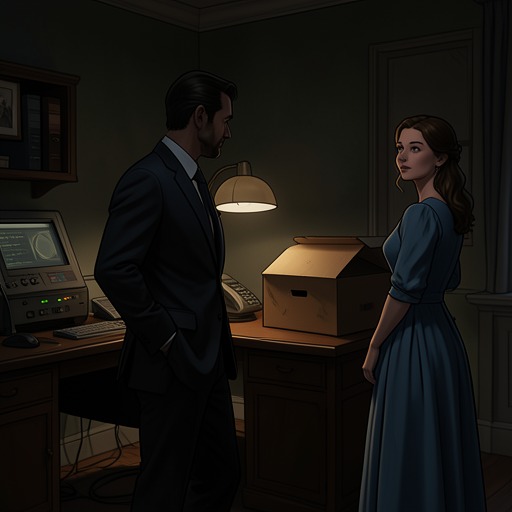
Event 1
Benton Bishop's murder of his family
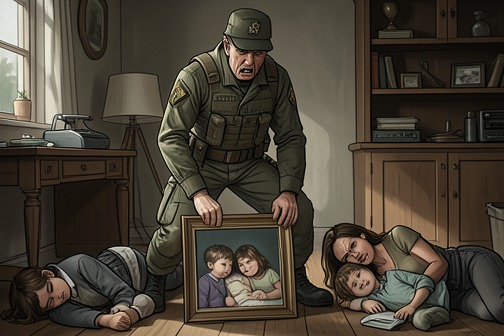
[Benton Bishop's murder of his family](entity:event-recall-event-benton-bishop-s-murder-9c1b32c06fbf) is the catastrophe behind [Dane Bishop](entity:character-recall-character-dane-bishop-7c521da04faf)'s years-long effort to prove his twin brother innocent. [Benton](entity:character-recall-character-benton-bde6ed62da14) killed his wife, Marianne, and their two children after beginning [Hymalete](entity:object-recall-object-hymalete-560fe538624d), a medication prescribed for depression and PTSD symptoms. The killings led to a murder trial and a death sentence; for Dane, they also opened a fight over whether the drug and its effects had been ignored. The account establishes the sequence and the family's loss, while presenting Hymalete's responsibility as Dane's claim rather than a proven conclusion.
## Causes and Background
Benton was a decorated veteran of the [Iraq](entity:location-recall-location-7cb5e3b1d5ce) War. The account connects his treatment to depression and PTSD symptoms, and says he had begun taking Hymalete shortly before the murders. His doctor had represented the medication as a treatment that would improve those symptoms with time, while its side effects would eventually pass. In retrospect, the confidence of that reassurance becomes part of the tragedy: the treatment was expected to help, but the outcome was devastating. The evidence does not establish a clinical explanation for Benton's actions or independently confirm that Hymalete caused them.
The timeline Dane gives [Emily West](entity:character-recall-character-emily-west-6092a86bb798) is specific. BioSphere had said Benton should take Hymalete for fourteen days to see whether it worked before switching him to another medicine. On the tenth day, Benton killed Marianne and their children. That interval gives Dane's suspicion its force: the killings followed the start of the medication and occurred before the recommended trial period was complete. It is the basis of his causal argument, not proof by itself that the drug produced the violence.
Before the murders, Benton had been living with his wife and children. Dane recalls a birthday party for [Landon Bishop](entity:character-recall-character-landon-bishop-6d7e89c5b88c), the youngest child, with the family grilling in the backyard while the children played in the sprinklers. The remembered scene offers a stark contrast to the later newspaper headlines and death sentence. It also locates the loss within an ordinary family life: the people who became victims of a crime had been, in Dane's memory, children laughing at a birthday gathering and a brother surrounded by his family.
## The Murder and Immediate Response
Benton killed Marianne and both children. The account does not detail the circumstances of each death; it identifies the victims and the central fact of the crime without turning their deaths into spectacle. One of the newspaper headlines Dane keeps is about a decorated veteran killing his wife and two children, while another reports that Benton would plead insanity. A later headline records his sentence to death. Together, these public fragments chart how a family tragedy became a criminal case and a national description of Benton.
After the killings, Benton called 911 and waited for police to arrive. He had a gun to his head, but officers talked him down, telling him that the courts would work things out. That response places the legal process immediately after the violence: rather than dying at the scene, Benton survived to face prosecution and a trial. It also sharpened the contrast between the promise that the courts would resolve matters and Dane's later belief that the proceedings had failed to account for the medication.
## Disputed Causation and Legal Aftermath
The case divides sharply between what the public record says Benton did and what Dane believes explains it. The articles on Dane's wall describe a veteran who murdered his family, an insanity defense, and a death sentence. Dane does not deny the deaths or the fact that Benton committed them; he contests the meaning assigned to the acts and the possibility that a newly prescribed drug helped bring them about. His conviction that Hymalete mattered grows from both the timing and his sense that the family had not recognized the danger in Benton's worsening condition.
Dane tries to defend his brother in court and in the press. He also contacts BioSphere, the company that manufactured Hymalete, seeking a response to his concerns. The company directs him to its public-relations department, where he receives a runaround rather than an answer he considers meaningful. He comes away feeling that no one is willing to listen. The account establishes his attempts and his frustration, but it does not report an independent finding that resolves the disputed medical question.
Benton is sentenced to death and, in Dane's later reflections, sits on death row awaiting execution. The sentence transforms Dane's search into more than a challenge to public opinion: as he sees it, his brother faces an irreversible punishment while the possible role of Hymalete remains unacknowledged. His grief is compounded by self-reproach. He regrets not recognizing the warning signs and not being there for his brother, who was one minute older than him. In his apartment, photographs of Benton and the family sit among the articles documenting the trial, making private mourning and public judgment occupy the same space.
## Consequences and Narrative Significance
The murders set Dane's life on a single course: proving Benton's innocence in the larger sense of establishing that the drug may have contributed to the disaster. He describes his attention as fixed on that task, while ordinary self-maintenance continues almost by instinct. Alcohol may numb his pain temporarily, but the memory of his brother's family and the unresolved case remains. The investigation that follows is therefore rooted not in abstract suspicion but in bereavement, loyalty to a twin, and the belief that a preventable danger was dismissed.
The family gathering Dane remembers and the headlines he rereads form opposing versions of the past. In one, Landon and the other children are carefree at play, and Benton is a husband and father within a living family. In the other, Benton is reduced to the veteran defendant in a murder case, and Marianne and the children appear as the dead behind the sentence. Dane's insistence on Hymalete presses against that reduction: he wants the sequence of treatment, worsening symptoms, and killings considered alongside the crime. The narrative leaves the medical cause unresolved, so the tragedy carries two forms of uncertainty at once: the loss itself cannot be undone, and the explanation Dane seeks has not been accepted.
Event 2
Benton Bishop's trial and death-row sentencing

[Benton Bishop's trial and death-row sentencing](entity:event-recall-event-benton-bishop-s-trial-a-106b8e9f9164) transformed a family tragedy into a public case and left his twin brother [Dane Bishop](entity:character-recall-character-dane-bishop-7c521da04faf) caught between grief and an unanswered question about [Hymalete](entity:object-recall-object-hymalete-560fe538624d). A decorated [Iraq](entity:location-recall-location-7cb5e3b1d5ce) War veteran, [Benton](entity:character-recall-character-benton-bde6ed62da14) was convicted of murdering his wife and two children and sentenced to death. Dane contested the explanation of the killings, arguing that the medication Benton had recently started taking was responsible; the evidence establishes this as Dane's claim, not as a proven finding of the trial.
## Background and Allegations
The case concerned Benton, a decorated veteran who had served in Iraq and murdered his family a little over a year before the events in which Dane recalls the trial. Newspaper headlines displayed in Dane's apartment give the case a stark public outline: Benton was identified as a veteran who killed his wife and two children; a separate headline reported that the defense intended to plead insanity; another announced that he had been sentenced to death. Those clippings preserve the sequence as it appeared in public, but do not explain the full arguments made in court or the basis on which the jury reached its decision.
Dane's concern centered on Hymalete, the medication Benton had begun taking shortly before the murders. He believed that a connection between the drug and Benton's actions had been overlooked, and wanted the courts, lawyers, and press to recognize it. The timing was central to his interpretation: a new medication preceded the killings, and Dane regarded that fact as a possible explanation for a devastating change in his brother. The available account does not establish that Hymalete caused the murders, nor does it provide a medical or legal determination confirming Dane's theory.
## The Trial and Its Public Aftermath
Dane attended the court proceedings on the family's side, seated behind Benton. His presence there was an expression of loyalty as well as an attempt to defend his brother, but it did not change the outcome. The trial and its coverage became inseparable in Dane's recollection: reporters pursued him, television crews parked outside his front door, and the case followed him beyond the courtroom. The family faced not only the loss of Benton's wife and children, but also sustained public attention to the murders and the trial.
Dane's apartment later held photographs of Benton and his dead family, while newspaper articles about the case were pinned to a wall. He regarded the photographs as evidence of his own failure to help his brother, both before the murders and afterward. That private arrangement of clippings and pictures contrasts with the public record: headlines reduce the case to military service, murder, an insanity plea, and a death sentence, while Dane's memories return to the brother and family behind those labels. The account supplies no date for the trial or detailed courtroom exchanges, keeping its emphasis on the verdict's lasting impact rather than the mechanics of the proceedings.
## Dane's Challenge to the Hymalete Explanation
After trying to defend Benton in court and in the press, Dane approached BioSphere, the manufacturer of Hymalete. The company referred him to its public relations department, where he felt he was given the runaround; he believed no one was willing to listen to his concern. His effort therefore met resistance both in the legal arena, where Benton was sentenced, and in his attempt to get the manufacturer to address a possible link between the medication and the murders.
Later, Dane told [Emily West](entity:character-recall-character-emily-west-6092a86bb798) that proof of Hymalete's responsibility had been there, but that it had slipped from his grasp. His language conveys how he understood his campaign: not as an abstract objection to the verdict, but as an attempt to make decision-makers acknowledge what he believed the evidence showed. Yet his conviction and the account's limits remain distinct. Dane's belief that the medication caused Benton to lose control is not independently verified here, and his unsuccessful efforts do not establish that the company or the court accepted his interpretation.
## Death Row and Continuing Consequences
The death sentence placed Benton on death row, where he remained alone while his appeals continued. In a later conversation with Emily, Dane said that Benton was receiving proper treatment and understood what he had done, but wanted to die. He described his brother as living in an empty cell and waiting for the appeals to run out. This later account adds the consequences of the sentence to the public verdict: Benton was not only condemned in court but left in a prolonged period of confinement and uncertainty.
For Dane, the sentence compounded grief with guilt. He regretted not recognizing signs of Benton's post-traumatic stress disorder and blamed himself for not being there when his brother was suffering. His memories of the trial recur alongside recollections of family life before the murders, including a birthday gathering for Benton's youngest son, Landon, and ordinary time spent with Benton and the children. Against those memories, the funeral coverage, courtroom days, and death-row sentence mark a world that cannot be restored. Dane's continuing insistence on the Hymalete connection gives the trial an unresolved dimension: the legal outcome is settled in the account, but the cause he believed mattered most remains contested rather than resolved.
Event 3
Emily West's appointment as BioSphere CEO
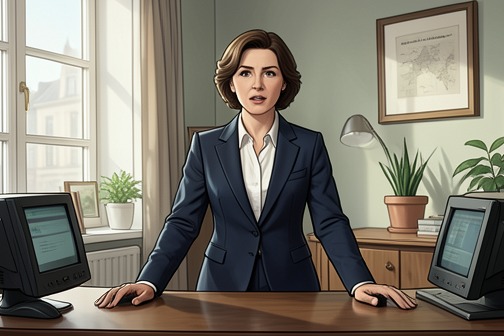
[Emily West's appointment as BioSphere CEO](entity:event-recall-event-emily-west-s-appointmen-7c953a6e7374) begins a leadership arc in which the language of public responsibility is tested against the company's commercial interests. The appointment is established through her first public interview and early corporate meetings rather than through a description of the selection process. Almost at once, a question about [Hymalete](entity:object-recall-object-hymalete-560fe538624d) exposes the distance between the reassuring image of BioSphere she presents and the troubling information its executives have failed to bring to her attention.
## Appointment and Public Image
In her first public presentation as the company's new CEO, Emily appears on television with long, wavy butterscotch hair and blue eyes described as caring and welcoming. She tells the interviewer that she favors an open-door management style and presents BioSphere as a medical company whose first purpose is helping people. Its medicines, she says, should be safe and effective so patients can lead full and healthy lives. This establishes the standard against which her decisions as CEO will be measured: corporate leadership is framed not only as a matter of earnings, but as a duty to patients.
The interview also shapes how [Dane Bishop](entity:character-recall-character-dane-bishop-7c521da04faf) responds to her appointment. Watching Emily, he believes she will listen to complaints that others have ignored and help investigate what went wrong. He hopes she will help clear [Benton Bishop](entity:character-recall-character-benton-bishop-8333894c0bca) and make BioSphere accept responsibility for its medication. His expectation is personal as well as corporate: the new CEO appears to him as someone who might hear a case that has not received a fair hearing. The passage therefore introduces her public image through two connected perspectives, her own promise of accessible leadership and Dane's hope that she might act on it.
## The First Test of Leadership
Emily's early meetings place that promise under pressure. At a company meeting, she faces a room of male executives whose reactions divide between supporters watching to see whether the board chose well and opponents waiting for a sign of weakness. She addresses the table coolly and confidently, forecasting that BioSphere will outperform expectations for its first quarterly earnings report of the fiscal year. Her composure signals an effort to establish authority in a setting where her appointment is still being judged.
The meeting changes when [Edward Barker](entity:character-recall-character-edward-barker-30c0e5d7cc69), BioSphere's Vice President of Marketing, asks whether negative reviews of Hymalete will harm growth in future quarters. He says his team has noticed complaints reaching Quality Control and Legal. Emily has not received this information. Hymalete is one of BioSphere's flagship products and accounts for much of its business, so the question is not peripheral: it joins a possible patient-safety problem to a major source of company revenue. Emily does not pretend she already knows the details. She proposes a separate discussion with Edward so they can give the issue proper attention, then checks whether anyone else has an immediate concern.
## Hymalete and the Limits of Corporate Reassurance
A later discussion supplies information that changes Emily's response. After learning that Hymalete is connected to the case of a decorated [Iraq](entity:location-recall-location-7cb5e3b1d5ce) War veteran who murdered his family, she concludes that the product must be removed from the market immediately while BioSphere investigates. Edward starts to object, but Emily cuts off the objection and insists that the review include the drug's original uses as well as the reported concerns. Her decision is a concrete shift from the language of earnings and forecasts toward precaution and scrutiny.
Her instructions also reveal the conflict within that decision. Emily wants BioSphere to examine the matter quietly, with a restrained press release, and worries that investors might discover what is happening. The response combines action on the drug with an effort to control the company's exposure. The appointment therefore does not instantly resolve the tension between patient welfare and commercial risk; instead, the Hymalete issue makes that tension visible within her own leadership. Emily's insistence on investigation and withdrawal gives practical force to her public assurances, while her concern about investor reaction shows the pressures surrounding them.
## Early Consequences
Emily recognizes that something is wrong with Edward beyond his alarm at the discussion. She cannot yet act on that suspicion: Legal must first complete its review and obtain what it needs from him, after which BioSphere will have to dismiss him. She regards serious misconduct at the senior level as unacceptable, especially when it exposes the company to litigation. Her appointment thus places her in the position of responding both to the product concern and to the possibility that information was mishandled inside the organization.
At the close of this early sequence, Emily has a flight to catch for a major conference several states away, where she is scheduled to deliver the keynote address. The narrative notes that she will not make it there, but the appointment's immediate significance has already been established: her first tests as CEO concern whether she can turn a promise of openness and patient care into action inside a company whose flagship product and financial interests are at stake.
Event 4
BioSphere's provisional withdrawal of Hymalete
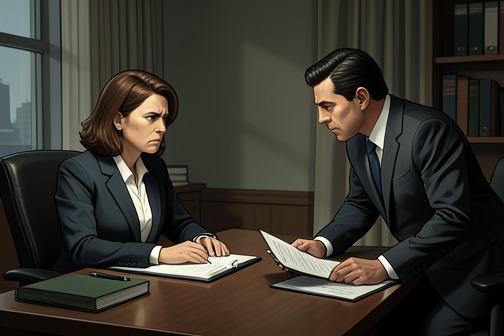
BioSphere’s provisional withdrawal of [Hymalete](entity:object-recall-object-hymalete-560fe538624d) begins with a routine executive meeting and turns into a confrontation with the company’s undisclosed quality-control concerns. After learning that clinical trials had not been completed for the patient group at issue and that sales teams may have promoted the drug for veterans with PTSD, [Emily West](entity:character-recall-character-emily-west-6092a86bb798) directs that Hymalete be removed from the market while the company investigates. The decision is not presented as a completed recall: it is an urgent, provisional response to information that had not reached her before the meeting.
## The warning in the meeting
[Edward Barker](entity:character-recall-character-edward-barker-30c0e5d7cc69) raises the first warning as a business question, asking whether poor reviews could affect BioSphere’s growth in future quarters. He says that complaints have been reaching Quality Control and Legal. Emily, newly confronted with the issue, says she has not been informed of complaints about Hymalete’s efficacy or side effects. She postpones a full discussion until they can devote time to it, then asks the other executives whether they have concerns. The room offers no further questions, leaving Edward’s disclosure to become the meeting’s central issue.
The imbalance between the product’s importance and Emily’s knowledge sharpens the stakes. Hymalete is one of BioSphere’s flagship products and accounts for a bulk of its business, yet its complaints were not part of the information she had received before this early meeting. When Emily later insists on discussing the quality-control complaints, Edward identifies [Dane Bishop](entity:character-recall-character-dane-bishop-7c521da04faf) as one of the most vocal complainants and gives her a file assembled about him. Emily reacts with disbelief at the existence of a dossier and asks both who Dane is and how BioSphere is involved. The file makes the complainant an immediate focus, but the decisive disclosure is about the company’s practices, not the contents of the dossier, which the scene does not detail.
## What the inquiry uncovers
Emily asks whether researchers were surprised because the side effect in question had not appeared during clinical trials. Edward’s explanation shifts the discussion from an isolated complaint to the limits of the evidence behind the drug’s use: he says there had been no completely successful clinical trials for that class of patient or those symptoms. The scene does not specify the side effect, identify the patients involved in the reported complaints, or establish that Hymalete caused a particular harm. It does establish that the company was confronting use beyond the clinical circumstances for which it had originally been studied.
Pressed to explain why doctors were prescribing the medication under different parameters, Edward says BioSphere sales teams may have suggested during educational meetings with private primary-care physicians that Hymalete was useful for veterans with PTSD. That admission gives the discussion a distinct ethical dimension. The proposed use was not simply a matter of doctors independently departing from the original parameters: company representatives may have helped create the impression that the drug was appropriate for that situation, despite the lack of completed trials for that patient class and those symptoms. Edward’s qualified account leaves the precise scale of the promotion unresolved, but it makes the company’s own conduct part of the investigation Emily demands.
## The withdrawal decision
When Emily asks again about Dane Bishop, Edward identifies him as the brother of [Benton Bishop](entity:character-recall-character-benton-bishop-8333894c0bca), a decorated [Iraq](entity:location-recall-location-7cb5e3b1d5ce) War veteran who had murdered his family a little over a year earlier. The exchange connects the complaint to a highly charged personal history, but it does not establish that [Benton](entity:character-recall-character-benton-bde6ed62da14) took Hymalete or that the drug caused his crimes. Emily recognizes the seriousness of what she has learned and closes the file. Rather than allow the conversation to remain focused on the complainant, she turns to the product and directs that Hymalete be removed from the market immediately while BioSphere investigates.
Emily also sets conditions for how the company should proceed. She rejects Edward’s attempt to interrupt, insists that the review include all of Hymalete’s original uses, and calls for the investigation to be conducted quietly, with only a restrained press release. Her concern that investors might learn of the matter shows that she is aware of the financial exposure, but she does not allow that concern to displace the immediate withdrawal decision. She tells Edward that a discussion of ethics and corporate citizenship will follow when she returns from a conference. The order therefore combines a concrete short-term measure with a broader inquiry and an internal reckoning that has yet to take place.
## Scope and significance
The scene leaves the operational outcome open. Emily orders an immediate withdrawal while the company researches the drug; the evidence does not confirm that the product has already been removed, describe the investigation’s findings, or state what the later discussion with Edward produces. Its provisional character matters: this is a decision made at the point when concealed or unreported information becomes visible to the chief executive, not a report of a completed regulatory process.
The meeting also distinguishes two questions that might otherwise be collapsed: whether Hymalete produced the reported effects, and whether BioSphere encouraged its use for a patient group whose symptoms had not been adequately tested in clinical trials. Emily lacks enough information to resolve the first, but treats the second as serious enough to halt sales pending review. In that shift—from quarterly growth and a complainant’s file to the company’s evidence, marketing, and responsibility—the withdrawal becomes a test of whether BioSphere will investigate the uses it promoted rather than protect a flagship product from scrutiny.
Event 5
Dane Bishop's abduction of Emily West

[Dane Bishop's abduction of Emily West](entity:event-recall-event-dane-bishop-s-abduction-fa35c13a5338) turns a request for institutional accountability into a violent seizure. Emily's refusal to make an unsupported admission on BioSphere's behalf becomes the immediate trigger for Dane to take control of her by force.
## Corporate Duty and the Failed Appeal
[Emily West](entity:character-recall-character-emily-west-6092a86bb798) faces [Dane Bishop](entity:character-recall-character-dane-bishop-7c521da04faf) as BioSphere's chief executive, conscious that she has responsibilities to the company's shareholders and employees. She believes her appointment carries an obligation to protect their investment and keep employees working; those responsibilities conflict with the possibility that BioSphere may bear some responsibility for Dane's brother's actions. The strain threatens to break the composed facade she is trying to maintain.
Dane asks Emily to acknowledge that the medication has a problem when used by people with PTSD. Emily declines to affirm this without more evidence, guidance from BioSphere's legal team and researchers, and recourse to the proper channels. She presents procedure not as a finding that Dane is wrong, but as the limit of what she can responsibly attest to at that moment. When she warns that continued pressure will lead her to call security, the appeal collapses: Dane grabs her by the throat, abruptly replacing a dispute over evidence and institutional responsibility with physical force.
## From Coercion to Armed Abduction
Dane apologizes, but the apology does not soften what follows: he tells Emily she must get into the car. She swings the keys toward his face in an attempt to resist. He catches her wrist midair, twists her arm aside, and forces her toward the passenger side, moving her with enough strength that her feet nearly leave the ground. The keys, briefly her only weapon, do nothing to interrupt his control.
Dane reaches behind Emily to open the driver’s door and releases her. Before she can understand the change in position, he draws a large matte-black pistol from inside his suit coat and puts it to her forehead. He orders her into the car again, this time shouting; Emily meekly takes the driver’s seat and buckles her seat belt reflexively. The ordinary gesture of fastening it offers no protection: the car has become the instrument of her forced removal, and the gun makes clear that compliance is no longer a matter of choice.
As Emily stares through the windshield, despair gives way to a narrow effort at self-command. She does not let the panic and fear rising in her eyes turn into tears, thinking that her mother would never have forgiven her for crying. That fixed gaze also leaves her unable to see Dane bring the pistol butt down on her temple. Pain erupts behind her eyes, and the world fades to black. The scene ends not with Emily consenting or being persuaded, but with her consciousness extinguished, completing the transition from a confrontation over BioSphere’s responsibility to an abduction enforced by physical violence and a firearm.
## The Life Emily Measures Against the Crisis
Before the abduction is complete, Emily’s perspective briefly widens from immediate danger to the life she believes she has led. She has a college education and a master’s degree and is one of the few women serving as a pharmaceutical CEO, yet she measures those achievements against what is absent: a love life, someone to share her bed, and travel beyond business. Her blunt inventory even includes the vibrator in her nightstand. Work has filled the space where intimacy and a life outside her career might have been, making the crisis a reckoning with more than physical safety.
That sense of exposure is sharpened by Emily’s knowledge that Dane’s identical brother had already committed terrible acts against his own family. The comparison gives her fear a specific precedent: the man confronting her is not simply a stranger with a gun, but someone whose capacity for violence seems confirmed by what his brother has done. The abduction thus narrows Emily’s choices while forcing her to confront how little the professional status she has built can protect her in private.
## Narrative Significance
The abduction’s decisive reversal lies in the collapse of the distinction between a corporate complaint and a private encounter: once Emily West’s answer fails to satisfy Dane Bishop, the procedures she invokes cannot govern what happens to her. The scene makes that imbalance concrete through objects with sharply changing uses. Emily’s keys briefly serve as an attempted defense; the seat belt is fastened by reflex, an ordinary habit that cannot make the car safe; and the pistol converts an argument into immediate bodily peril. By ending with Emily’s consciousness lost, the episode leaves the question of BioSphere’s responsibility unresolved while making her loss of control unmistakable.
Event 6
Emily West's captivity at her home
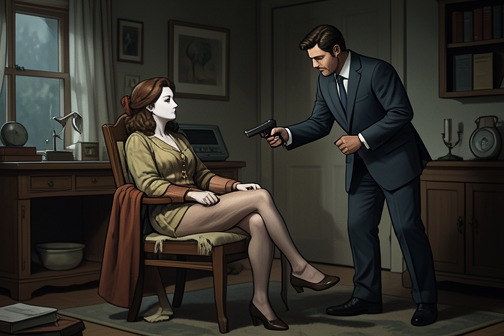
[Emily West](entity:character-recall-character-emily-west-6092a86bb798)’s captivity at her home turns a familiar private residence into the setting for a sustained exercise of coercive control. It begins when [Dane Bishop](entity:character-recall-character-dane-bishop-7c521da04faf) responds to Emily’s refusal to make an unsupported admission about [Hymalete](entity:object-recall-object-hymalete-560fe538624d) by taking her against her will. Once inside her home, he restricts her movement, imposes rules, and presents punishment as a means of establishing order. The episode’s central tension is the contrast between Dane’s stated grievance against BioSphere and the power he exercises over Emily, who is both the person he wants to compel and the person deprived of ordinary choice.
## Causes and Seizure
Before the abduction, Dane asks Emily to acknowledge that the medication poses a problem for people with post-traumatic stress disorder. Emily says she cannot make that claim without more evidence and guidance from her legal team and researchers. When she starts to say she may have to call security if he continues pressing her, Dane cuts her off by grabbing her throat. He tells her he needs her to get into the car. The captivity thus begins not with an agreement or a negotiated exchange but with force used to override her refusal.
Emily later wakes disoriented in the garage at her own house, with a headache and a dry, sore throat. The return home has been engineered through the car’s GPS: Dane has selected its HOME function. The ordinary convenience of a navigation feature becomes part of the abduction’s mechanics, bringing Emily back to a place she recognizes but cannot control. Her question about what Dane is doing meets a situation in which the familiar location offers no immediate protection.
As he leads her from the garage toward the house, Emily realizes that she has been drugged. Dane appears to have found the injectable sedative she carried in her purse and used it against her. The drug slows her reactions and makes it difficult for her to plan an escape, compounding the physical force with which he moves her. He explains his anger as a grievance against people with wealth and institutional power, accusing Emily of dismissing those who become inconvenient. His words frame the confrontation as resistance to corporate indifference, but his method places Emily under his control rather than giving her a voice in the dispute.
## The Home Becomes a Place of Confinement
Inside the house, Dane declares that Emily’s home has become a prison. He orders her to obey and moves her through rooms that had belonged to her ordinary life. At one point, he ties a leash to a bedpost and uses duct tape as an additional restraint. The setup makes plain that he is not relying on her cooperation or on the leash alone: the arrangement is designed to prevent her from leaving. Emily is frightened, recognizes the need to escape, and has little opportunity to act on that recognition.
Dane’s control extends beyond restricting movement. He lays down rules governing when Emily may speak and requires her to do household chores, including cooking and attending to his needs. He treats compliance as a system he must enforce consistently, describing himself to himself as an authority responsible for keeping order. That self-description clashes with the actual terms of the household: Emily has not chosen the rules, and Dane determines both what counts as an infraction and what follows from it.
When Emily tests those limits, Dane grabs her wrist, pulls her from the bed, and forces her into a chair, calling the incident a warning. Her attempts to resist do not alter his authority over what happens next. He then tips the chair back and drags her into the walk-in closet, closing her away from the rest of the house. The closet becomes a distinct space of punishment within the larger prison of the home. Dane leaves her there while he goes to the kitchen, where he notices the sparse state of her pantry and refrigerator despite her collection of cookbooks. He takes the car keys to buy groceries, an ordinary household errand carried out while Emily remains confined.
## Punishment, Routine, and Dane’s Justification
The headphones become part of the punishment. Dane brings Emily heavy, padded headphones with loud music already playing and puts them on her while she is restrained. The episode shows how his control operates through imposed conditions as well as direct commands: he can shape what she hears, where she stays, and when she is allowed out. Emily fears what he may do and later pleads against the headphones being used again. Her reaction gives the object a significance beyond its practical use; it marks a punishment she has reason to dread.
During the captivity, Dane takes out another syringe of the same sedative he found in Emily’s purse. Emily begs him not to inject her and points out that she has helped keep her company from pursuing him. He refuses, insisting that the choice is no longer hers. This exchange makes the governing logic explicit: even Emily’s efforts to accommodate him do not restore her control over her own body or circumstances. Dane treats submission as something she must learn, not as a decision she is entitled to make.
Dane also reflects on his earlier actions and hesitates over what he has done. That uncertainty does not end the coercion or repair the imbalance between them. His attention to Emily’s constrained physical responses cannot establish consent; the conditions of captivity remain in force. The narration places his self-questioning alongside the continuing restraint, allowing the conflict between his personal doubts and his conduct to remain visible without making those doubts an excuse.
At night, Dane makes a sleeping pad on the floor beside the closet. He deliberately returns to memories of [Benton Bishop](entity:character-recall-character-benton-bishop-8333894c0bca) and what [Benton](entity:character-recall-character-benton-bde6ed62da14) went through, holding BioSphere responsible. He tells himself that he and Benton should have had normal lives and that the company, rather than he, is to blame for the circumstances he has created. This reasoning supplies the motive he uses to sustain his actions, but it also exposes their contradiction: his accusation concerns the harm done by an uncaring institution, while his response places Emily under an individual power she cannot refuse.
## Release and the [Captivity](entity:state-recall-state-captivity-0bc31185b3d3)’s Continuing Tension
The routine continues into the following day, with Dane attending to Emily’s feedings and bathroom breaks while she remains confined. That night, he decides she has had enough, cuts her loose, and removes the headphones and blindfold. She blinks against the light as he helps her up and asks whether she has an apology for him. The release is therefore limited and conditional in its framing: Dane decides when the punishment ends and still expects Emily to answer to him.
The threat of renewed control persists even when someone approaches the house. When [Jas Robertson](entity:character-recall-character-jas-robertson-6a0f9315f74b) arrives at the front porch, Emily sees her through the peephole. Dane warns Emily that, although he is unarmed, he can snap her in two. Emily recognizes the threatening man she remembers and steps back before turning to manage the visitor. She draws on the example of her mother, [Geraldine West](entity:character-recall-character-geraldine-west-8aeda5ccdaf3), recalling how Geraldine received people she disliked by appearing exuberant and finding a positive feature to focus on. Emily uses that remembered social performance to prepare for [Jas](entity:character-recall-character-jas-80c0fa57a0ec)’s arrival while Dane remains present. The scene shows her adapting her public composure to the immediate danger, not escaping it.
The home’s transformation is the episode’s defining reversal. Its garage, bedroom, kitchen, and closet remain recognizably domestic spaces, but Dane’s control changes what Emily can do in each of them. At the same time, his vocabulary of responsibility and order obscures the coercion on which his authority depends. Emily’s captivity is consequently not only a physical confinement: it is a conflict over evidence, choice, and power, in which Dane claims to challenge BioSphere’s disregard for vulnerable people while denying Emily the freedom to refuse him.
Event 7
Discovery of BioSphere's Hymalete misconduct

The discovery of BioSphere’s [Hymalete](entity:object-recall-object-hymalete-560fe538624d) misconduct begins as a search for evidence that might free [Benton Bishop](entity:character-recall-character-benton-bishop-8333894c0bca) and becomes a confrontation with the gap between the drug’s documented effectiveness and the company’s public claims. [Emily West](entity:character-recall-character-emily-west-6092a86bb798) finds studies indicating that Hymalete is less effective than BioSphere says, then watches an advertisement that presents the drug as help for first responders. For [Dane Bishop](entity:character-recall-character-dane-bishop-7c521da04faf), the findings offer a possible way to hold BioSphere accountable; for Emily, they make her company’s conduct newly personal and difficult to dismiss.
## The search and its stakes
Dane’s request for Hymalete files is driven by a narrowing window of opportunity. The ruse the pair has used against BioSphere will eventually expire, and Dane believes that without evidence of Benton Bishop’s innocence he will lose Emily’s help: she will no longer be CEO. The search therefore carries two linked stakes. It may support Dane’s effort to challenge the case against his brother, and it may give Emily a reason and an opportunity to act against the company she leads.
Dane asks Emily to look through whatever Hymalete files she can access from where they are. She agrees to try, while warning that the files may not contain the information he wants. As she works through emails and documents, Dane stays quiet rather than interrupting her concentration. The scene establishes the difference in their skills: Emily is much faster and more capable with the computer, and she is the one who identifies the significance of the records. Her search is not presented as a guaranteed route to proof; its importance lies in what the documents actually show.
## What the files reveal
After searching through the material, Emily finds files she considers promising. The records include notations, emails, and PDF documents. As she examines successive documents, she becomes uncertain, then alarmed. Her conclusion is that study after study shows Hymalete does not work as effectively as BioSphere claims. The discovery is specific but bounded: the studies challenge the company’s claims about effectiveness. The scene does not specify which studies she reads, quantify the gap, or establish that this finding by itself proves Benton Bishop’s innocence.
Emily’s response shifts from disbelief to anger and betrayal, followed by fear. She also turns that anger on herself, wondering how she could have failed to know what the studies showed. Her reaction marks the revelation as more than a useful lead for Dane. The documents implicate the company whose leadership she holds, and the apparent discrepancy forces her to reconsider what BioSphere has represented about its drug. Dane believes her account and sees the findings as the evidence he needs to pursue accountability, though the scene shows his conviction rather than a completed legal case.
## The advertisement and the public claim
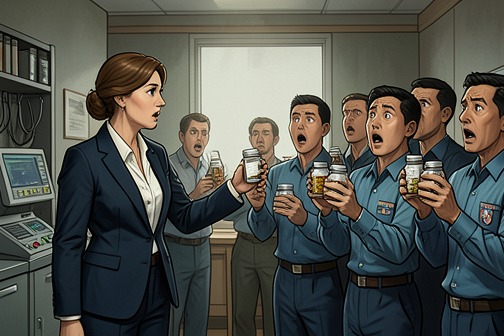
Dane then shows Emily an advertisement released quietly at the beginning of the month. Its opening message presents Hymalete as a means of helping first responders withstand the demands of keeping people safe. A montage features policemen, firefighters, other first responders, soldiers, and doctors discussing the stress of their work and their vulnerability to anxiety and PTSD symptoms. At the close, the people shown stand in a line, hold up prescription bottles bearing the Hymalete brand, and deliver the same slogan together: “[I keep working, because it keeps working](entity:expression-recall-expression-i-keep-working-bec-84dda1d14888).”
Placed beside Emily’s findings, the advertisement sharpens the contradiction at the heart of the discovery. The public message presents the drug as a dependable answer to occupational stress, while the studies she has reviewed indicate that it falls short of BioSphere’s claims. The advertisement does not itself prove the contents of the studies or explain how the company handled them; instead, it makes visible the confident promise against which the documentary evidence must be judged. Emily watches in shock and disgust, unable at first to respond.
## Immediate consequences and significance
Dane tells Emily that thousands have been harmed by Hymalete and that more may be, framing the people targeted by the company as innocent victims who deserve answers and relief. This is Dane’s stated assessment, not a number independently established by the documents described in the scene. He urges Emily to print the files and says they will take them to his reporter contact. His plan turns the discovery from private evidence into a proposed public disclosure, although the scene ends before the files are printed or the contact is made.
The revelation thus advances two conflicts without resolving either. For Dane, the studies may help him hold BioSphere accountable and, in his view, offer the only route to getting his brother free. For Emily, the evidence and advertisement place corporate responsibility beside her own former ignorance and her position as CEO. The scene’s force comes from that collision: technical records, a polished appeal to first responders, and the personal realization that the public promise may not match the evidence. It establishes a basis for action, not its eventual outcome.
Event 8
Emily's deletion of the Hymalete evidence
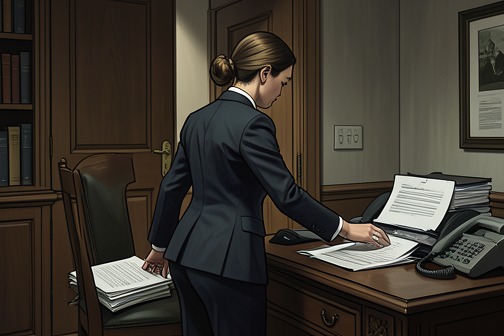
[Emily West](entity:character-recall-character-emily-west-6092a86bb798)’s deletion of the [Hymalete](entity:object-recall-object-hymalete-560fe538624d) evidence is a calculated interruption of [Dane Bishop](entity:character-recall-character-dane-bishop-7c521da04faf)’s attempt to use the files against BioSphere. She removes the copies accessible from her home office, but not the files on the company’s servers; by letting Dane believe the evidence is gone, she buys time to pursue an internal response on her own terms. The act turns a dispute over corporate misconduct into a test of competing priorities: Dane wants the truth exposed, while Emily means to protect her position and control how the scandal emerges.
## The demand for evidence
Dane asks Emily to print the files so he can read them. She refuses, calling them industry secrets and a breach of protocol. His objection is that the documents appear to show BioSphere lied and manipulated the truth; to him, treating the evidence as confidential compounds the wrongdoing rather than containing it. Their argument is not about whether the files matter, but who gets to decide what happens to them.
Emily sets out the consequences she anticipates if the material becomes public. She believes the company could be destroyed, that she could lose her job, and that her assistant could lose hers. Government fines and lawsuits, she fears, would be immense. She has already provisionally withdrawn Hymalete from the market, but that action does not satisfy Dane: he wants the people responsible to admit that they ruined lives. The two measure accountability differently. Dane focuses on public acknowledgment and the harm behind the evidence; Emily also sees employees, the company, and her own future caught in the fallout.
Dane then takes control of the computer and searches YouTube for a video he wants Emily to see. The passage establishes that the video, the pill, and the surrounding lies and cover-ups blindside her, but does not specify the video's contents. Her response is to blame [Edward Barker](entity:character-recall-character-edward-barker-30c0e5d7cc69) and anticipate investigations if the allegations come out. The new information does not settle her course; it sharpens her awareness of the scandal while increasing her fear that its public consequences will fall unevenly.
## Emily’s internal plan
Emily concludes that Dane’s plan will not work as he intends. She expects the media to focus on her as BioSphere’s CEO and the board to make her bear the blame, while Edward Barker might escape attention. Her proposed alternative is to bring the matter to the board herself, quietly and internally, and remove Barker from the way before outside interference begins. Only after that, she thinks, can she help Dane with [Benton Bishop](entity:character-recall-character-benton-bishop-8333894c0bca).
That order matters. Emily does not decide that the files are false or that BioSphere should face no consequences; she chooses to control the route by which the evidence reaches decision-makers. Her reasoning combines concern for her assistant and other employees with her own determination to retain the success she has worked for and prove she can remain at the top. The plan therefore offers no simple division between principled protection and self-interest: she sees internal handling as a way to preserve what she has built, even as she intends to act against Barker.
## The staged deletion
Emily turns back to the files and types a series of commands while behaving as though she is preparing to print them. When Dane asks what she is doing, she pretends that she has found the right step, then deletes her copies from the computer. She presents the disappearance as an accident or failed attempt to retrieve them, insisting that nothing remains there and claiming she is trying to recover the files. The deletion is deliberate; the explanation is a lie designed to conceal both her choice and her next move.
The distinction between the home computer and BioSphere’s servers is decisive. Emily knows that the files still exist on the servers and that they are merely no longer accessible from her home office. Dane does not know this. The scene thus turns a seemingly absolute loss into a controlled concealment: she has not destroyed the underlying evidence, but she has deprived Dane of access to the copies he expected to use. The computer becomes the point where technical access, corporate control, and personal trust converge.
## Consequences and significance
Dane reacts as if his opportunity has vanished. He runs a hand through his hair, rubs his face, and says he was close; when he turns back to Emily, his eyes are hard and red-rimmed, his fists balled, and his knuckles cracking. He assigns responsibility to her. His anger follows from the apparent destruction of the evidence, while the reader knows Emily has withheld the crucial fact that the files remain elsewhere.
Emily sees his hurt and recognizes the failure he believes he has suffered. She reaches toward him, then withdraws her hand. Although she wants to tell him how close he still is, she does not disclose the server copies or comfort him. In her judgment, she needs the files for her own purposes, and she remains committed to her responsibilities to BioSphere’s employees and her ambition. That withheld truth leaves their alliance strained at the moment she privately imagines helping him later. The deletion therefore does not resolve the conflict over Hymalete; it changes who controls the evidence, postpones Dane’s effort to expose the wrongdoing, and makes Emily’s intended cooperation conditional on her own intervention first.
Event 9
Dane and Emily's alliance against BioSphere
[Dane Bishop](entity:character-recall-character-dane-bishop-7c521da04faf) and [Emily West](entity:character-recall-character-emily-west-6092a86bb798)’s alliance against BioSphere is a conditional bargain forged under captivity, suspicion, and competing definitions of justice. Emily West recognizes that [Hymalete](entity:object-recall-object-hymalete-560fe538624d) has harmed people and offers to help expose [Edward Barker](entity:character-recall-character-edward-barker-30c0e5d7cc69), but she wants to act from inside BioSphere and shield the company—and her own career—from a wider public reckoning. Dane Bishop needs her access and knowledge, yet cannot bring himself to trust the plan or release his captive. Their cooperation therefore begins less as a settled partnership than as a struggle over who will control its terms.
## The appeal of the evidence
The alliance takes shape after Emily West watches a video showing policemen, firemen, first responders, soldiers, and doctors describing the stress and emotional demands of their work, and their vulnerability to anxiety and PTSD symptoms. At the end, they stand in a line holding Hymalete prescription bottles and raise them together. The image connects the drug to people whose difficult jobs make them especially susceptible to the suffering it claims to address. Emily West watches in shock and disgust.
Dane Bishop gently squeezes her shoulder and tells her that thousands have been destroyed by Hymalete, with perhaps thousands more still at risk. He frames the victims as innocent people targeted by BioSphere and asks Emily West to print the files so they can take them to a reporter contact. His appeal links the evidence to two demands: answers and relief for those harmed. The proposed alliance initially appears to offer a direct route from the documents to public exposure.
Emily West does not accept that route. She suspects that Edward Barker arranged the drug’s approval without her knowledge and blames him for the deception and cover-up. But she also anticipates how an investigation would unfold: as BioSphere’s chief executive, she expects the media and the board to make her the public face of the scandal, while Edward Barker might escape scrutiny. Her concern is not simply whether the evidence is true, but who will bear the consequences of making it public.
## Emily West’s counterproposal
Rather than print the files for an outside reporter, Emily West decides that she must take the matter to BioSphere’s board herself, quietly and internally. She hopes to preserve the success she has worked for, remove Edward Barker, and only then help Dane Bishop with [Benton Bishop](entity:character-recall-character-benton-bishop-8333894c0bca)’s case. As Dane Bishop watches, she turns back to the files and types commands that make it look as though she is preparing to print them. The gesture exposes the gap between their apparent cooperation and her actual plan: she is acting on her own timetable and withholding her decision from him.
Later, after an intimate encounter, Emily West renews the offer in more direct terms. She tells Dane Bishop that she can obtain what he wants and make those responsible for Benton Bishop’s situation pay. Her proposal is to return to BioSphere and use what she knows to bring down Edward Barker, whom she identifies as the man who pushed Hymalete in its harmful direction. She insists that responsibility belongs to him, not to the entire company, and says she can remove the people involved and ruin their careers.
The distinction matters to both the practical plan and its moral reach. Dane Bishop’s earlier appeal treats the victims’ need for answers and relief as a reason to confront BioSphere publicly; Emily West’s version narrows the target to Edward Barker and the people around him. She offers a way to act against specific wrongdoing without exposing the whole corporation to outside interference. That limitation also serves her stated wish to retain what she has achieved and protect her position as chief executive.
## Cooperation under coercion
Dane Bishop considers Emily West’s offer, but consideration does not become consent. He collects her clothes rather than returning them to her, and the discussion ends with him imposing punishment. He straps her into a dining-room chair with duct tape, leaving her back arched, and uses his tie as a blindfold. While she is restrained, he tells her to think about the pain she has caused him and about leaving a man to die because of a drug her company pushed. He also says that he must decide what to do with her now that she is useless to him.
Emily West still argues that she can change things. Dane Bishop does not accept the assurance: his earlier experience of believing her has, in his view, brought him to this point. His response makes the limits of the alliance unmistakable. Although Emily West offers information and a means of reaching Edward Barker, Dane Bishop retains physical control and treats her usefulness as something he alone can judge. Cooperation is inseparable from captivity, so her proposed role in the campaign cannot be separated from the unequal power that governs their negotiations.
In his private thoughts, Dane Bishop entertains the possibility that Emily West believes what she says about taking down BioSphere. Even so, he rejects letting her return to work and investigate the corruption on her own. He intends to find another way to use her to bring the company down, though he has not yet worked out what that way will be. The alliance thus remains unresolved: Emily West has stated a plan, but Dane Bishop has neither granted her freedom nor committed himself to its terms.
## A contested alliance
The episode’s decisive change is not that Dane Bishop and Emily West reach agreement, but that Emily West becomes a potential strategic partner rather than only a captive whose company is implicated in his grievance. Her knowledge may give him access to BioSphere and to Edward Barker; her plan may also protect the very institution Dane Bishop wants to bring down. Their shared opposition to the harm caused by Hymalete creates an opening, while their competing approaches—to expose the company externally or discipline it internally—keep the partnership unstable.
The evidence itself sharpens that conflict. The line of workers holding prescription bottles gives the scandal a human scale, while the files offer a means to act on what the video shows. Yet neither access to those files nor recognition of the victims resolves the question of accountability. Emily West seeks a controlled internal intervention; Dane Bishop seeks a way to make BioSphere answer, but continues to withhold the freedom that would let her carry out her own plan. The alliance begins as an offer of help and ends, for the moment, as an uncompleted bargain shaped by distrust and coercion.
Event 10
Hymalete Drug Scandal and BioSphere Pharmaceutical Fraud Case
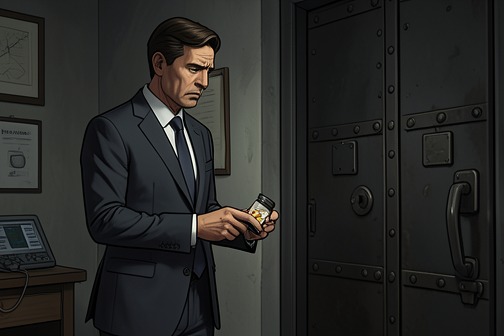
The [Hymalete Drug Scandal and BioSphere Pharmaceutical Fraud Case](entity:event-recall-event-hymalete-biosphere-3da70768788e) turns a family’s unanswered questions into a confrontation with corporate misconduct. For [Dane Bishop](entity:character-recall-character-dane-bishop-7c521da04faf), the case begins with the medication his brother [Benton Bishop](entity:character-recall-character-benton-bishop-8333894c0bca) had recently started taking before the murders of their family. For BioSphere executive [Emily West](entity:character-recall-character-emily-west-6092a86bb798), it becomes a reckoning with a drug marketed by her company despite evidence that its benefits did not match its claims. Their discoveries expose more than a disputed treatment: they reveal an approval process allegedly corrupted for profit, surviving documentary evidence, and an institutional failure that left those seeking answers isolated.
## Origins and the unanswered harm
Benton Bishop’s doctor had told him that medication would improve his depression and post-traumatic stress symptoms, that it would take time to work, and that its side effects would fade. Dane came to believe that those assurances had been wrong. After the murders, he tried to defend [Benton](entity:character-recall-character-benton-bde6ed62da14) in court and in the press, arguing that [Hymalete](entity:object-recall-object-hymalete-560fe538624d), which Benton had recently begun taking, had caused the tragedy. The account establishes Dane’s belief and his effort to make the connection heard; it does not establish the medication as the proven cause of the murders.
Dane also tried to contact BioSphere, the drug’s manufacturer. Instead of addressing his concerns, the company referred him to its public relations department, whose responses left him with what he experienced as a runaround. His efforts to secure a hearing—in legal proceedings, public discussion, and through the manufacturer—failed. That history gives the later evidence its personal stakes: the scandal is not an abstract dispute over marketing, but the answer Dane had sought while believing that his brother and family had been failed by the treatment and by the institutions around it.
## Evidence and confrontation
The decisive shift comes when Emily tells Dane that study after study shows Hymalete does not work as effectively as BioSphere claims. Dane takes this as confirmation that the company has been lying and sees the research as a means of holding those responsible accountable. Emily’s response is not simple certainty or professional detachment: she asks how she could have failed to know, and her anger gives way to fear as she confronts the implications of what she has learned. Their reactions connect the findings to both Dane’s personal campaign and Emily’s recognition of her own company’s betrayal of people who trusted it.
Emily’s investigation leads her to confront [Edward Barker](entity:character-recall-character-edward-barker-30c0e5d7cc69) in his office. She accuses him of getting Hymalete approved while knowing it was faulty, and insists that people took it hoping to ease their suffering when it was no better than a sugar pill. Barker does not deny that he pushed it through approval. Instead, he treats the approval as part of the business of selling drugs and making money, then points to the profit it brought in. The scene turns suspicion into an explicit admission of the company’s commercial priorities, though it does not by itself settle every question about who else knew or what every person’s role was.
Emily subsequently tells Dane and [Jas Robertson](entity:character-recall-character-jas-robertson-6a0f9315f74b) that Barker had been running the scheme: pushing the drug through approval and bribing federal inspectors. She warns that the misconduct may reach the company’s upper levels, including its board. Her account draws on emails she has seen and her direct conversation with Barker; she describes complaints and legal challenges as matters he regarded as minor inconveniences, with suits and fines expected to make only a small dent in profits. This expands the scandal from an individual executive’s conduct to a possible corporate structure of concealment and calculated tolerance.
## Records, exposure, and consequences
Emily brings up files she has pulled from BioSphere’s servers and shows them to Dane and [Jas](entity:character-recall-character-jas-80c0fa57a0ec) on her computer. Dane recognizes them as the records he had been searching for and on which he had staked his brother’s future. Jas, encountering their contents, reacts with shock at the scale of what they appear to document. The files matter not merely as corroboration between Emily and Dane, but as evidence capable of carrying the case beyond private discovery and into public and legal scrutiny.
A year later, Emily describes the aftermath as a period marked by trials, headlines, bankruptcies, recriminations, and tabloid attention. Federal scrutiny has arrived: the [Food and Drug Administration](entity:organization-recall-organization-food-and-drug-ad-284249899b35) and the [United States Department of Justice](entity:organization-recall-organization-united-states-de-a9a6b733a21b) have become involved. BioSphere is sued and fined into collapse, while the board members escape criminal consequences and take much of the public heat. Barker, by contrast, is on trial and facing substantial potential prison time. Files that survived a company data purge because they had reached Emily’s personal email account become part of the case against him. The contrast between the board’s outcome and Barker’s prosecution leaves the scandal’s accountability uneven even as the company itself is financially destroyed.
The scandal also becomes inseparable from the hostage hoax Dane uses to force attention onto what he and Emily uncovered. In the year-later account, the public controversy surrounding Hymalete has overshadowed Emily’s personal experience of that crisis, while the hostage situation has drawn persistent curiosity of its own. The means of exposure therefore carries a cost: the misconduct enters public view through a sensational event that complicates how the people involved are seen and remembered.
## Significance
The case is built around a collision between private testimony and institutional power. Dane’s early warnings were diverted to public relations and met with disbelief; Emily’s access to internal records and her confrontation with Barker give those warnings a documentary basis. Yet evidence does not produce uniform justice: BioSphere collapses, Barker faces trial, and the board avoids criminal consequences. The scandal’s resolution is consequently both an exposure of wrongdoing and a record of limits—of how easily corporate assurances can outrun the evidence, how long an individual can be left unheard, and how accountability can fall unevenly even after concealed records reach the public.
Event 11
Dane Bishop's kidnapping of Emily West and family hostage crisis
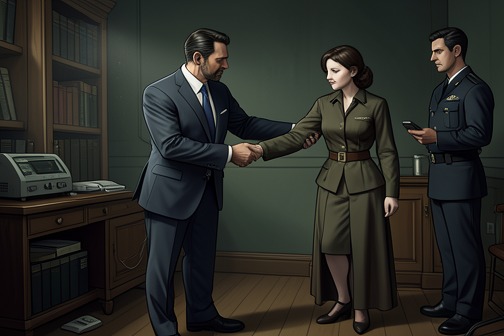
[Dane Bishop's kidnapping of Emily West and family hostage crisis](entity:event-recall-event-dane-bishop-emily-west-935755a7d7b4) is the point at which Dane recasts his campaign for his brother as a public spectacle. Seeking to expose BioSphere’s handling of [Hymalete](entity:object-recall-object-hymalete-560fe538624d) and raise support for [Benton Bishop](entity:character-recall-character-benton-bishop-8333894c0bca), he makes Emily—the company’s CEO—the apparent hostage in a crisis designed to draw national attention. The event’s defining tension is that the danger and coercion are real, but the public-facing emergency is also deliberately staged: Dane and Emily work to make the performance convincing enough that officials and reporters treat it as genuine.
## Causes and Stakes
The crisis grows out of Dane’s demand that Emily obtain backup files and keep the police out of the matter. He gives her two hours and threatens [Jas Robertson](entity:character-recall-character-jas-robertson-6a0f9315f74b) if she fails, making [Jas](entity:character-recall-character-jas-80c0fa57a0ec) a lever in his effort to control Emily. When Emily asks what would happen if an accident or a problem with the files intervened, Dane offers no extension or accommodation. The deadline establishes the immediate pressure under which the later hostage plan takes shape: Emily is not simply a public figure brought into a media strategy, but someone Dane has already threatened and physically restrained.
Dane’s stated cause is his brother’s case. [Benton](entity:character-recall-character-benton-bde6ed62da14) is on death row for killing his wife and children during a psychotic break associated with years of service in the [United States Army](entity:organization-recall-organization-united-states-ar-bc24e4a38db1). Dane also contends that Benton had taken Hymalete, a BioSphere medication that was being marketed to service members and first responders with similar symptoms. He alleges that the drug did not work and may have worsened Benton’s condition. The crisis therefore joins a family appeal for Benton’s defense to a broader accusation about a medicine intended for vulnerable groups.
## From Private Pressure to Public Stunt
Over sandwiches, Dane tells Emily he has worked out how to make [The New York Times](entity:organization-recall-organization-the-new-york-tim-bb503dc75ff2) run the story: a hostage situation. His proposal changes the method of his campaign. Rather than relying only on the files or on Emily’s position inside BioSphere, he plans to produce an emergency that the media cannot easily ignore. The hostage narrative makes Emily’s corporate identity central to the story and turns the threat against her into the means of generating coverage.
Dane presents the plan as a way to force BioSphere to respond and to advance Benton’s defense. He also brings out a dog collar and leash, placing them on the desk after telling Emily that, if she will not help, he will help himself. The gesture connects his demand for cooperation to the rules of captivity already imposed on her. He appeals to her stated feelings for him as another reason she should assist with the story and Benton’s legal fund. The plan’s emotional and political claims thus sit alongside a direct demonstration of his control.
## The Recording and the Demands
Dane records a video addressed to [Charlene Padilla](entity:character-recall-character-charlene-padilla-5d3c149c9699). He identifies himself and Benton, outlines the public account of Benton’s crimes and mental state, and then sets out what he says has been kept from the public: Benton’s use of Hymalete, the possibility that it aggravated his symptoms, and BioSphere’s alleged possession of evidence that the medicine failed. He further claims that the company falsified data and pushed the drug through federal oversight. These are Dane’s allegations in the recording, not independently established findings within the event.
As the video continues, Dane holds a pistol against Emily’s head and turns the camera toward her. He identifies her as BioSphere’s CEO and threatens further harm if his demands are not met within twenty-four hours. The recorded threat is intended to make the crisis appear urgent and credible; it also raises the stakes beyond the earlier two-hour deadline concerning backup files and police involvement. The two deadlines serve different purposes: one pressures Emily in private, while the other gives the public hostage story its ultimatum.
In his call with [Charlene](entity:character-recall-character-charlene-a85b9957e307), Dane specifies four demands: thirty million dollars for Benton’s defense fund, BioSphere’s admission that Hymalete has failed, publication of the true documentation on its experiments, and an exclusive interview with Charlene so he can present his account. Charlene questions how extreme the situation is, but Dane insists that the lives of Benton and Emily are at stake. His list makes the crisis both a ransom demand and an attempt to compel a corporate admission, disclose evidence, and secure a media platform.
## Public Emergency and Staged [Captivity](entity:state-recall-state-captivity-0bc31185b3d3)
After Charlene calls back, Dane and Emily turn on CNN and see the hostage crisis reported on television. The broadcast describes BioSphere’s CEO as held at home by a distressed family member of a customer on death row. That framing compresses Dane’s claims into a dramatic public headline, linking Emily’s abduction to Benton’s case while making the alleged corporate misconduct secondary to the immediate emergency. The coverage confirms that the plan has reached the audience Dane wanted, though the visible headline does not show whether any of his demands have been met.
The response outside escalates quickly. Within less than two hours, news helicopters are overhead, media vans and satellite uplinks occupy the neighborhood, and SWAT vehicles form a heavily armed perimeter that effectively locks the area down. Emily recognizes from the scale of the response how much power her position as CEO gives the crisis to attract attention. Her brief thought about neighbors whose dog had repeatedly left waste in her yard gives the otherwise tense neighborhood scene a domestic, wry counterpoint.
For appearances, Dane and Emily decide that she should be tied to her chair again, this time in the living room with the curtains drawn. The detail clarifies the event’s double character: they are actively maintaining the hostage image even as the police perimeter and media presence make that image consequential beyond their control. Emily’s awareness that outsiders may no longer believe a sudden announcement that the crisis is a stunt underscores the risk of the performance. The episode ends with the neighborhood sealed off and the staged emergency operating as a real public crisis, its outcome and the fulfillment of Dane’s demands unresolved in this account.
Event 12
BioSphere总部人质对峙

The [BioSphere headquarters](entity:location-recall-location-biosphere-headquarte-59900deb9cf8) hostage standoff is the confrontation in which [Dane Bishop](entity:character-recall-character-dane-bishop-7c521da04faf) uses a hostage to reach [Edward Barker](entity:character-recall-character-edward-barker-30c0e5d7cc69) and press him over BioSphere’s [Hymalete](entity:object-recall-object-hymalete-560fe538624d) scandal. It turns Dane’s pursuit of answers into a public crisis: employees flee, police surround the building, and his dispute with an executive ends at the entrance beneath a police response. The scene also distinguishes what Dane alleges about Barker from what the encounter actually establishes, leaving the accusation unresolved in the available account.
## Causes and Background
Dane arrives at BioSphere headquarters intent on reaching Barker, the company’s head of sales. The immediate objective is not to confront [Emily West](entity:character-recall-character-emily-west-6092a86bb798): Dane tells [Jas Robertson](entity:character-recall-character-jas-robertson-6a0f9315f74b) that Emily is safe and that he is acting to address their shared problem. He later makes the purpose more explicit to Barker, demanding money and the truth about whether Emily was behind Hymalete. His questions place responsibility for the drug’s rollout and the effort to blame Emily at the center of the confrontation.
Dane turns to a hostage because he needs access to Barker’s office. [Jas](entity:character-recall-character-jas-80c0fa57a0ec) is the person closest to him when he enters the lobby, and he acknowledges that her proximity, rather than any particular role in the dispute, made her the person he seized. He regrets putting her in danger, but proceeds, treating the risk to her as part of a plan he believes will get him to the executive and the truth.
## The Lobby and the Route Upstairs
Jas, arriving with her purse and an empty travel mug, recognizes Dane as he bursts into the lobby. She begins to retreat, but he catches her, holds her close, and draws his pistol. The employees respond with immediate alarm: roughly ten people shout, push toward the exits, and try to get away. An older employee calls for security and warns that Dane has a gun. The scene’s ordinary workplace details give way to evacuation and confusion as Dane uses the weapon and Jas’s presence to force a path through the building.
Dane tells Jas to remain calm and asks her to get him to Barker’s office. She is frightened and begins to hyperventilate; his assurance that Emily is safe eases her only somewhat. He tells the security guards that he is going upstairs and threatens Jas’s life if anyone tries to stop him. The guards look toward one another and toward police gathering around Emily’s Escalade, which Dane has left in the small concrete plaza. He then has Jas press the elevator button and takes her with him.
At the elevator, Jas wishes him luck with a warm smile before the doors close. Her cell phone begins to ring as they shut. Once upstairs, Dane follows her directions through the cubicles to Barker’s office. That sequence makes Jas more than a silent prop in the passage: despite the terror of being held, she provides the directions that bring Dane to the person he is seeking.
## Barker’s Office and the Accusation
Barker is seated at his desk with a large, overfilled duffel bag in front of him and a pistol in his hands. His greeting is barely surprised, and he remarks that Dane is early. The scene does not explain the bag or establish why Barker is armed, so neither detail resolves the larger question of what he expected. They do, however, make clear that Dane enters an office where the executive is also prepared for a potentially dangerous encounter.
Dane closes and locks the door, then lowers his own gun and tells Barker he has not come to hurt him. He wants money as well as an answer about Emily and Hymalete. Barker initially says nothing; Dane reads a fleeting suggestion of a smile, then doubts what he has seen. The executive’s silence leaves Dane to make the case against him directly rather than drawing a confession from him.
Dane claims that he has seen files, emails, and memos showing Barker approved Hymalete’s rollout despite knowing it had failed, and that Barker intended to place the blame on Emily. Barker answers with a dismissive laugh. Dane then says that the evidence is being reported and that Barker could see it on CNN. The exchange introduces a crucial difference between allegation and proof: Dane presents records and imminent reporting as leverage, but Barker does not confirm the accusation, and the encounter does not independently verify what the records contain or what the broadcast shows.
## Exit and Police Confrontation
After Barker’s continued resistance, Dane calls out a fake gunshot, frightening him, and then pulls him to his feet and orders him out of the office. Dane keeps Barker ahead of him on the way to the elevator, positioning him away from its controls. In the lobby, the prospect of the police outside registers as a new danger, but Dane continues toward the entrance with Barker in front of him.
Beyond the doors, the police helicopter, bullhorns, and distant sirens arrive together as a barrage of sound. Dane slows to cope with the input. A police voice calls his name and orders him to put down his weapon and raise his hands. Barker runs toward the barricades; Dane lifts his weapon by its trigger guard while police laser dots move across the concrete toward him. He appears not to treat the lasers as an immediate threat, reasoning that police could have shot him earlier and noting that he did not use Barker as a human shield at the exit.
The account ends with the standoff at that exposed threshold, not with a reported resolution to the police order. The shift from a controlled effort to reach Barker to a confrontation in the plaza is the scene’s decisive reversal: Dane has secured access to the executive and voiced his accusations, but the question of Hymalete’s responsibility remains unsettled as the police crisis takes over.
Event 13
Benton Bishop's Family Murders and Death Sentence
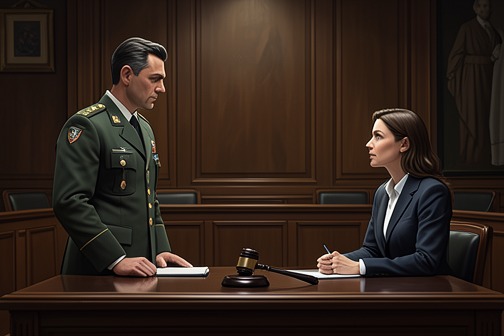
[Benton Bishop](entity:character-recall-character-benton-bishop-8333894c0bca)’s Family Murders and Death Sentence are the personal tragedy at the center of [Dane Bishop](entity:character-recall-character-dane-bishop-7c521da04faf)’s attempt to expose BioSphere. [Benton](entity:character-recall-character-benton-bde6ed62da14) was imprisoned on death row for murdering his wife and children during a psychotic break. Dane argued that the case could not be understood apart from Benton’s military service and his use of [Hymalete](entity:object-recall-object-hymalete-560fe538624d), a BioSphere medication that, he alleged, failed to help and may have worsened his symptoms. The family loss gives Dane’s campaign its intimate stakes; the possibility of concealed drug evidence turns it into a challenge to the company and the system that approved its product.
## The Murders and the Death Sentence
Benton’s crime is described as the killing of his wife and children, and Dane later refers to the victims as his sister-in-law, niece, and nephew. Benton was sentenced to death and remained on death row when Dane sought help from [Emily West](entity:character-recall-character-emily-west-6092a86bb798). The account identifies the murders and the sentence as established parts of the public record; it does not supply further details about the trial or the killings themselves.
Dane connected the crime to Benton’s psychotic break, which he attributed to years of service in the [United States Army](entity:organization-recall-organization-united-states-ar-bc24e4a38db1). In the recorded statement he made for [Charlene Padilla](entity:character-recall-character-charlene-padilla-5d3c149c9699), he characterized Benton as having been in the midst of such a break when he killed his family. This explanation does not erase the deaths or Benton’s responsibility as presented in the case. Instead, it shifts attention toward the circumstances surrounding his mental health and the treatment he had trusted to help him.
## Hymalete and the Disputed Explanation
According to Emily’s account to [Jas Robertson](entity:character-recall-character-jas-robertson-6a0f9315f74b), Dane first came to her office the week before the car accident, not for a business meeting but to draw attention to Benton’s case. He wanted her assistance in bringing out the truth and obtaining evidence about what BioSphere knew concerning Hymalete. His aim was to find grounds that might exonerate Benton. Emily made clear that she had not really begun working with Dane before that point, distinguishing his initial appeal from the later cooperation that became part of their story.
Dane’s hostage video set out the case he wanted the public to hear. He said Benton had taken Hymalete, manufactured by BioSphere, and maintained that the drug had not worked and might have aggravated Benton’s symptoms. He also stressed that the medication was being marketed to first responders and service members experiencing similar symptoms, with the promise of restoring their mental health. In his presentation, Benton’s experience therefore raised a broader question: whether people facing comparable distress were being offered a treatment that had already failed in a devastating case.
## The Alleged Evidence and Dane’s Response
Dane claimed that BioSphere’s servers contained proof that Hymalete did not work, that the company had falsified its data, and that it had pushed the drug’s approval through federal oversight. These are allegations made in his recorded appeal, not independently demonstrated findings in the scenes recounting the case. Their importance lies in how they connect Benton’s death-row sentence to a possible corporate concealment: if the evidence existed as Dane described, the case against Benton might have to be reconsidered alongside BioSphere’s conduct.
When confronting [Edward Barker](entity:character-recall-character-edward-barker-30c0e5d7cc69), Dane said he had obtained everything he needed from him. He considered killing Edward, whom he held responsible for packaging a drug that Dane believed had led to his brother’s crime and the deaths of his niece, nephew, and sister-in-law. The confrontation makes plain how closely Dane’s demand for accountability is bound to private grief. His pursuit of evidence is directed toward Benton’s fate, but it is also charged by the loss of the family members who were killed.
## Public Meaning and Aftermath
Emily later described the case in an interview with [Charlene](entity:character-recall-character-charlene-a85b9957e307) as an injustice: Benton had trusted BioSphere and his doctors to help him, yet, in Emily’s account, the treatment had failed and he had suffered. She attributed Dane’s decision to force the matter into public view to his perception that people with power had failed to do their jobs. She further accused BioSphere executives of putting shareholder enrichment ahead of the service members and first responders the drug was intended to help. Her explanation presents Dane’s actions as a response to both his brother’s sentence and a suspected institutional betrayal.
The story does not provide a final resolution of Benton’s case in these accounts. Instead, it establishes why Dane believed the sentence could not be separated from Hymalete and why he sought evidence that might overturn it. The contrast between a publicly known murder case and the alleged private records on BioSphere’s servers supplies the event’s central tension: Benton’s punishment appears settled, while the truth about the drug and the company’s knowledge remains contested. His family’s deaths are both the irreversible loss that drives Dane and the reason the claimed evidence carries consequences beyond one prisoner.
Event 14
Benton Bishop's Exoneration and Release
[Benton Bishop](entity:character-recall-character-benton-bishop-8333894c0bca)’s exoneration and release turn a legal reversal into a difficult family exchange: [Benton](entity:character-recall-character-benton-bde6ed62da14) regains his freedom after treatment, while [Dane Bishop](entity:character-recall-character-dane-bishop-7c521da04faf) watches from prison, serving time for helping secure his brother’s release. Their reunion is shaped not by uncomplicated celebration but by the question of who should bear responsibility for the harm surrounding BioSphere and [Hymalete](entity:object-recall-object-hymalete-560fe538624d).
## The Appeal and Benton’s Release
Money from the lawsuit against BioSphere financed the legal defense prepared for Benton. The suit concerned the company’s knowing release of a harmful product and its misleading of customers and doctors. As the scandal became public, Benton’s defense won an appeal that admitted new evidence; his sentence was changed on the basis of temporary insanity.
Benton was released after completing treatment at a facility. His freedom came after a long period of confinement and a legal process that revisited the circumstances behind his sentence. The change restored his ability to live outside custody, but it did not restore the family life he had lost.
## The Interview and the Cost of Dane’s Imprisonment
After Benton’s release, he and Emily sat across from [Charlene](entity:character-recall-character-charlene-a85b9957e307) for an interview. Dane, still incarcerated, watched the exchange on television from the prison’s TV room. The physical distance between the brothers remained, even as Benton’s freedom became a shared subject of public discussion.
Asked what it had been like to have Dane imprisoned, Benton described the experience as painful: in his view, his brother had effectively taken his place by getting him out while putting himself inside. Benton believed Dane was not truly guilty of anything beyond trying to help his brother set things right, but accepted that consequences had to follow. His response holds affection and judgment together rather than treating Dane’s sacrifice as a simple triumph.
Charlene raised the possibility that Dane’s sentence was light. Emily challenged the premise by weighing it against the absence of physical injury: she emphasized that Dane had not hurt anyone, including the person who masterminded the deception around Hymalete or BioSphere’s board. She contrasted that with the company’s actions, which had harmed first responders and military veterans, many of whom were pursuing claims against what remained of the corporation. She also recalled that police officers who took Dane into custody had told her they appreciated what he had done and would have let him go if they could.
## Competing Ideas of Responsibility
Benton called Dane a hero, arguing that Emily had tried to withdraw Hymalete but that BioSphere would have returned it to the market after forcing her out, in pursuit of further profits. In Benton’s account, Dane’s actions stopped that outcome. Dane, watching from prison, did not see himself in the heroic terms used by the interviewees. His immediate purpose had been to free a brother he believed had been wrongly imprisoned; he distinguished having committed an act from being morally responsible for the crime attributed to him.
The interview therefore places two measures of justice beside each other. Benton and Emily judge Dane’s conduct by its intended protection of others and by the damage BioSphere had caused; Dane remains focused on his brother’s freedom and on the consequences he himself must face. The public praise does not erase his imprisonment, and Benton’s release does not make the brothers’ exchange of places feel painless.
## Rebuilding After Release
Asked about the future, Benton answered in terms of healing. Since returning, he felt that his life had been dismantled, and he wanted to rebuild and move forward despite his losses. He understood that work as a way of honoring his family’s memory. His release thus begins a period of recovery rather than presenting freedom as a complete resolution.
Emily offered a different sign of a future taking shape: she shyly showed an engagement ring and said that she had met someone at her new company. Her news shifts the interview from the brothers’ imprisonment and release toward the lives continuing beyond the scandal, while Benton’s stated priority remains the slower work of personal healing.
Event 15
Dane Bishop's Sentencing and Release from Prison

[Dane Bishop](entity:character-recall-character-dane-bishop-7c521da04faf)’s sentencing and release mark a change in custody, but not a clean return to freedom. He accepts responsibility for the crimes that sent him to prison, while insisting that the legal fund he could have used for himself mattered more to his brother [Benton Bishop](entity:character-recall-character-benton-bishop-8333894c0bca)’s defense. When Dane finally walks beyond the prison fences after more than a year, gratitude from a man he helped and the open road ahead cannot erase his losses or make release feel like a fresh beginning.
## Responsibility and the Cost of the Sentence
Dane’s imprisonment follows a series of actions he does not deny: he fabricated an incident that consumed valuable police resources and held [Edward Barker](entity:character-recall-character-edward-barker-30c0e5d7cc69) at gunpoint. In his own reckoning, acknowledging those acts is part of accepting responsibility, not a reason to claim that every charge defines the whole meaning of what he did. He distinguishes between having committed acts and being answerable for them, and has already decided to bear the consequences rather than redirect them toward his brother.
That choice is especially clear in his decision to leave the legal fund for [Benton](entity:character-recall-character-benton-bde6ed62da14)’s defense. Benton, wrongly imprisoned for a crime he was not guilty of, needed the money more, and Dane treats his own year behind bars as a price worth paying for Benton to be alive and free outside prison. His release therefore arrives after a sentence he considers bearable in comparison with the outcome he helped secure for his brother. The personal cost is real, but Dane has already placed it within a larger family obligation.
## Public Praise and Private Judgment
A week before Dane’s release, he watches a talk-show interview with Benton and [Emily West](entity:character-recall-character-emily-west-6092a86bb798) conducted by [Charlene Padilla](entity:character-recall-character-charlene-padilla-5d3c149c9699). Emily argues that Dane did not injure anyone and that his actions helped stop BioSphere from returning [Hymalete](entity:object-recall-object-hymalete-560fe538624d) to the market after she was forced out. Benton adds that Dane prevented the company from resuming its pursuit of profit at the expense of people who had been harmed. Their account presents Dane as a public benefactor, and Emily says even the police who took him into custody had expressed gratitude for what he had done.
Dane does not take comfort in being cast as a hero. The praise on the screen describes consequences he had not been thinking about when he acted; his immediate purpose had been to get Benton out of prison for a crime Benton had not committed. Nor does public admiration persuade Dane that he is innocent of his own offenses. The contrast matters: the interview weighs the good that came from stopping BioSphere against the harms done to first responders and veterans, while Dane measures himself against the crimes for which he accepts responsibility. The same course of events can make him a source of help to others and a man who must answer for his own choices.
## The Release from Prison
At the prison property desk, an older corrections officer checks Dane’s voucher and asks him to confirm his name. The question carries a modest but important change: after too long being identified as a number, Dane can answer with his own name. The officer retrieves Dane’s worldly possessions from a plastic tub and returns them sealed in a bag. The procedure is practical and impersonal, yet it makes the change in status concrete: the prison is handing back what it has held while he was inside.
Before he finishes the outtake process, a veteran recognizes him and thanks him. The man says that papers Dane released helped keep his marriage intact when medication worsened matters, and that he won his lawsuit because of them. The encounter supplies a direct example of the effects attributed to Dane’s actions in the interview. But the gratitude does not ease the hurt of losing a year of his life, or the ache of Emily having found another man. Dane gives a brief welcome, does not smile, and continues through the remaining steps. Recognition confirms that he mattered to someone; it does not restore what he feels he has lost.
The guards escort Dane along the walk and through a chain-linked corridor to the road, where a cab is waiting. They wish him luck as he passes beyond the fences, free for the first time in over a year. He breathes in the freedom of being outside, but the road is empty and desolate. He has not called for a car, and he has deliberately kept his release date from Benton because he did not want his brother waiting there. Once he is alone at the roadside, however, he regrets that decision a little. His effort to manage the moment by himself has left him without the welcome he might otherwise have had.
## Freedom Without a Fresh Start
Dane understands this release through the memory of an earlier one: his freedom after leaving the military. That earlier opening was cut short by the problems involving Benton, and Dane feels that he never truly had a fresh start, only a false one. The comparison keeps the prison gate from functioning as a simple ending. He is outside again, but the past has already taught him that a change in formal status does not by itself create a new life.
The scene consequently makes release a qualified victory. Dane has completed his year, preserved the resources he thought Benton needed, and receives evidence that his released papers helped another person. At the same time, the costs remain present in his strained response to gratitude, his private grief over Emily, and his uncertainty at the roadside. His freedom is real, but its first image is not a reunion or a settled destination: it is a man with his possessions in a sealed bag, facing an empty road and recognizing that he must begin again without knowing whether this beginning will last.
Event 16
Dane Abducts Emily from the Wedding
[Dane Abducts Emily from the Wedding](entity:event-recall-event-dane-emily-4e63f06481bb) is the sudden interruption of [Emily West](entity:character-recall-character-emily-west-6092a86bb798)’s wedding and a deliberate reprise of her earlier abduction by [Dane Bishop](entity:character-recall-character-dane-bishop-7c521da04faf). In front of her assistant, [Jas](entity:character-recall-character-jas-80c0fa57a0ec), Dane uses a syringe to sedate Emily, then takes her from the bridal suite and drives away. The scene turns the wedding’s expected departure into a forced one: Emily leaves in her dress, barefoot and drugged, while Jas is left calling after her to get help.
## The Abduction
A knock at the bridal-suite door interrupts Jas’s questions about Emily’s doubts over her choice. Emily expects her mother, opens the door herself, and finds Dane instead. Before she can do more than recognize him, he stabs a syringe into her thigh through her dress. She identifies him aloud, and he tells her that she is coming with him. The injection is especially unsettling because Emily realizes the sedative is her own. Its effects, compounded by champagne, quickly blur her thoughts and weigh down her eyelids. As Dane pulls her away, he apologizes to Jas and says he has to do it; Emily calls back for Jas to get help, but makes little effort to resist.
## The Repeated Route
As the sedative takes hold, the scene folds back on itself: Emily is carried in memory to the day she first met Dane, a little over a year earlier, when he had stuffed her into the passenger side of her Escalade. Now the elevator delivers them to the parking garage, where he puts her into the passenger seat of an older Honda Accord. The change of car cannot disguise the repeated arrangement. The wedding dress and bridal suite have replaced the circumstances of their first encounter, but the passenger seat again becomes the place where Dane’s decision overrides Emily’s freedom.
The ride also marks a change in Emily’s own sense of certainty. Slumped beside Dane, she no longer feels that she knows what is best for everyone, including herself. Her confidence in [Ian](entity:character-recall-character-ian-3cefd5118552) as the man who would give her a good life gives way to the unsettled recognition that such a life might not have been fun. The abduction therefore interrupts not only the wedding but Emily’s settled expectation of what her future should be.
## The Interrupted Choice
The abduction arrives at the precise point where Emily West’s own decision has become difficult to defend. [Jas Robertson](entity:character-recall-character-jas-robertson-6a0f9315f74b) asks when Emily last felt so uncertain about a choice that she needed a drink to go through with it; Emily cannot answer, because she knows the question is fair. The knock cuts off that exchange without resolving it. Instead of speaking through her doubts, Emily is abruptly placed in a situation where someone else makes the consequential choice for her.
That interruption sharpens the scene’s contrast between a wedding and an abduction. Emily’s bridal dress marks the future she had been preparing to choose, while the sedative leaves her increasingly unable to act on the choice at all. Her subdued response is presented alongside the champagne and the drug’s effects, not as a clear decision to follow Dane Bishop. The event thus leaves her doubts about Ian unresolved even as it overturns the wedding’s expected course: uncertainty about one future becomes immediate loss of control over what happens next.
## The Departure's Unresolved Meaning
Dane Bishop gets Emily West out of the garage and onto the road, but the scene does not turn her impaired stillness into agreement: she is sedated, slumped in the passenger seat, and being driven away from her wedding. What changes is her confidence in the future she had arranged. Ian had seemed capable of giving her a good life; now, amid the drug’s effects, Emily wonders whether that life would have been fun. The departure closes on that destabilized judgment rather than a settled choice, leaving the wedding’s interruption and Emily’s doubts unresolved.
Event 17
Dane and Emily’s Wedding

[Dane and Emily’s Wedding](entity:event-recall-event-dane-emily-40680f141f92) is the backyard ceremony in which [Dane Bishop](entity:character-recall-character-dane-bishop-7c521da04faf) and [Emily West](entity:character-recall-character-emily-west-6092a86bb798) make their relationship a marriage. Its significance lies not only in the officiant’s pronouncement, but in the promises leading up to it: each describes a bond of mutual support and trust, while Emily’s account makes clear that her willingness to submit is her own choice.
## Preparation and Setting
The wedding follows soon after the couple persuade [Geraldine West](entity:character-recall-character-geraldine-west-8aeda5ccdaf3) to remain in town for several days. While she is there, they put Emily West’s backyard in order, and Dane and [Benton Bishop](entity:character-recall-character-benton-bishop-8333894c0bca) have their tuxedos fitted. The preparations are practical and shared: the ceremony takes place at Emily West’s home, with its garden made ready to receive the people closest to the couple.
On the day, Dane stands with his hands folded in front of him and [Benton](entity:character-recall-character-benton-bde6ed62da14) at his left as best man. They face the back of the house while a string quartet begins [Here Comes the Bride](entity:expression-recall-expression-here-comes-the-bri-2202d16ce0c5). The arrangement sets the scene in motion without grandeur: a familiar wedding melody, a garden aisle, and the people who will stand beside the couple as they exchange vows.
## Emily’s Arrival
Dane is already grinning so broadly that his face hurts; his heart feels so full that he imagines it might burst from his chest. As Emily approaches, the scene swims before him and his eyes begin to water. Benton nudges him, drawing attention to the bride, but Dane’s gaze returns to her. His emotional response makes the ceremony’s importance visible before either person speaks: for him, this is not simply a formal occasion, but a happiness he can scarcely contain.
Emily wears a simple ivory dress rather than a long train or an abundance of ruffles and lace. Its restraint suits the wedding’s intimate setting. Her veil covers her face as she walks slowly down the aisle, carrying a bouquet made from flowers she had started growing after Dane advised her the previous year. That detail binds the moment to an earlier part of their shared life: the flowers have become a tangible part of the ceremony, carrying a trace of their history into the promises they are about to make.
[Jas Robertson](entity:character-recall-character-jas-robertson-6a0f9315f74b) smiles at the couple from across from Dane. Emily hands off her bouquet, then turns to Dane; together, they lift her veil. Dane experiences the gesture as a sudden brightening of the world. He tells her she looks beautiful, speaking in the dazed happiness that has accompanied her approach.
## Vows and Mutual Recognition
The officiant explains that the bride and groom have written their own vows and invites Dane to begin. Dane takes Emily’s hands, squeezes them gently, and promises to keep her in his heart through sickness and health, wealth and hardship. He also pledges to stand beside her, support her when she needs help, and build her up for however long they are together. The vow combines familiar marriage language with a particular promise about how he will treat her: his commitment is expressed as continued presence and encouragement.
Emily holds his hands tightly and tears up as he finishes. Her own vow answers his with commitments to remain with him through difficulty, love and hold him, and always come home to him. She promises to build him up rather than tear him down, and to trust his judgment. She calls him her guiding light and the conscience she needed, saying he will continue to be both. Her words present Dane not only as a husband but as someone whose influence has mattered to her—and whose place in her life she chooses to affirm.
That choice is important to the scene’s account of their relationship. Emily is no longer the neglected girl struggling to claim her place in a man’s world; she has become the person she hoped to be and does not need to lord her success over Dane. Nor does she need to be forced into submission. She understands that she can submit willingly, on her own terms, and that her accomplishments do not diminish his self-worth. The vows therefore frame the marriage as a meeting between people able to recognize each other’s independence, not as a victory that requires one partner’s erasure.
## Rings and Marriage
After the vows, the couple turn to their respective escorts and take their wedding rings while the officiant speaks about their symbolism. They exchange the rings and say their “I dos.” The sequence gives the ceremony a clear progression: personal promises are followed by the exchange of objects, then by the spoken assent that makes those promises a shared public act.
The officiant pronounces them man and wife and invites Dane to kiss the bride. Dane draws Emily into his arms, described as strong, warm, and supportive, and they kiss while holding each other upright in a chaotic world. When they part, they grin at one another like lovesick idiots; the narration emphasizes that they are happy ones. The ending returns the wedding from formal declaration to mutual affection. Their marriage is sealed by ceremony, but its emotional conclusion is the image of two people leaning on one another and openly delighted to have arrived there.
Event 18
Cormac and Scarlet Exchange Intelligence at the Bar
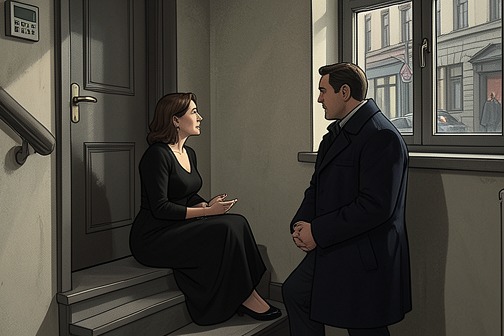
[Cormac and Scarlet Exchange Intelligence at the Bar](entity:event-recall-event-cormac-scarlet-6854b1a548b2) brings FBI agent [Scarlet O’Bannon](entity:character-recall-character-scarlet-o-bannon-e4e8eec22e5d) and Irish mobster [Cormac MacKay](entity:character-recall-character-cormac-mackay-0e15ee84c297) together over a troubling pattern inside Cormac’s organization. Their meeting at [The Leprechaun](entity:location-recall-location-the-leprechaun-59ea69fe97f2) turns personal tension into cautious intelligence-sharing: Cormac reports missing deliveries and people, while Scarlet admits she has no prior knowledge of the men reportedly held in [Los Angeles](entity:location-recall-location-a4be76fb5f5a). The scene’s central uncertainty is not only what has happened, but whether the [Federal Bureau of Investigation](entity:organization-recall-organization-federal-bureau-o-f1c5664278d2) knows more than Scarlet does.
## The Summons and the Setting
Cormac reaches Scarlet on her personal phone after she has been thinking about him at work. She answers from a stairwell and keeps her voice deliberately unemotional, trying to preserve the distance between an agent and a criminal informant. The encounter has already drawn scrutiny: [Max Smithson](entity:character-recall-character-max-smithson-19adbfea9da2) has teased her about being interested in Cormac and urged her to take the requested meeting. Scarlet rejects the suggestion that attraction has compromised her, yet she goes to see him.
Half an hour after the call, Scarlet arrives at The Leprechaun in clothes she considers less recognizably associated with the Federal Bureau of Investigation. The exterior contrasts age and renewal: a giant leprechaun model has faded to grey under years of weather, while the sign is new, green, and flashing. Inside, the bar’s atmosphere is conveyed through whisky, fried meat, cigarette smoke, sweat, and perfume. Cormac waits in a booth, tracing the rim of his glass with a forefinger. These details establish a space that belongs to his world, even as Scarlet enters it under the obligations of her own.
## Professional Distance and Personal Pull
The meeting carries a tension Scarlet cannot reduce to professional procedure. She describes Cormac as attractive, notes his wolf-blue eyes and soldierly build, and recognizes that her response to him unsettles the emotional discipline she has maintained since her younger sister [Tess](entity:character-recall-character-tess-7136fe16a68b) drowned. Her private fantasies of intimacy are immediately checked by her insistence that this is not the time or place for them. The attraction therefore does not resolve into romance; it sharpens the conflict between what Scarlet feels and the role she must perform.
Cormac’s manner presses against that restraint. He jokes that Scarlet is obligated to come because of her job and suggests she can sound unhappy about it if she wishes. She hangs up rather than answer, then appears at the bar anyway. When she threatens to leave if he has no useful information, he calls her a brick wall and points to the sweet dress she is wearing. The exchange makes their opposing performances visible: Scarlet uses formality and threat to reinforce professional boundaries, while Cormac uses familiarity and teasing to draw her closer. Her lipstick, which she does not want to ruin, even shapes a small practical gesture when he hands her a straw.
## The Missing Men and the Federal Connection
Scarlet opens the conversation by reminding Cormac that he left a message at the drop box claiming to have information. He initially denies knowing what she means, knocks back his whisky, and leaves her waiting while a waiter brings him another. The delay gives the meeting a teasing, evasive rhythm, but the information he eventually offers is concrete. He suspects that someone may be inside his organization because deliveries have gone missing and people have disappeared. His cousin [Mickey MacFarland](entity:character-recall-character-mickey-macfarland-47d8bce7146a) has been out of contact for about a week.
Cormac adds that he has learned two of the missing men are locked up, not in [New York City](entity:location-recall-location-7a11f2949ca3) but in Los Angeles. He has heard from a contact that they are with the federal authorities. A birthday scene unfolds beside this account: a man in a new, elaborate leprechaun outfit comes out of the kitchen carrying a cake and singing to ten-year-old twins in matching red shirts. The ordinary celebration provides a striking counterpoint to the possibility of criminal infiltration and unexplained arrests. Cormac watches Scarlet for an answer, apparently worried, and asks what is going on.
## Trust Without an Answer
Scarlet tells him honestly that this is the first she has heard of the situation. Cormac accepts her answer quickly, without pressing her or treating her denial as a deception. That trust unsettles her: he is a criminal speaking openly to an FBI agent, and she recognizes that trusting her is dangerous for him. Their earlier cooperation has involved taking down his rivals, even though she knows he has not given up members of his own organization. The meeting consequently rests on an unstable distinction between cooperation and loyalty.
Scarlet offers one possible explanation, carefully marked as conjecture: an agent could have arrested the men and sent them to Los Angeles to keep the matter quiet. She has heard nothing about such an operation, however, and her suggestion does not solve the mystery. Instead, the exchange leaves both sides with a question about the Federal Bureau of Investigation itself. Cormac has evidence of missing men and a report connecting them to federal custody; Scarlet has neither confirmation nor access to an explanation. The scene ends with intelligence exchanged but uncertainty intact, making their tentative trust useful precisely because neither can yet provide the other with certainty.
Event 19
Cormac’s Father Is Assassinated and Mickey Seizes Power
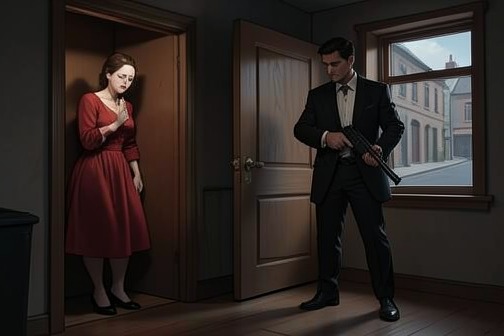
The killing of [Cormac MacKay](entity:character-recall-character-cormac-mackay-0e15ee84c297)’s father and [Mickey MacFarland](entity:character-recall-character-mickey-macfarland-47d8bce7146a)’s takeover mark a sudden transfer of power within the family and leave Cormac in immediate danger. The event is revealed through [Moira](entity:character-recall-character-moira-b5d51f7b4c94)’s shaken phone call: a quiet meeting planned over coffee becomes a murder, a coup, and a warning that reaches Cormac just as Mickey’s men find him.
## Setting and Immediate Circumstances
Cormac’s father had arranged to meet Moira for coffee at the compound, the family’s casino on the fifteenth floor. The casino was one of the family’s many covers around town, alongside bars, laundries, and electronics stores, but it had become his favorite and the family’s base of operations. The ordinary purpose of the meeting gives the violence that follows its first sharp contrast: Moira had come expecting time with her father, not an attack.
Moira tells Cormac that Mickey came into the compound carrying a large gun. Cormac initially objects that Mickey had been missing, making his return itself a startling turn in the account. Moira explains that her father had made her hide in a closet because there was noise outside. From there she witnessed Mickey kill him. Her account is fragmented by grief; she struggles to continue, then hurries through the sequence as though speaking quickly might keep her from breaking down again.
## The Killing and the Takeover
Moira’s account establishes both the manner of the killing and its political consequence. Mickey entered with a shotgun and shot Cormac’s father; Moira survived because she had been concealed in the closet at her father’s direction. The family’s meeting place, normally a center of operations, becomes the site where its leadership is violently displaced.
The death is not presented as an isolated attack. Moira tells Cormac that Mickey is now the family’s Don and has taken over the family. Her warning links the murder directly to a change in power: with Cormac’s father dead, Mickey’s return has become a seizure of control. The evidence establishes the outcome but does not describe a formal succession or the full mechanics of Mickey’s takeover.
## The Warning Reaches Cormac
Cormac is away from the compound, speaking with Moira by phone while at a bar with [Scarlet O’Bannon](entity:character-recall-character-scarlet-o-bannon-e4e8eec22e5d). When Moira urges him to leave wherever he is and come to her, she makes clear that she fears losing both her father and Cormac. Her warning is interrupted by another immediate threat: five of Mickey’s men enter the bar. Their tattoos, the knuckle dusters carried by some of them, and the outlines of guns beneath the clothing of others make them identifiable as armed mob men; Cormac concludes that they belong to Mickey.
The call changes Cormac’s priorities at once. He tells Moira to stay where she is, remain safe, and be smart, then hangs up so he can deal with the men entering the bar and get Scarlet out of danger. He reports the essentials to Scarlet in a deliberately cold, emotionless manner: his father is dead, the men helped kill him, his cousin has taken over the family, and they have come for him. His restraint is practical rather than evidence that the news has left him untouched; he sets aside his response because he believes emotion would interfere with what he must do next.
## Scarlet’s Response and the Event’s Stakes
Scarlet is already watching the approaching men, her hands near her handbag. When Cormac explains the danger, she tells him to turn toward her, nod, and act as though he is listening, hoping they will not recognize him. He follows her suggestion. Her confidence rests on an earlier instance in which she helped evade people following them: she pretended to be drunk, went onstage to sing karaoke, and made their pursuers think Cormac was simply out with a partygoer. In this scene, that remembered improvisation becomes a practical model for concealment.
The event therefore moves from concealed violence to an exposed threat in a public place. Moira’s testimony confirms the death and the change in leadership; the arrival of five armed men shows that the danger has traveled beyond the compound and reached Cormac. For him, grief must be deferred in favor of immediate survival and Scarlet’s safety. For Moira, the call is both an account of what she witnessed and an attempt to prevent the family’s new power struggle from taking another person she loves.
Event 20
The Leprechaun Shootout and Cormac’s Escape
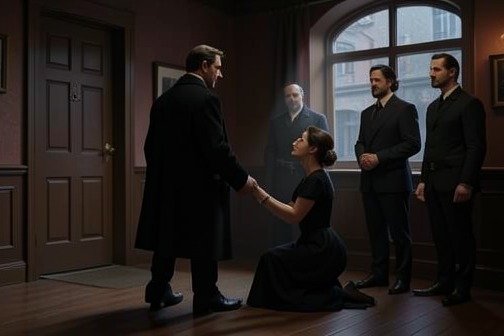
[The Leprechaun Shootout and Cormac’s Escape](entity:event-recall-event-the-leprechaun-cormac-3b1cfa5ec338) is a turning point in [Cormac MacKay](entity:character-recall-character-cormac-mackay-0e15ee84c297) and [Scarlet O’Bannon](entity:character-recall-character-scarlet-o-bannon-e4e8eec22e5d)’s flight from [Mickey MacFarland](entity:character-recall-character-mickey-macfarland-47d8bce7146a): five armed men arrive to confront Cormac, but Scarlet’s quick thinking and Cormac’s readiness transform the encounter into a retreat for the attackers. The clash also makes the new balance of power explicit: Mickey is now being recognized as Don, while Cormac is treated as a target whose old claim has been displaced.
## The Ambush at [The Leprechaun](entity:location-recall-location-the-leprechaun-59ea69fe97f2)
Before the confrontation becomes openly violent, Scarlet tries to buy time by carrying on a deliberately ridiculous conversation about the Electoral College and voting. Her haughty, intellectual performance is a variation on an earlier evasion: when the pair had once been followed to a meeting, she pretended to be drunk, took the stage, and sang karaoke so their pursuers would mistake Cormac’s company for an ordinary night out. Here, too, the performance is cover rather than a genuine diversion from the danger.
A man calls for Cormac to come along, threatening to expose them on CCTV. Cormac turns to face five men, who share the tattoos, jeans, and hard-worn appearance of the group confronting him. Their leader is a black-haired, heavily bearded man whom Cormac privately calls Blackbeard. The men’s numbers make clear that this is not a casual encounter, and Cormac addresses the group rather than only its leader: he knows they have come because of who he is and warns them to leave.
## Scarlet’s Intervention and the Change in Power
Blackbeard laughs at Cormac’s warning. At the same moment, Scarlet presses something metal against Cormac’s leg. He takes the gun she has passed him, and the concealed weapon changes the immediate odds. Cormac keeps the men’s attention on himself while Scarlet stands beside him with a second gun. When he asks why she has two, she answers that it is better to be safe than sorry.
The exchange displays an established difference between how the attackers read Scarlet and what Cormac knows about her. The men appear to take her for a harmless companion; Cormac knows she has an arrest record and has seen her physically overpower an Italian gangster. Now, with a weapon in each hand between them, Scarlet’s composure becomes visible to the men as well. She does not look frightened, and her steady presence turns the pair from apparently outnumbered targets into an armed opposition the five men must take seriously.
Cormac also steers Scarlet away from mentioning the FBI. He suspects Mickey may have connections there and worries that revealing Scarlet’s association could make her vulnerable to retaliation. The concern shows that the confrontation is not only about surviving the five men in the room: Cormac is also trying to keep information about their wider circumstances from reaching Mickey.
## The Standoff and the Attackers’ Retreat
Blackbeard dismisses the pair as a woman and an orphan, then insults Cormac’s mother and invokes the death of his father. Cormac responds by shooting Blackbeard in the knee. The other men freeze; Cormac steps forward, points his weapon at them in turn, and counts down. They drop their weapons and leave, though one calls back a threat that the conflict is not over.
The encounter’s balance shifts sharply: the five men entered as a force sent to compel Cormac, but leave without their guns after their leader is wounded and Cormac refuses to yield. The exchange also puts the succession crisis into words. Blackbeard tells Cormac that Mickey is Don now and that Cormac is no longer the Don’s son. The insult about Cormac’s father confirms the loss that the confrontation forces back into the foreground, even as Cormac tries to keep attention on the practical danger around them.
## Escape and Its Personal Undercurrent
After the men have gone, Cormac kneels to sort through their weapons. He takes a sawn-off shotgun and puts two handguns into his belt. Scarlet watches him, then asks whether he is all right and raises the subject of his father. Cormac acknowledges her concern as sweet, but insists that they need to get away before more of Mickey’s men return. He also fears the police may arrive, a possibility he keeps to himself because Scarlet might welcome it.
Cormac takes Scarlet by the hand and pulls her out of the bar and down the road toward his car. His attention remains fixed on escape, but the narration also lingers on the unexpected tenderness of holding her hand. That private reaction cuts against the surrounding violence and urgency: their alliance is practical, forged under threat, yet Cormac registers an intimacy that he himself treats as troubling. The scene ends not with Mickey’s conflict resolved, but with Cormac and Scarlet leaving together, armed with the attackers’ weapons and still exposed to the pursuit they expect to continue.
Event 21
Scarlet Suspects FBI Involvement in the Mob Coup

[Scarlet O’Bannon](entity:character-recall-character-scarlet-o-bannon-e4e8eec22e5d)’s suspicion of FBI involvement in the Irish mob coup begins with a casual nickname. On a call from [Max Smithson](entity:character-recall-character-max-smithson-19adbfea9da2), an FBI official, she hears him refer to [Cormac MacKay](entity:character-recall-character-cormac-mackay-0e15ee84c297) as “Cor”—a familiarity that makes her question whether the office’s interest in the unfolding crisis is as innocent as it seems. The clue is slight, but its consequences are immediate: Scarlet tests Max’s account, while Cormac’s distrust of the FBI turns the phone itself into a point of conflict.
## Context: A Coup and an Unanswered Question
Before the call, Cormac argues that [Mickey MacFarland](entity:character-recall-character-mickey-macfarland-47d8bce7146a) could not have made his move against Cormac’s father without help. He believes the FBI may have assisted Mickey, including by arranging for some of Cormac’s men to be sent to [California](entity:location-recall-location-7255928c66a8). Cormac contrasts Mickey’s perceived lack of judgment with his father’s intelligence and treats that difference as a reason to suspect outside backing. These are Cormac’s suspicions, not confirmed facts.
Scarlet resists treating suspicion as proof. She points to procedure and the rules that guide her work, distinguishing the FBI’s investigative world from Cormac’s. The ringing phone interrupts that argument: its display identifies the call as coming from the office. The ordinary interruption becomes consequential because the caller’s identity and choice of words may connect the institution Scarlet serves to the coup Cormac fears.
## The Call and the Slip
Max opens in a friendly, slightly awkward manner, asking how things are going in the field before deciding that Scarlet should return to the office as quickly as possible. He says that major players are making moves on the Irish mob and asks whether Cormac may have mentioned something. His knowledge of the situation could be consistent with an official response, but the casual reference to Cormac as “Cor” catches Scarlet’s attention. She registers the nickname as an unexpected sign of familiarity, not as conclusive evidence of collusion.
Scarlet’s reaction is sharpened by the call’s shift in tone. When Max repeats that she should return immediately, his voice sounds more commanding, and she senses possible desperation beneath the authority. She wonders why he is so intent on bringing her back when she considers herself low in the office’s hierarchy. The discrepancy between his insistence and her understanding of her standing adds pressure to the question raised by the nickname.
## Testing Max’s Account
Rather than accept the recall order at face value, Scarlet asks Max directly whether he has information that Cormac killed his father and taken over the mob. The question gives him an opportunity to confirm, deny, or qualify the intelligence. Max says he has heard nothing about it, then explains that Scarlet’s father asked him to bring her onto his team for the matter. He adds that the information about Cormac could be useful if it proves reliable.
His response does not resolve Scarlet’s concern. Max’s denial and proposed assignment offer an official explanation for his call, while his earlier use of “Cor” remains a small but troubling inconsistency. Scarlet recognizes that a larger case can turn on a minor clue and trusts her instinct enough to keep investigating, yet she does not claim the slip establishes that the FBI as a whole is involved. The scene holds the distinction between suspicion and proof in place: the clue matters precisely because it is suggestive, not decisive.
## The Broken Phone and the Breach of Trust
Before Scarlet can decide whether to go to the office or contact someone she trusts, Cormac closes the distance and takes the phone from her. He throws it against a wall, destroying it. The act removes her immediate means of continuing the call and makes Cormac’s distrust materially impossible to ignore. He frames their mutual suspicion as a means of survival: both, he says, have stayed alive by being wary.
Scarlet objects to the leap from distrust of one official to distrust of the entire FBI. She thinks she could meet with other people she trusts, but the destroyed phone has already narrowed her options. The event therefore ends without confirming Max’s connection to Mickey or settling whether Scarlet can rely on the bureau. Instead, a revealingly familiar form of address has changed the terms of the conflict: Scarlet now has reason to question an official, while Cormac’s response forces the question of trust between them into the open.
Event 22
Cormac and Scarlet Begin Fleeing Together and Investigating

[Scarlet O’Bannon](entity:character-recall-character-scarlet-o-bannon-e4e8eec22e5d) and [Cormac MacKay](entity:character-recall-character-cormac-mackay-0e15ee84c297) begin fleeing together not simply to get away, but to create room for an investigation they could not safely conduct in the city. With [Moira](entity:character-recall-character-moira-b5d51f7b4c94) beside them and the mob—and possibly the [Federal Bureau of Investigation](entity:organization-recall-organization-federal-bureau-o-f1c5664278d2)—searching for them, Scarlet turns flight into a plan: disappear long enough for their pursuers to relax, then return quietly and look for the truth. The decision also marks a personal shift. Scarlet, newly conscious of the danger to Cormac and his sister, promises to protect them and makes their safety part of the alliance.
## The decision to disappear
Moira’s distress makes the danger immediate. When she asks where they will go, she begins to cry. Scarlet responds by going to her, kneeling beside her, and squeezing her shoulder. The gesture recalls how Scarlet comforted Cormac in the bar and [Tess](entity:character-recall-character-tess-7136fe16a68b) after she fell; more painfully, it recalls her attempt to help Tess when the sirens were still far away. That chain of memories gives Scarlet’s reassurance a weight beyond strategy: she is responding to a present fear through the memory of an earlier loss.
Scarlet explains that leaving for a few days, a week, or perhaps longer is the safest course. She cannot bring herself to tell Moira outright that the people looking for them may kill them. Instead, she presents distance as a tactical pause: letting events settle can make pursuers feel secure and careless, creating an opening to find out what is happening. She promises to keep Moira and her brother Cormac safe. The promise exposes how much the escape has changed her role. Scarlet is no longer acting only as an investigator caught in danger; she is accepting responsibility for two people who are now endangered alongside her.
Outside, in Cormac’s jeep, he questions why she made that promise. Scarlet does not retreat from it. She tells him to drive and explains that, if they are truly going to work together, both the mob and the Federal Bureau of Investigation—if involved—must believe they have vanished. Their departure is therefore both protection and misdirection. The risk remains, but the pair now share a method for facing it.
## A flight designed as cover
On the first day, Cormac asks what the driving is meant to accomplish. Scarlet redirects his attention from their own movement to the assumptions of their pursuers: the mob and the Federal Bureau of Investigation will be searching the city, and, if they do not find the pair, may conclude they have run away. Cormac points out that they are, in fact, doing just that. Scarlet’s answer depends on a distinction between leaving and being known to have left. Their physical escape is real, but the impression it creates is intended to be useful after they turn back.
The route carries them past New Jersey toward Maryland, along a highway crowded with families on summer holiday. Bicycles are fastened to car roofs, an ordinary detail that contrasts with the hidden purpose of Scarlet and Cormac’s drive. They move through a stream of people leaving the city without drawing attention to themselves as investigators or targets. The uneventful setting is part of the tactic: they are not staging a dramatic disappearance, but blending into commonplace travel.
Scarlet explains that, once they return carefully, they can work in the city without letting their pursuers know they are there. Cormac understands the practical result: they will be able to investigate the Federal Bureau of Investigation without coming onto anyone’s radar. His teasing acceptance of her plan gives the exchange a lighter surface, but it does not erase the danger underneath it. The drive has a defined purpose, and their safety depends on keeping that purpose concealed.
## Payphones, contacts, and the first results
By the third day, they are moving around the Virginia–Maryland border without a fixed destination or urgency. Cormac has cash, so they do not need to use credit cards. Their days are organized around driving from one payphone to another, allowing Scarlet to contact people back in [New York City](entity:location-recall-location-7a11f2949ca3) while limiting the traceability of their communications. The details make the disappearance operational: cash avoids card use, and public telephones let Scarlet test what is happening at home without openly returning.
The contacts mostly sound confused, but the calls do yield something concrete. One or two people agree to meet Scarlet in secret once she returns. Her plan has therefore begun to produce opportunities, even though the larger questions remain unanswered. The secrecy of those prospective meetings also sets a condition for the next stage: the pair must preserve the appearance of absence while preparing a quiet re-entry.
## From escape to partnership
The journey establishes a working alliance through complementary roles. Scarlet frames the problem as an investigator, reading the likely behavior of the mob and the Federal Bureau of Investigation; Cormac supplies the vehicle and cash, asks what the plan means in practice, and follows her reasoning once she makes it clear. Their exchanges include irritation and banter, but the central change is practical trust: Cormac accepts a strategy built around patience and concealment, while Scarlet treats his safety and Moira’s as obligations of their shared effort.
The event’s decisive turn is that running away becomes a way to continue the investigation rather than abandon it. The pair intend to let the searchers mistake their silence for retreat, then use their return to gather information discreetly. By the third day, secret meetings are possible, though no culprit or answer has yet been established. Their escape has bought them a narrow interval of freedom; what they do with it depends on staying unnoticed.
Event 23
Cormac and Scarlet’s Intimacy Is Interrupted at the Motel
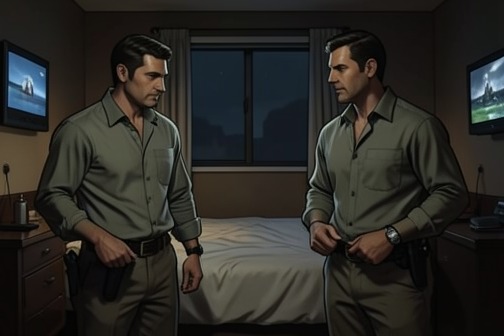
The motel encounter between [Cormac MacKay](entity:character-recall-character-cormac-mackay-0e15ee84c297) and [Scarlet O’Bannon](entity:character-recall-character-scarlet-o-bannon-e4e8eec22e5d) turns an inconvenient shortage of rooms into a test of Scarlet’s professional identity and emotional boundaries. Their mutual attraction draws them toward intimacy, but Scarlet’s fear of crossing the line between FBI agent and criminal interrupts the encounter. Her decision to draw her sidearm stops what is happening; the silence that follows leaves her confronting not only what she feels for Cormac, but also the guilt and self-judgment that shape her resistance.
## A Room Chosen Rather Than Checked
Cormac returns from the parking lot with the news that the [Motel](entity:location-recall-location-motel-cd30b5bb177c) has only one room left. It contains two single beds, so sharing the room does not require sharing a bed. Scarlet doubts his account and considers checking for herself. Yet doing so might establish that another room is available, forcing her to take one alone—a prospect she does not want. She agrees to go with him without verifying the story. The choice is small and outwardly practical, but it places the two of them in close quarters while showing that Scarlet is already reluctant to create distance.
Several hours later, they watch television from separate beds as the sun sets. Takeout containers remain on the bedside table. Scarlet begins to undress and climbs onto the bed without getting under the covers, uncertain about what she intends. Cormac notices her and approaches. The separate beds have preserved the appearance of a boundary, but Scarlet’s actions have made that boundary unstable; the scene’s tension comes from the gap between her deliberate invitation and her uncertainty about how far she can accept it going.
## Attraction Meets Professional Identity
As they kiss and become more intimate, Scarlet experiences desire alongside fear. Her attraction is not merely an abstract possibility: she recognizes it as stronger than what she has felt with previous partners. At the same time, she interprets continuing as a threat to the identity she associates with being Agent O’Bannon. Cormac’s status as a criminal makes the conflict concrete. The prospect of intimacy is also, in her mind, a crossing of the professional and moral line that defines her role.
Scarlet’s hesitation is therefore not presented as a simple absence of desire. She is drawn to Cormac even as she tries to preserve a version of herself organized around the badge, the holster, and the pursuit of offenders. The encounter exposes how difficult it is for her to separate attraction from the categories through which she understands herself and him. She can want him and still regard acting on that desire as a betrayal of her professional self.
## The Interruption and Its Immediate Aftermath
When Cormac moves toward sex, Scarlet abruptly reaches for the gun in her handbag. She checks that its safety is on, points it toward him, and tells him to get off her. Cormac stops and objects that he is not trying to assault her. Scarlet insists that he stop, then points the weapon at his face. He backs away, laughing in disbelief and asking whether she is crazy. The encounter is interrupted by Scarlet’s armed intervention, not by an outside arrival or a change in the room’s circumstances.
Scarlet then sees [Tess](entity:character-recall-character-tess-7136fe16a68b), muddy and standing with folded arms, accusing her in a vision of failing to save her and now choosing a bad man. Scarlet knows Tess is not actually present, but feels the judgment as real. That distinction matters: the vision does not change the physical situation, yet it gives form to Scarlet’s guilt and helps explain why desire has become entangled with self-reproach. Scarlet says she does not want to go further and describes the sexually open version of herself as unlike the suited, armed agent she considers real.
Neither speaks much afterward. They lie in the same room while television commercials give way to a game show and the night darkens; Cormac eventually snores. Scarlet reflects on having drawn her sidearm without reasonable cause and compares the incident with her experiences with other men, against whom she had never drawn her gun. Her response makes the encounter consequential beyond its immediate interruption: attraction has brought her to a point where the professional weapon she carries becomes part of a personal crisis.
## What the Scene Reveals
In the quiet afterward, Scarlet distinguishes Cormac from her previous partners. She thinks of those men as ordinary in comparison and recognizes that Cormac seems able to see past the professional presentation she maintains. His response to her is unlike the clumsy or fearful reactions she associates with other men. The contrast helps explain the intensity of her attraction, but it does not settle what she should do with it; instead, it makes her feel more exposed.
Scarlet imagines a counterfactual version of their circumstances: Cormac as an FBI agent, sharing a room with her on a case, with his badge on the nightstand. In that imagined setting she is sure she would not have drawn her gun. She also recognizes that, if he belonged to her professional world, she would not be nearly as attracted to him. The imagined alternative clarifies the force of the actual one. Her desire is bound up with the very difference that makes the relationship feel impermissible, while her badge and weapon represent an identity she cannot simply set aside. The scene ends with that contradiction still active, held in place by separate beds, silence, and Scarlet’s unresolved attempt to decide which version of herself is real.
Event 24
Cormac and Scarlet Are Abducted by FBI Impersonators
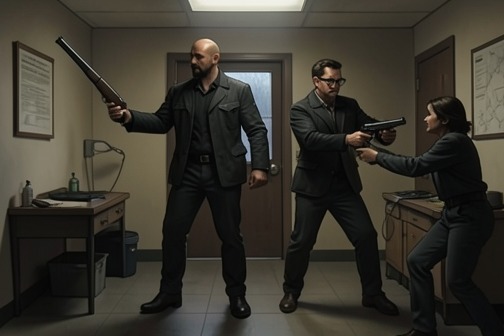
[Cormac and Scarlet Are Abducted by FBI Impersonators](entity:event-recall-event-cormac-scarlet-fbi-6959864ddc62) is the motel ambush in which the pair lose their freedom and are taken by two armed men. The scene shifts rapidly from an attempt to reach their own guns to forced restraint: Cormac resists, but the attackers use the threat against Scarlet to make him yield. Their claim that they are bringing the captives to a boss places the abduction within a larger chain of command, though the boss is not identified here.
## The Ambush at the [Motel](entity:location-recall-location-motel-cd30b5bb177c)
The assault begins when the door crashes open while Cormac is behind the bed, searching for his gun. Scarlet is also trying to reach a weapon, but neither can act before two men enter with twelve-gauge shotguns aimed at them. The sudden breach overturns the room’s immediate balance of power: the occupants are caught reaching for their guns, while the newcomers already control the space with weapons ready.
The attackers are presented as distinct figures rather than an anonymous force. One is exceptionally tall, bald beneath a Yankees cap, with a caved-in nose and a thin mustache; the other is shorter, with untidy blond hair, a goatee, and reflective glasses. The larger man addresses Cormac by name and threatens him while affecting a tone of calm. The contrast between that manner and the explicit threat makes clear that his words are not an invitation to negotiate; they are an attempt to control the room before anyone can resist.
## Resistance and Reversal
The smaller man, [Bryan](entity:character-recall-character-bryan-dfe49d357a99), speaks as if the captives are already destined for death once they reach the boss. He also makes degrading remarks about Scarlet and suggests that the captors can abuse their power without consequence. The exchange marks the danger as more than a transfer: the men treat their control over Cormac and Scarlet as license to humiliate them. Their confidence also exposes a tension within the group: the larger man has asked for calm, while Bryan treats the situation as an opportunity for personal cruelty.
Cormac responds physically rather than accepting the attackers’ terms. He lunges for Bryan’s shotgun, and its discharge strikes the thin wall instead of him. Amid Scarlet’s screams and [Harold](entity:character-recall-character-harold-09e82f1733f6)’s shouting, Cormac concentrates on controlling the weapon, attempting to wrench it from Bryan’s hands. Bryan proves stronger than Cormac expects and pulls it back. The failed struggle is the scene’s decisive reversal: Cormac can disrupt the attackers’ control momentarily, but cannot take the weapon from them.
## Scarlet as Leverage
Harold then presses his shotgun against Scarlet and uses her as leverage. Cormac stops resisting and lowers his hands. The change is immediate: he does not surrender because the threat has convinced him that the attackers are right, but because continuing the struggle would put Scarlet at greater risk. The scene therefore makes the captors’ control relational as well as physical. They can force Cormac to choose between his own resistance and the safety of the person beside him.
That choice closes off the brief possibility that the pair might turn the ambush around. Cormac’s attempted seizure of the gun has not freed either captive, and the attackers retain their weapons. Scarlet’s presence gives them a means to end his resistance without defeating him in a fair contest. The episode’s movement is from two people reaching for a chance to defend themselves to two people whose actions are constrained by armed captors.
## Restraint and Consequence
The men handcuff Cormac and Scarlet to seats, then climb into the front. The restraint makes their loss of control concrete: they are no longer merely outnumbered in the motel room but physically secured and unable to move freely. With the captors taking the front positions, the scene ends in the transition from attack to removal. The promised destination is the boss, but the boss’s identity and the captives’ fate are not disclosed in this moment.
The event’s significance lies in how quickly the pair’s situation changes. The door’s sudden breach gives way to an uneven struggle, and the threat to Scarlet turns that struggle into compliance. Harold and Bryan’s stated intention to deliver the pair establishes that the abduction is organized around someone beyond the two men at the motel. For Cormac and Scarlet, the immediate consequence is captivity; for the narrative, the handcuffing and departure extend the danger beyond the room without yet resolving who directs it or what will happen next.
Event 25
Scarlet Lures the Kidnappers and Rescues Cormac

[Scarlet Lures the Kidnappers and Rescues Cormac](entity:event-recall-event-scarlet-cormac-7a5c2ae53f02) is the turning point in which [Scarlet O’Bannon](entity:character-recall-character-scarlet-o-bannon-e4e8eec22e5d) converts her captors’ assumptions into an opening to escape. Held in a sedan with [Cormac MacKay](entity:character-recall-character-cormac-mackay-0e15ee84c297), she feigns interest in [Harold](entity:character-recall-character-harold-09e82f1733f6), gets him to release her handcuffs, and then takes control of the situation. Cormac is freed, but Scarlet’s decision to stop him from killing their captors gives the rescue a second conflict: survival must be secured without allowing his anger to dictate what happens next.
## [Captivity](entity:state-recall-state-captivity-0bc31185b3d3) and the Opening
The scene begins on a dusty road, with the freeway dwindling in the distance and [Bryan](entity:character-recall-character-bryan-dfe49d357a99) at the wheel. Cormac challenges Bryan over whether he works for [Mickey MacFarland](entity:character-recall-character-mickey-macfarland-47d8bce7146a). Bryan does not answer; he simply continues driving. The exchange leaves the suspected connection unconfirmed, but places the abduction within the danger surrounding Cormac and the struggle over the Irish mob.
Scarlet is handcuffed, and Cormac remains confined in the car. She recognizes that she can behave flirtatiously toward a stranger more easily than she can with Cormac, an observation that briefly exposes a difference between the performance she is about to use and the intimacy of their relationship. There is no time to dwell on it. Her immediate objective is to make Harold lower his guard without alerting Bryan, who remains in a position to interfere.
When Scarlet points out an abandoned barn beside the road, she presents it as an excuse to stop and pursue a fantasy with Harold. The invitation is deliberately exaggerated, as is her anxious insistence that he not think badly of her. Harold accepts the story with apparent sincerity and asks Bryan to pull over. Bryan voices suspicion that Scarlet may be setting a trap, so her plan is not accepted without resistance. Nonetheless, the car stops, giving her access to Harold outside the vehicle and a chance to change the balance of power.
## The Rescue
Harold takes his shotgun from the car before opening Scarlet’s door. He notices her handcuffs, but still unlocks them when she maintains the flirtatious act. Scarlet then walks ahead toward the barn while he keeps the gun trained on her. The maneuver has won her freedom from the cuffs, not safety: she is still under armed guard, and she understands that failure could endanger both herself and Cormac.
Inside the barn, Scarlet offers to help Harold. When he lets his attention lapse, she turns the invitation into a physical counterattack, takes his shotgun, and forces him to comply. She makes him walk back to the sedan and orders Bryan to stay back, threatening to shoot Harold if Bryan approaches. Bryan stops, allowing Scarlet to bring Harold to Cormac’s side and demand the keys to the handcuffs.
Harold unlocks Cormac. The release reverses the arrangement that had defined the journey: the captives now control the weapons and the movement of their captors. Cormac takes Bryan’s shotgun, and the two men end up kneeling together at the barn entrance. Scarlet’s plan has succeeded not by persuading Bryan or defeating both captors alone, but by isolating Harold, compelling him to free Cormac, and creating time for Cormac to act.
## Anger and Restraint
Once free, Cormac confronts Harold with visible rage. The men’s treatment of Scarlet has transformed the rescue into more than an escape: Cormac is responding to the threat and degradation she faced, and to the part of her performance that required her to appear willing. Scarlet intervenes when Cormac is poised to kill Harold. Her refusal is immediate and firm; she insists that they cannot kill the two men.
Cormac accepts that limit, but his anger does not vanish. He knocks Harold unconscious with the shotgun and then strikes Bryan until he too is unconscious. The distinction matters: Scarlet prevents a killing, but she cannot simply erase the violence of the confrontation or Cormac’s fury. She puts a hand on his shoulder and reassures him that the danger has passed and they are safe, shifting her role again—from strategist to the person calming the man she has just rescued.
## Narrative and Significance
The episode is narrated through Scarlet’s first-person perspective, so the reader follows both the visible performance and the calculation beneath it. Her deliberately coy manner is not evidence of consent or a change of allegiance; it is a tactic she uses while captive to exploit Harold’s expectations. The scene’s suspense comes from the gap between what she presents to the men and what she intends, especially while Bryan remains wary and armed.
The rescue also exposes a tension between Scarlet and Cormac without resolving it into a separate dispute. Cormac knows that her flirtation was an act, yet says afterward that watching it made him want the car to burst into flames. His response shows how strongly he reacts to the danger and humiliation directed at her. Scarlet, meanwhile, defines a boundary around what their rescue permits: the captors must be stopped, but not killed. The outcome is therefore both practical and relational. Scarlet frees Cormac through her own ingenuity, and then steadies him as he struggles to contain the anger that the ordeal has provoked.
Event 26
Scarlet Discovers the Kidnappers’ FBI Connection
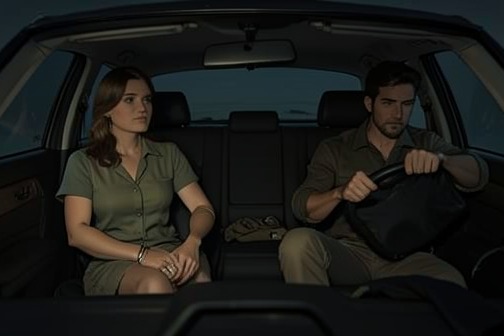
The discovery that [Scarlet O’Bannon](entity:character-recall-character-scarlet-o-bannon-e4e8eec22e5d)’s kidnappers belong to a [Federal Bureau of Investigation](entity:organization-recall-organization-federal-bureau-o-f1c5664278d2) network transforms a suspicion into a tangible threat: the institution she serves may be compromised, and its resources may have helped place her and [Cormac MacKay](entity:character-recall-character-cormac-mackay-0e15ee84c297) in danger. The turning point comes not through an explanation from the abductors but through the contents of their car: agency-issued jackets, trousers, holsters, and other equipment. For Scarlet, the evidence makes the betrayal physically undeniable, even as the extent of the corruption remains uncertain.
## From suspicion to evidence
Before the discovery, Cormac had already argued that [Mickey MacFarland](entity:character-recall-character-mickey-macfarland-47d8bce7146a) could not have taken power without outside help. He contrasted Mickey’s perceived lack of judgment with the intelligence of Cormac’s father, and reasoned that the move against his father required assistance. In Cormac’s account, sending some of his men to [California](entity:location-recall-location-7255928c66a8) and creating an opportunity to attack his father pointed to a wider operation, with the Federal Bureau of Investigation as a possible ally. Scarlet resisted treating that theory as established fact. Her professional instinct was to insist on procedure and evidence, even as Cormac urged her to recognize the implications of what she already knew.
That gap between suspicion and proof gives the later discovery its force. Cormac’s theory had been rooted in his understanding of the criminal world and the unusual scale of Mickey’s success; Scarlet had reason to be wary of accepting it without confirmation. When they open the abductors’ car, however, the question is no longer whether the Federal Bureau of Investigation could be involved. The clothing and equipment make an institutional connection visible, while leaving unanswered how many people are involved or how far the network reaches.
## The car’s contents
After dragging the men into a barn, Scarlet and Cormac handcuff them together around a weak bannister. They expect the captives to be able to free themselves eventually, but not before the pair can leave. Cormac then breaks open the car’s trunk with a shotgun to look for clothes. The jackets inside are blue, marked with yellow letters spelling out the agency’s initials; the trousers resemble those Scarlet has worn at crime scenes, and the holsters and other equipment are Federal Bureau of Investigation issue.
The contents overturn the distance Scarlet had tried to keep between her professional world and Cormac’s. These are not merely clothes that resemble an agent’s uniform: the cluster of jackets, trousers, holsters, and equipment identifies the abductors’ connection through objects she recognizes from her own work. She had considered [Max Smithson](entity:character-recall-character-max-smithson-19adbfea9da2) as a possible source of the danger, but the evidence suggests to her that the problem extends deeper than one individual. It does not, by itself, establish the identities of the people who authorized the operation or prove that the entire agency is involved.
## Scarlet’s reaction and the escape
Scarlet’s response is physical before she can master it: she drops to her knees and vomits into the dust. She repeats that the discovery cannot be true and cannot reconcile it with her sense of the Federal Bureau of Investigation as her own institution. Cormac kneels beside her and rubs her shoulder. His response acknowledges both the shock of the revelation and the fact that it confirms a danger he had already been trying to make her see.
She rises unsteadily but refuses to let the shock stop her. Scarlet explains that she had expected, at most, that Max Smithson might be implicated; the agency-issued gear makes the possibility of deeper involvement feel overwhelming. She also reasons that her firearm probably contains a tracker and that it may be how the kidnappers found them. This is her explanation, not a confirmed account of how they were located. She left the gun behind in the motel room, and the omission now reads as a possible safeguard rather than a simple inconvenience.
Cormac asks whether she can drive without shoes and wearing only her underwear. Scarlet forces a laugh and answers through the situation by invoking her professionalism. The detail brings the scene back from institutional betrayal to immediate survival: she and Cormac still have to get away, and she takes the driver’s seat despite her exposed, disordered circumstances.
## Consequences and significance
The discovery sharpens the conflict from a struggle with individual abductors into a threat that may reach inside law enforcement. It also changes the meaning of Cormac’s earlier suspicion. His claim that Mickey’s takeover required help had sounded to Scarlet like a theory drawn from his own world; the Federal Bureau of Investigation equipment gives that theory a concrete basis, without resolving its full scope. The evidence therefore confirms a connection while preserving uncertainty about who within the institution is responsible.
For Scarlet, the reversal is especially severe because the evidence implicates the professional world she belongs to. Her recognition of the clothing and equipment makes the revelation intimate as well as political: the signs of an agency she knows are now attached to the people who took her. Her response—to absorb the shock, consider how they were tracked, and keep moving—carries the scene toward escape rather than resolution. The captives remain behind, temporarily restrained; the pair leave without knowing the full reach of the network or whether the suspected tracker explains their capture.
Event 27
Cormac and Scarlet Disguise Themselves and Steal Clothes
Cormac and Scarlet’s theft of clothing is a makeshift escape measure that also changes the emotional temperature between them. Stranded by a failing car and conscious that the FBI or [Mickey MacFarland](entity:character-recall-character-mickey-macfarland-47d8bce7146a)’s men might be looking for them, they enter a crowded supermarket without money, take clothes, and leave wearing them. For Scarlet, the risk is not abstract: the act produces more anxiety than her past encounters with armed danger, then ends in laughter and an unwelcome recognition that she is growing attached to Cormac.
## Causes and Setting
The pair are on the road and expect to reach the highway soon. Scarlet worries that being stopped while improperly dressed could expose them to trouble, particularly if the FBI or Mickey MacFarland’s men have people watching for them. Her concern is practical and tied to the danger of being identified or detained; clothing offers a way to travel without attracting the immediate attention that their existing situation might invite. They also have no money, a constraint that rules out an ordinary purchase.
Their car’s air conditioning is turned down as far as it will go, but the vehicle coughs, splutters, and dies when they are about halfway to town. After they stop, the interior becomes unbearably hot. Cormac opens a window and leans his head out, while the breakdown turns the need to find clothes into an urgent problem. They pull up outside a vast, industrial-scale supermarket, busy enough that Scarlet doubts anyone could notice every customer. Its size makes it seem almost airport-like to her: an impersonal public space whose crowds offer cover, but whose ordinary bustle also makes the plan feel exposed.
## The Theft and Disguise
Cormac treats the crowd as an opportunity. He suggests that a little shoplifting would go unnoticed, and invites Scarlet to take part, while she objects that they cannot steal. His teasing makes the plan sound like an adventure, but its immediate purpose remains plain: without money, they need clothes and intend to leave wearing them. The danger of being caught is not eliminated; Cormac simply proposes that, if an alarm sounds, they run.
Inside the clothing section, the two move along the aisles while trying not to look conspicuous. Cormac is still barefoot as they search. In the women’s section, he adopts a joking husbandly manner and suggests that they pretend to try clothes on, change, and walk out. The performance supplies a flimsy appearance of normality for an act that depends on escaping notice. Scarlet asks whether an alarm might go off; Cormac answers with confidence, but his plan offers no real guarantee against discovery.
Scarlet selects a T-shirt, jeans, and boots and takes them to a changing room. The only employee in that section is occupied with a mother and toddler, whose disagreement over the child’s clothing has drawn the staff member’s attention. Scarlet changes quickly, leaving her jacket and heavy pants behind, then walks back through the aisles to find Cormac. He is leaning casually against a wall in a short-sleeved shirt and jeans. Their stolen outfits provide practical cover for continuing their journey, though the scene does not establish whether anyone has noticed them or whether the clothes make them unrecognizable.
## Fear, Laughter, and the Return to the Road
The theft unsettles Scarlet more than her experience would seem to predict. She has been on drug busts, arrested murderers, and exchanged gunfire, yet walking through the store in stolen clothes while looking for Cormac makes her heart race more intensely than those dangers did. The contrast gives the scene its particular tension: the act is materially small beside her past work, but it places her in the unfamiliar position of knowingly breaking the law for herself. She expects someone to stop her, and the tension lasts until she finds Cormac and they can leave.
Once they are back in the car, Cormac laughs openly at her anxious expression. Scarlet initially insists that there is nothing funny about what they have done: they have broken the law. But as she starts the engine, she begins laughing too. Their laughter continues as they merge into highway traffic, heading back toward [New York City](entity:location-recall-location-7a11f2949ca3). The change is not a reversal of the facts—the clothes remain stolen, and their exposure to pursuit has not been disproved—but it turns a stressful act into an experience they share.
## Significance
On the highway, Scarlet keeps glancing in the rear-view mirror, still alert to the possibility of being followed. Cormac jokes about whether highway patrol would pursue a pair of shoplifters. Scarlet wants her response to be annoyed, but recognizes that it comes across instead as affection. She also realizes that she cannot allow herself to become endeared to him and suspects that the process may already be too far advanced.
The episode therefore joins a concrete survival problem to a shift in their relationship. Their lack of money, the broken air conditioning, the crowded store, and the risk of an alarm all make the disguise an improvised necessity rather than a detached prank. Yet Cormac’s teasing, Scarlet’s reluctant participation, and their shared laughter give the escape its intimacy. The closing glances toward the road preserve the external danger; Scarlet’s altered response to Cormac reveals a quieter change within it. The theft does not settle their flight or remove the threat, but it leaves them moving forward together, with Scarlet more conscious of the attachment that has begun to form.
Event 28
Moira Urges Cormac to Reclaim the Don’s Position
[Moira](entity:character-recall-character-moira-b5d51f7b4c94)’s appeal to [Cormac MacKay](entity:character-recall-character-cormac-mackay-0e15ee84c297) to become Don turns a private conversation into a choice between family power and the possibility of escape. With [Mickey MacFarland](entity:character-recall-character-mickey-macfarland-47d8bce7146a) in control after killing Cormac’s father, Moira urges Cormac to fight for the family’s leadership; [Scarlet O’Bannon](entity:character-recall-character-scarlet-o-bannon-e4e8eec22e5d) challenges them to imagine a life outside crime. Cormac can picture that life, but concludes that he has no alternative to pursuing the position.
## Setting and Immediate Context
The appeal comes after Moira brings food and wine to the group in hiding. The meal is an unusually generous one compared with what Cormac and Scarlet have eaten over the preceding days. For a short while, they concentrate on eating and drinking; once that reprieve ends, the gathering settles into a more serious conversation. Cormac sits in a chair while Moira and Scarlet sit on the couch, placing the three together around the table as the discussion turns to the future of the family.
Moira’s fidgeting signals that she has something difficult to say. Cormac recognizes the habit from her childhood and from other occasions when she has been eager to share an idea. Here the gesture precedes a blunt announcement: their father is dead. Moira tries to present the fact as though it does not affect her, but her voice betrays the effort. Her grief and anger are not separate from her appeal; they give it urgency.
## Moira's Appeal for the Don's Position
Moira identifies the immediate political consequence of her father’s death: the family needs a new Don, and Mickey has taken control. She describes Mickey’s rise as illegitimate and insists that Cormac must do whatever is necessary to regain the position for the family. Her appeal explicitly includes fighting and killing, making clear that she understands the succession struggle as a violent contest rather than a title that can be claimed peacefully.
Her case is personal as well as political. Moira recalls that Mickey, their cousin, had made unwanted advances toward her when they were children. She also says she witnessed him kill her father. Those disclosures place her hostility to Mickey alongside the recent loss of her father and her fear of his rule. She invokes what her father would have wanted, presenting Cormac’s pursuit of the Don’s position as a duty to both the family and the dead man’s wishes. Cormac immediately agrees with her, affirming that he shares the goal she has laid out.
## Scarlet's Alternative
Scarlet responds by naming the conflict plainly: Cormac and Moira are discussing violence and crime in front of an FBI agent. Her posture has become that of an interviewer questioning a suspect; she leans forward, and her tightly clasped hands show the strain behind her challenge. She reminds Cormac that she had tried to warn him earlier, at the supermarket, and now argues that the situation offers both of them a chance to leave their criminal lives.
Scarlet’s appeal to Moira is especially direct. Though the two women have known one another for less than a week, Scarlet urges her to imagine a life free of violence and hiding. She speaks of freedom as a genuine possibility, not merely a rebuke to Cormac’s ambition. After the group calms down, Scarlet softens her tone and admits that she likes Cormac and would want to date him in another life. She suggests ordinary shared activities, including going to the movies, as an alternative to the life they are leading. Her words expose the personal cost of Cormac’s choice: leaving is not only a hypothetical escape from danger but also a possible future with Scarlet.
## Cormac's Decision and the Scene's Turn
Cormac closes his eyes and imagines that ordinary future. He pictures walking beside Scarlet near a river, dressed for a conventional date, and sharing an apartment where they watch television. He even imagines going to work as a mechanic. These details make the alternative concrete: it has a setting, routines, and a kind of work, rather than existing as an abstract promise to abandon crime.
But the imagined life cannot displace the image of Mickey occupying their father’s desk and giving orders to his men. The contrast returns Cormac to the succession struggle. He tells Scarlet that he has to become Don and that there is no other option. Moira’s appeal has thus received his explicit assent, while Scarlet’s offer has made the rejected alternative visible. Scarlet responds by getting to her feet and asking Moira about the bedrooms; Moira quietly directs her down the hall. The practical exchange ends the argument without resolving its emotional division. In the scene, Cormac’s ability to imagine escape is real, but his decision to pursue power takes precedence over it.
Event 29
Cormac Organizes an Anti-Mickey Alliance
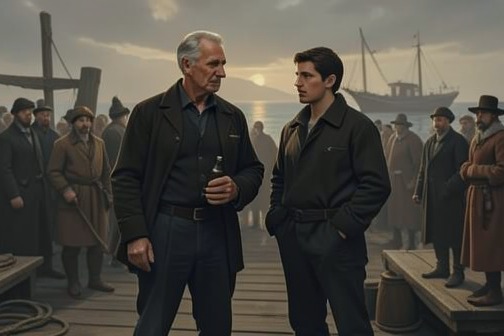
[Cormac Organizes an Anti-Mickey Alliance](entity:event-recall-event-cormac-mickey-fd8f7d7bfe62) marks the shift from [Cormac MacKay](entity:character-recall-character-cormac-mackay-0e15ee84c297)’s grief and suspicion into practical opposition to [Mickey MacFarland](entity:character-recall-character-mickey-macfarland-47d8bce7146a). Rather than beginning with an open assault, Cormac seeks out men whose loyalty to his father or disgust with Mickey might outweigh their fear. Their support is hesitant and conditional, but it gives Cormac the beginnings of a counterforce inside a family that no longer feels united.
## The Problem of Mickey’s Power
Two days after returning to [New York City](entity:location-recall-location-7a11f2949ca3), Cormac meets [Patrick O’Hara](entity:character-recall-character-patrick-o-hara-37a644079f17), an older ally of his father’s, at the docks. The meeting unsettles him: Patrick has known him since childhood, but Cormac cannot be sure whether old loyalties still hold or whether the man might turn against him. Patrick greets him with an embrace and condemns what was done to Cormac’s father. His anger, however, does not amount to a plan, and Cormac presses him to explain why Mickey remains in power if other members of the family are so troubled by the killing.
Patrick’s explanation reveals the scale of the obstacle. Mickey did not act alone: he arrived with men recruited from other states, a personal force assembled over years as he prepared to seek the position of Don. Those followers include people from varied walks of life, and their numbers matter because the rest of the family fears the consequences of open conflict. Many have wives and children and, even if they believe Mickey’s actions were wrong, do not want to risk a war without a compelling reason. Suspicion compounds that reluctance: members are afraid to speak openly because they cannot tell who is already working with Mickey or might side with him.
For Cormac, this is a contradiction at the heart of the family. The killing of the Don ought to be sufficient cause for resistance, yet fear has made even shared outrage difficult to turn into action. Patrick’s account does not excuse the men’s silence; it shows how Mickey’s strength depends not only on the loyal force he has built, but also on the uncertainty that keeps potential opponents isolated.
## Turning Old Loyalty into a Promise
Cormac’s appeal to Patrick is personal as well as political. He asks his father’s old friend to be ready to support him when he makes his move, whether that means acting against one of Mickey’s men or simply refusing to shoot Cormac if Mickey demands it. The range of possibilities makes the request deliberately concrete: Patrick is not asked to lead an uprising at once, but to make his allegiance clear when the confrontation arrives. Cormac invokes both his father’s affection for Patrick and his own, grounding the proposed alliance in ties that predate Mickey’s rule.
Patrick accepts and promises to be ready. The change is visible in the encounter: after initially appearing awkward and uncertain, he stands with a harder resolve. His commitment is significant but limited. He has not been shown taking action against Mickey; he has agreed not to remain neutral when the choice becomes unavoidable. For Cormac, that distinction matters. In a climate where fear makes loyalties hard to read, even a promise of support is a first breach in Mickey’s apparent control.
## [Smiley](entity:character-recall-character-smiley-ca993b23ddd9)’s Disclosure and the Cost of Allegiance
The following day, Cormac meets Smiley at Lit, a quiet downtown bar where he expects not to be recognized. Smiley arrives visibly uneasy and explains that he is reluctant to become involved in undercover work or anything that might put his family at risk. He is married, and his wife, Sheila, is pregnant. Cormac does not dismiss that concern. He tells Smiley he does not want his wife or child hurt, while arguing that continued service under Mickey may not protect them either.
Smiley then discloses an incident that helps explain his fear and his disgust. He says Mickey assaulted a barmaid’s young child after the woman rejected Mickey’s attention. The disclosure is not merely a general accusation of cruelty: it gives Cormac a specific reason that a man close to Mickey might no longer accept his authority. Smiley describes Mickey as surrounded by men who worship him, so the danger is not confined to Mickey’s own conduct; his followers help make that conduct difficult to challenge.
Cormac narrows his request to the kind of support Smiley can offer. He does not ask him to spy or undertake covert work, only to promise that if a confrontation comes, he will stand with Cormac rather than Mickey. Smiley agrees. The exchange turns an abstract objection into a defined, limited commitment, while acknowledging that family obligations make the decision more costly for him than it is for Cormac.
## Building a Fragile Coalition
Cormac continues recruiting through quieter, less conspicuous meetings. He meets Trevor, Dylan, and Liam behind a school during recess, choosing a place where he thinks Mickey will not look for him. They recount another account of Mickey abusing his power: one of Mickey’s men killed a woman’s partner after he objected to Mickey’s conduct toward her. The men say they are sickened by what happened and agree either to help Cormac or, at minimum, not to shoot at him if the conflict comes to a head.
Over the next several days, Cormac brings seven more men onto his side. The growing group is not presented as a secure army. He returns exhausted from the effort and knows that any recruit could report the discussions to Mickey in hopes of winning favor. His confidence rests instead on what he sees in the men: affection for his father. That loyalty offers a basis for resistance, but it also points backward, to a bond with the dead Don, rather than proving that the alliance can withstand the pressure ahead.
The episode therefore ends with a beginning, not a victory. Cormac has secured promises from Patrick, Smiley, Trevor, Dylan, Liam, and seven additional men, but he has not yet confronted Mickey or tested those commitments in battle. The alliance is built through individual appeals, shared anger, and carefully bounded pledges. Its central tension is already clear: the men may oppose Mickey, yet fear for themselves and their families can still keep them from acting together.
Event 30
Scarlet Reports Her Investigation into FBI-Mob Ties to Her Father

[Scarlet Reports Her Investigation into FBI-Mob Ties to Her Father](entity:event-recall-event-scarlet-fbi-a9710c8f4180) is a turning point in [Scarlet O’Bannon](entity:character-recall-character-scarlet-o-bannon-e4e8eec22e5d)’s investigation: she brings her suspicions about corruption inside the [Federal Bureau of Investigation](entity:organization-recall-organization-federal-bureau-o-f1c5664278d2) to her father, [Derrick O’Bannon](entity:character-recall-character-derrick-o-bannon-85215b4cd94e), and proposes joining forces with him to pursue [Mickey MacFarland](entity:character-recall-character-mickey-macfarland-47d8bce7146a). The meeting turns a private inquiry into a proposed collaboration, but it also makes Scarlet’s divided loyalties unmistakable. She is asking her father to trust the same mob-connected people with whom she has become personally involved.
## The Investigation Behind the Meeting
In the six days before she sees her father, Scarlet meets with three agents and spends much of her remaining time researching colleagues she considers suspicious. Her attention settles on [Max Smithson](entity:character-recall-character-max-smithson-19adbfea9da2). At first, she regards him as a familiar kind of older professional: outwardly paternal and proud, but liable to make a pass when circumstances allow. Further digging turns that impression into a case she cannot dismiss. Smithson owns a yacht, an apartment, and a house in [California](entity:location-recall-location-7255928c66a8), despite having no offices there. His brother works in a lower-level position at the Federal Bureau of Investigation, and Scarlet recalls that [Cormac MacKay](entity:character-recall-character-cormac-mackay-0e15ee84c297)’s men had been sent to California.
She checks Smithson’s travel history and finds that he spent his holiday time in California over the past year. His declared wealth includes a chain of local laundromats, but Scarlet cannot find a purchase history for them; the businesses appear to have been bought with no visible source of funds. Taken together, the travel, property, family connection, and unexplained assets make Smithson look to her like a possible bridge between corruption in New York and Mickey MacFarland’s operations. She suspects a network, not an isolated offender, but at this point she has a pattern of troubling clues rather than proof of every connection.
## A Difficult Conversation with Derrick O’Bannon
Scarlet meets Derrick O’Bannon in a small coffee shop squeezed between larger restaurants. The room around them is noisy, yet their table feels silent. Scarlet is hungover; painkillers have eased her headache without lifting her groggy, unreal feeling. The conversation is difficult before it begins. Her father looks older than his years, his lined face and constantly worrying hands marked by grief. His green eyes match hers. For a moment, his expression seems to answer the imagined sight of [Tess](entity:character-recall-character-tess-7136fe16a68b) running toward him, then the moment passes. Scarlet finds it hard to treat him as a suspect while Tess’s death sits between them.
She nevertheless names Max Smithson and two agents she believes may be working with him: Elijah Sullivan and Gertrude Fitzgerald. Derrick calls the accusations serious and asks what evidence she has. Scarlet has to force herself through the family memories and guilt that make questioning him unlike questioning anyone else. She wonders whether he might be involved, but she does not claim to know. Instead, she asks directly whether he is working with Smithson. Derrick smiles and denies it, saying he would never betray the Federal Bureau of Investigation. His assurance does not resolve Scarlet’s suspicions; it sharpens her awareness that both her investigation and her relationship with her father depend on trust she cannot take for granted.
## From Suspicion to a Proposed Alliance
Scarlet’s plan is to take Derrick to meet the informants she has been working with. She feels guilty even describing Cormac MacKay and [Moira](entity:character-recall-character-moira-b5d51f7b4c94) as informants, because doing so makes her feel she is betraying somebody whichever way she turns. In her account, Smithson and his associates work for Mickey MacFarland, who has recently taken over the Irish mob. She presents Cormac and Moira as two affiliates who may help the authorities capture him, not as neutral strangers untouched by the criminal world.
Derrick accepts the proposal as a sound plan: catch the mob boss and root out the people inside law enforcement who may be assisting him. That response gives Scarlet a concrete basis for bringing her father into the inquiry, even though it does not settle whether her suspicions about individual agents are correct. The proposed alliance also joins two networks that Scarlet has struggled to keep separate: the Bureau, where her father serves, and the mob connections that give her access to information about Mickey.
Later, when Scarlet and Moira have been taken, Derrick is present with the search party in [Flint](entity:character-recall-character-flint-e06a60b5a993)’s car. Flint studies a photograph and points out two towers reflected in a mirror, using their angle to argue that the captives are at the ballroom. The later scene does not establish the truth of every suspicion Scarlet raised at the coffee shop, but it shows Derrick acting alongside the people she had offered to bring him to meet, as the investigation becomes an urgent effort to find them.
## Family Grief and Divided Loyalty
The meeting’s personal stakes surface most plainly as Derrick prepares to leave. Scarlet tells him that she tried to save Tess, repeating the admission rather than turning their conversation into a clean exchange of evidence and plans. Her investigation has required her to look at her father as a possible suspect, but her grief prevents that scrutiny from becoming emotionally detached. The event therefore leaves two kinds of uncertainty in place: whether the suspected corruption can be proved, and whether Scarlet can work with her father without feeling that she has betrayed either him or Cormac and Moira.
Scarlet’s decision to bring Derrick into the inquiry is not simply a transfer of information. It is a test of whether formal procedure and family trust can operate beside the dangerous, personal relationships on which her investigation now depends. His agreement opens the way to cooperation, while her parting words about Tess reveal the loss that neither the investigation nor the proposed alliance can put aside.
Event 31
Tess O’Bannon’s drowning

[Tess O’Bannon’s drowning](entity:event-recall-event-tess-o-bannon-s-drownin-8d99fd304696) is the loss at the center of [Scarlet O’Bannon](entity:character-recall-character-scarlet-o-bannon-e4e8eec22e5d)’s remembered lake tragedy, turning an ordinary swim between sisters into a life-and-death emergency and a lasting source of guilt. The scene is told through Scarlet’s recollection: she first imagines that rescuing [Tess](entity:character-recall-character-tess-7136fe16a68b) will return her family to happiness, then discovers that reaching her sister is not the same as saving her. The memory’s later return, shaped by self-accusation and a vision of Tess, shows how the event continues to govern Scarlet’s understanding of herself.
## The Outing and Scarlet’s Hope
The memory opens with two girls laughing and playing in the lake, unaware that the swim is about to become dangerous. Scarlet enters the water after Tess, paddling toward the girls with an urgent conviction that getting her sister out in time will make life right again. Her thoughts expand beyond the immediate rescue: she imagines her father seeming younger, her mother regaining her friends, hobbies, and work, and Tess living the milestones of adulthood. This imagined future gives the rescue an impossible scale. Scarlet is not only trying to reach her sister; in her mind, she is trying to restore the family’s entire life.
Even as she hurries toward them, Scarlet calls the girls foolish for swimming far from shore. The rebuke sits beside her own confidence that she can make everything safe again. Her first response is practical and immediate—swim to Tess and bring her back—while her hopes make the moment feel like a test of whether the family can return to normal. The lake, however, is large, and the girls are in its middle. The distance that initially seems crossable becomes increasingly consequential once Tess is in trouble.
## The Search Underwater
Tess dives beneath the surface and swims downward. Scarlet remembers that Tess liked to sink to the bottom and float back up, and that she described the sensation as feeling like a balloon. At first, this familiar habit prevents Scarlet from recognizing the danger. She tries to shout, reach Tess, and intervene, but cannot make herself act as she wants to; the recollection conveys her helplessness through the gap between her attempts to respond and her inability to do so.
When bubbles rise, Scarlet still briefly treats the situation as part of play. A larger bubble breaks that expectation and makes the danger unmistakable. She dives after Tess without goggles, struggling to see underwater. Her air runs out before she can reach the bottom, forcing her back to the surface; she makes two further attempts before finally finding Tess. The repeated descents turn the rescue into a contest with the limits of Scarlet’s breath and visibility. When she reaches her sister, Tess’s foot is caught beneath a rock. Scarlet frees it and carries her upward.
## Rescue and Loss
Scarlet tries to reassure Tess while swimming toward shore with one arm supporting her and the other paddling. The shore seems far away, and Scarlet keeps urging her sister to speak, laugh, or stop pretending. Her reassurance is also an effort to deny what she fears: she describes Tess as sleeping rather than dead, unable to accept the change in how her sister feels in her arms. The passage thus moves from recognition of danger to rescue, but not to the happy reversal Scarlet had imagined at the start.
Exhausted and trembling, Scarlet drags Tess onto shore and stares at her before reacting. She then runs to the cabin. When she returns, her father is attempting to revive Tess, while her mother paces in a bathrobe, bites her nails, and asks where the ambulance is. The adults’ presence confirms that the crisis has passed beyond Scarlet’s individual effort; her father is trying to help, and her mother is waiting for emergency assistance. The account does not describe a successful recovery. Instead, its focus on the urgent response and Scarlet’s inability to accept Tess’s condition establishes the drowning as the loss she will later blame herself for.
## Guilt and the Memory’s Return
In a later scene, Scarlet addresses Tess as Tessy and apologizes, insisting to herself that she is at fault and should have died instead. She recalls that her father had apologized for shouting at her in the car and explained that he was sad, but Scarlet turns that exchange into further evidence against herself. Her conviction that everyone blames her is presented as her own belief, not as a judgment confirmed by the family. The event’s aftermath is therefore not only grief for Tess but also Scarlet’s persistent assumption that she should have prevented the death or taken her sister’s place.
That later guilt becomes a vision in which Tess appears to rise from her grave and tells Scarlet that everything is her fault. The scene gives Scarlet’s self-accusation an outward voice; it does not establish that Tess has literally returned. Its force comes from the way the memory has been transformed into an encounter Scarlet cannot control. The drowning’s narrative significance lies in this double movement: the lake scene records the failed rescue, while the later vision shows how Scarlet repeatedly relives the loss as a verdict on herself.
Event 32
Mickey MacFarland’s takeover of the Irish mob

[Mickey MacFarland’s takeover of the Irish mob](entity:event-recall-event-mickey-macfarland-s-tak-8ee08635b458) is both a seizure of power and a crisis over what that power has become. After [Cormac MacKay](entity:character-recall-character-cormac-mackay-0e15ee84c297)’s father is killed, Mickey rules by violence, while Cormac’s claim to be the rightful heir is reduced to a dangerous challenge: accept Mickey as Don or die. The takeover also exposes a deeper conflict, since the damage associated with Mickey’s rule may persist even if he is removed.
## Causes and Background
By the time Cormac meets with [Scarlet O’Bannon](entity:character-recall-character-scarlet-o-bannon-e4e8eec22e5d) and her father, Agent O’Bannon, Mickey is already in charge and Cormac’s father is dead. The FBI agent explains that he has come because Scarlet has shared her suspicions and because the Bureau sees possible links between Cormac and the Irish mob as an opportunity to take down Mickey and expose corruption inside the FBI. He distinguishes that goal from dismantling every criminal organization: in his view, intervention is warranted when an organization causes measurable harm. He identifies the mob’s involvement in selling drugs to children, human trafficking, and gang warfare as the threshold that has been crossed.
The takeover is therefore framed not simply as a family succession dispute but as a change in the organization’s conduct and reach. Cormac agrees that the abuses must stop, yet fears that the response will not distinguish Mickey from the men around him. If the FBI targets the entire family, he worries, men who grew up and fought alongside him may go to prison with him. His anxiety makes the cost of removing Mickey uncertain: the operation could end a violent regime, but it could also sweep away the organization and people Cormac hopes to reclaim.
## A Contest over the Mob’s Future
Scarlet argues that removing Mickey may not be enough. Mickey has taken the Don’s position through violence, but, as she reasons, he has also made the men substantially more money than their earlier activities did. Once they become accustomed to those earnings, they may continue the same practices under Cormac or another leader. In that scenario, changing the person at the top would not end the harm, and the FBI might have grounds to pursue the wider organization. Her argument makes the takeover a structural problem as well as a personal one: Mickey’s rule could have altered what the members expect from the mob.
The metaphor Scarlet uses is one of cutting off the head of a snake. Cormac hears in that possibility a threat to his entire family and to the work his father spent his life building and maintaining. He sees Scarlet planning with Agent O’Bannon to undo that inheritance, even while he understands why Mickey must be stopped. [Moira](entity:character-recall-character-moira-b5d51f7b4c94) sits with them, anxious but silent; Cormac hopes she can be included in the FBI’s plans and remain safe, even if he cannot. His sense of belonging is already fractured: he is physically present in a comfortable penthouse with two FBI agents, but feels that it is not where he should be.
## Cormac’s Resistance and the Counterattack
Cormac’s opposition takes shape in a damp, cold office that once belonged to a foreman. There he gathers a small force: [Davey](entity:character-recall-character-davey-fa6829eac0ea), [Sebastian](entity:character-recall-character-sebastian-7fce10745ce8), and [Flint](entity:character-recall-character-flint-e06a60b5a993), three men without wives or children who agree to stay with him as he tries to reach Mickey or someone who helped him. Flint becomes Cormac’s second-in-command. Their effort is presented as an attempt to put the family back on the right track, but the reports reaching them—of Mickey hurting children, selling drugs, and trafficking women—make the stakes more immediate than a disputed title. Cormac understands Mickey’s conduct as a disgrace to his father’s legacy.
Cormac also confronts evidence that the takeover may have involved betrayal beyond the mob. He accuses an older associate of giving Mickey his father’s location after FBI men had been assigned to tail his father under the pretext of a case. The accusation does not establish every detail of the killing, but it connects Mickey’s rise to a suspected breach within the Bureau. Agent O’Bannon’s stated aim of rooting out corruption therefore intersects with Cormac’s personal investigation: taking on Mickey means pursuing not only the new Don but also the network that may have enabled him.
The search for Mickey’s location brings the danger into Cormac’s immediate circle. Cormac asks [Max Smithson](entity:character-recall-character-max-smithson-19adbfea9da2) where Mickey is staying, reasoning that it must be one of his father’s former hideouts. Smithson refuses, saying that revealing the location would cost him his life. Cormac presses him, insisting that silence will not save him, and his anger becomes personal when he speaks of the woman he loves. The exchange shows how Mickey’s power works even before Cormac reaches him: fear can keep information from the challenger and obstruct any effort to dislodge the leader.
## Violence, Loss, and Forced Recognition
The threat becomes concrete when Sebastian returns from Scarlet O’Bannon’s apartment. He reports that Mickey appeared unexpectedly while he and Davey were waiting there. Mickey killed Davey and left Sebastian with a message for Cormac: the men would die unless Cormac accepted him as Don. He also described Cormac as selfish. The attack transforms the succession struggle into a direct ultimatum and makes Scarlet’s whereabouts another urgent uncertainty. Cormac’s first concern is whether she is alive; he rushes toward her apartment with Flint and Sebastian, willing to abandon his own claim if that is what saving her requires.
At the eventual confrontation, Mickey makes the choice explicit. After guards report that Cormac has been checked for weapons, Mickey tells him that he has only two options: recognize Mickey as Don or die. Cormac pauses and looks toward Scarlet and Moira before acknowledging Mickey’s position. Loyal men nearby react with disbelief, suggesting that his declaration is not received as a willing settlement. The scene presents recognition as the outcome of coercion, not proof that Cormac has ceased to see himself as the rightful heir.
## Consequences and Significance
The takeover leaves Cormac caught between competing obligations: his claim to lead, his loyalty to his father’s legacy, the safety of the men around him, and his determination to protect Scarlet. His temporary acknowledgment of Mickey secures neither reconciliation nor a demonstrated end to the conflict; it is made under a threat of death. Earlier, when Cormac fears the FBI may destroy the whole mob, he is already confronting the possibility that defeating Mickey could require sacrificing the institution he hopes to inherit.
The episode’s central reversal is that the title of Don cannot by itself restore the family Cormac wants back. Mickey’s violent accession has brought the mob into activities that invite outside intervention, while the profits Scarlet describes may make those activities durable beyond Mickey’s rule. At the same time, the suspected FBI connection complicates any simple opposition between law enforcement and the mob. The takeover thus establishes two intertwined questions: whether Cormac can reclaim leadership, and whether leadership can change what the organization has become.
Event 33
The clubhouse massacre
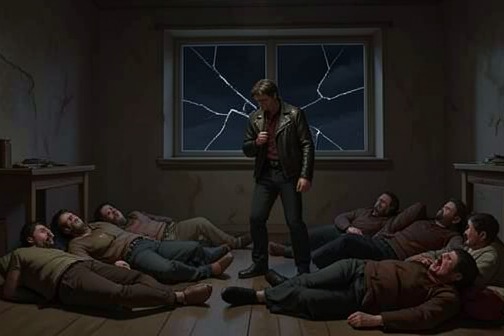
[The clubhouse massacre](entity:event-recall-event-the-clubhouse-massacre-54526bf05e5f) is the catastrophic attack that turns a lively gathering into a scene of mass loss and lasting dislocation. More than half the group is killed, the clubhouse is left badly damaged, and the survivors are affected physically, mentally, or emotionally. The event’s consequences continue beyond that night: the survivors face deaths they cannot fully process, people whose whereabouts remain unknown, and memories that return with painful clarity.
## The attack and its immediate aftermath
Only minutes before the violence, music had been playing, drinks were being passed around, and the people gathered there were laughing. [Grizzly](entity:character-recall-character-grizzly-879f7ff26e99) and [Rodent](entity:character-recall-character-rodent-741ce8e750d6) were part of that ordinary celebration, and Grizzly had begun to think that circumstances might be improving despite Rodent’s recent difficulties. The abrupt reversal gives the massacre its particular force: a moment of shared ease becomes a night that leaves the group shattered.
By the following morning, the clubhouse is extensively damaged by the gunfire. The front and windows have been struck, and the destruction extends throughout the building. The damage to the place reflects the human consequences around it: more than half the group has been killed, while those left behind are struggling in different ways. The aftermath is not presented as a single wound that can be counted or repaired; both the gathering place and the people who depended on it have been altered.
Grizzly recalls carrying [Ana](entity:character-recall-character-ana-c37b34a26ecf) away from her boyfriend, who was also his friend, during the night. By morning, that man’s body is no longer there. Other bodies are missing as well, and Grizzly can only suppose that relatives have come to collect them. His thoughts are too clouded to pursue the question. The absence of the bodies leaves the survivors without a complete account of what happened to everyone, making the morning’s uncertainty part of the event’s aftermath.
## Survival and unresolved absences
Grizzly’s recollection also identifies the people who are not accounted for after the attack. He cannot reach Rodent’s brother, so he never learns what became of him. He also does not find out where Duchess went. He thinks she may have left town, given her long relationship with Rodent, and considers searching for her or going after her. He ultimately does not pursue that possibility: he has the boys to look after, and Duchess has always made her own choices.
These unanswered questions distinguish survival from resolution. Grizzly is left to care for those still with him without knowing whether some absent people are safe or where they have gone. The practical demands of looking after the boys take precedence over searching, while the missing remain part of the massacre’s unresolved aftermath. The account does not explain the fate of Rodent’s brother or confirm Duchess’s destination.
## Memory and the meaning of the rescue
The attack returns later through Ana’s memory of that night. She says her dreams do not include Grizzly; they bring back the event that overturned her world. Yet the end of the remembered scene remains clear to her: Grizzly covers and protects her, carries her away from the gunfire, and brings her home. This recollection places a specific act of rescue within the wider account of collective loss without diminishing the others who were killed or affected.
That contrast shapes the event’s continuing significance. The massacre is remembered both as a moment of devastation for the group and as the night Grizzly carried Ana to safety. Her later recollection does not make the violence disappear; instead, the rescue becomes one sharply preserved part of a memory otherwise associated with upheaval and torment. The surviving characters’ lives continue, but the damage to their community, the unanswered questions about those who vanished, and the memory of that night remain inseparable from what survival means.
Event 34
The Ballroom Bust
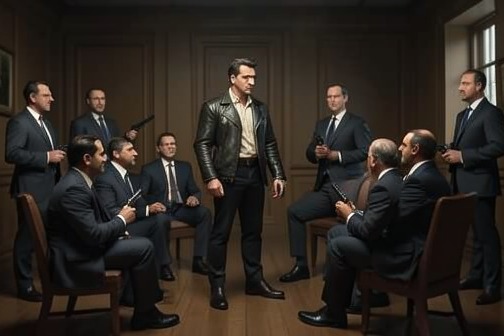
[The Ballroom Bust](entity:event-recall-event-the-ballroom-bust-bbc7911f4d50) is the decisive confrontation that breaks [Mickey MacFarland](entity:character-recall-character-mickey-macfarland-47d8bce7146a)’s hold over the men gathered in the ballroom and makes his eventual imprisonment possible. Its turning point is not a superior force: [Scarlet O’Bannon](entity:character-recall-character-scarlet-o-bannon-e4e8eec22e5d) recognizes that Mickey’s followers are armed and vastly outnumber her side, while [Cormac MacKay](entity:character-recall-character-cormac-mackay-0e15ee84c297) makes them confront how much their confidence depends on Mickey himself. By using Mickey as leverage and exposing the weakness beneath his authority, Cormac changes the room from a dangerous standoff into a surrender.
## Causes and Stakes
The operation takes place against the background of Mickey’s violent seizure of power and the harm he has caused to Cormac’s family. During the confrontation, Cormac identifies the personal stakes plainly: Mickey took the woman Cormac loves and his sister, and had a part in his father’s death. Those accusations place the struggle for control of the mob alongside a reckoning over abduction and murder. The men in the ballroom are not simply an audience to that conflict; they are the armed force whose loyalty has allowed Mickey’s rule to function.
Scarlet and Cormac enter a room sharply divided. On one side, unarmed men sit together, drinking slowly and looking toward the exit as though they are prisoners. On the other, armed guards watch over men and frightened prostitutes amid dancing, shouting, and drinking. The division gives visible form to the two kinds of power at work: coercion and enforced confinement on one side, a potential group of allies on the other. Scarlet’s assessment is that Mickey’s men have twenty guns for every one on her side. Any plan that depends on winning a conventional firefight would therefore be perilous.
## The Room Changes Hands
The first shift comes when Scarlet moves ahead of Cormac and searches for the sound system. It is across the room, within sight of the armed guards. As an elevator opens and three men emerge, the guards are caught by surprise. Scarlet’s father presses his [Federal Bureau of Investigation](entity:organization-recall-organization-federal-bureau-o-f1c5664278d2)-issued weapon beneath one guard’s chin, while two other men secure a second guard. The sound system is then cut off. The sudden quiet gathers attention around Cormac and Mickey, making the struggle for control of the room public and unmistakable.
The crowd’s response identifies the leverage Cormac has acquired: Mickey is in his hands. Several of Mickey’s men draw weapons and wave them toward Cormac, but doing so also places their boss in the line of fire. They hesitate, hampered both by their concern for Mickey and by their drunkenness. Across the room, the men who had seemed trapped stand up; Scarlet now sees them as an army preparing to fight. The balance has not yet changed numerically, but the forces within the room are no longer arranged as they were. The armed men’s position is compromised, while the previously passive group appears ready to act.
## Bluff, Disarmament, and Surrender
Cormac’s appeal is a calculated bluff as well as a challenge to Mickey’s authority. He tells the men that their expectation of becoming part of Mickey’s family, and their sense of safety under his protection, have failed them. He offers them survival if they put down their weapons, leave [New York City](entity:location-recall-location-7a11f2949ca3), and do not return, while threatening death if anyone moves. Scarlet knows the threat is not backed by the numbers: Mickey’s weapons outnumber theirs twenty to one. But Cormac is addressing belief and allegiance, not merely counting guns. The men have acted with impunity because they trusted Mickey’s backing; now they must decide whether that backing still exists.
Scarlet watches the men deflate and step back. One by one, they drop their guns, and Cormac’s side gathers the weapons and trains them on the men who have surrendered theirs. The prostitutes are told to clear the area and head for the hallway. That movement ends one immediate danger in the room: the armed groups are separated, and the women can leave. The surrender is a reversal of the apparent odds, achieved through the threatened consequence of loyalty to Mickey rather than through a firefight.
The terms then shift again. One of Mickey’s men objects because he understood Cormac’s offer as permission to go free. Cormac strikes Mickey across the back of the head, bringing him to his knees, and clarifies that the men will be released only when the agents let them go. He identifies the people present as Federal Bureau of Investigation agents and puts the decision about custody in their hands. His retaliation is tied to the losses he names, while his handover acknowledges that control of the room is not the same as authority to decide legal consequences. The men respond by chanting for Cormac as Don; Scarlet smiles at him, and he smiles back.
## Investigation and Aftermath
The operation continues beyond the ballroom. In the immediate aftermath, Cormac tells Scarlet she can call it in, and she reflects later on the paperwork that the event generated. She and her father share the work of conducting interviews and corroborating evidence. That procedural aftermath matters: the Bust does not rest only on Cormac’s dramatic seizure of Mickey or the surrender of the guns. Interviews and corroboration turn the confrontation into a case that can support lasting consequences.
Scarlet’s later account records those consequences. Mickey is serving life for multiple murders, his men are imprisoned or being tried, and corrupt agents have been removed. She also learns that one of those agents was a serial rapist and killer. The ballroom’s struggle therefore exposes danger not only within Mickey’s organization but within the law-enforcement network expected to respond to it. The Bust’s significance lies in both reversals: Mickey’s followers abandon the protection they believed he offered, and the agents’ corruption becomes part of the aftermath that Scarlet and her father must confront. What began as a room divided between armed captors and apparent prisoners becomes the starting point for a larger process of testimony, corroboration, and accountability.
Event 35
Cormac MacKay and Scarlet O’Bannon’s engagement
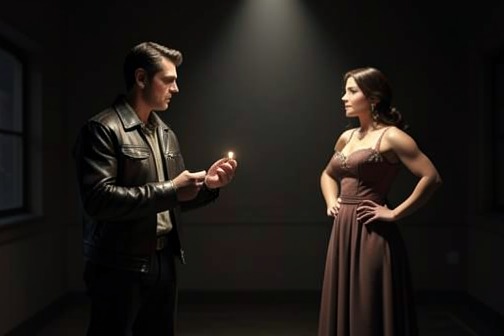
[Cormac MacKay and Scarlet O’Bannon’s engagement](entity:event-recall-event-cormac-mackay-and-scarl-b25a8a583b15) joins two lives shaped by opposing worlds: he has become Don and is rebuilding the mob, while she is a Federal agent. Cormac proposes in his penthouse after a private evening together, presenting a ring he has carried for weeks. Scarlet answers with a kiss, and their exchange makes the commitment both intimate and explicitly entangled with Cormac’s new position of authority.
## The commitment behind the proposal
The proposal comes after Cormac has taken up the work of rebuilding the mob his father established. Once the [Federal Bureau of Investigation](entity:organization-recall-organization-federal-bureau-o-f1c5664278d2) removed [Mickey MacFarland](entity:character-recall-character-mickey-macfarland-47d8bce7146a) and his men, Cormac discovered that Mickey had let the organization’s old contacts deteriorate and redirected its money into drugs and trafficking. Cormac’s response was not simply to reclaim the title of Don: he began dismantling those operations and rebuilding the organization from the ground up.
That rebuilding also involved people harmed by Mickey’s regime. Cormac put women Mickey had abused in contact with Scarlet so she could help them reach somewhere safe. He regards Scarlet’s involvement as essential, saying the rebuilding would not have been possible without her. His certainty that he will never again be apart from her grows out of this shared work as well as their romantic relationship: she has been a partner in confronting the damage that came with his inheritance.
The mismatch between their positions remains visible. Cormac is now the head of a mob, while Scarlet is an agent of the Federal Bureau of Investigation, and he feels the weight of the institution between them. Even ordinary public gestures—walking arm in arm, holding hands, kissing—still feel unfamiliar to him. He nevertheless insists that they are making a life together work. The proposal does not erase the conflict in their circumstances; it makes his intention to remain with her explicit despite it.
## The ring and the moment
On the drive to the penthouse, Cormac is distracted by a small velvet box in his pocket. He has carried it for weeks, ever since he walked into a jewelry shop and asked for a ring. Its physical smallness contrasts with the weight he assigns to what it means: the decision has been present before he speaks it, held close while he waits for a moment that feels right.
At the penthouse, the evening moves from intimacy toward a quieter pause. The two look down over [New York City](entity:location-recall-location-7a11f2949ca3)’s lights after calling for Chinese takeout. Cormac describes a sudden sense that something has clicked into place: he does not doubt that he is the right man for Scarlet, and he wants to be worthy of her. His declaration of love is not, in his telling, an impulsive line produced by the occasion; he says that he meant it and that he will always love her.
He takes the ring from his crumpled pants and opens the box. Scarlet’s jaw drops, and she can only begin to say his name before he asks, “Agent O’Bannon… will you marry me?” The address preserves the fact that she is a Federal agent even as the question asks her to share his life. The proposal makes their difference in status and allegiance part of the scene rather than disguising it.
## Scarlet’s answer and their changed terms
Scarlet does not give a spoken answer in the moment. Instead, she kisses Cormac and wraps her arms around his neck. Their physical closeness resumes, but the ring changes the meaning of the scene: the proposal has moved their bond from private certainty toward a promised future. Later, curled in his arms and looking out through the windows again, Scarlet repeatedly glances at the ring as if testing whether it is real. Cormac admits that he, too, can hardly believe it.
Their exchange turns the engagement toward the practical consequences of Cormac’s new authority. He asks what it feels like to be married to a mobster, a teasing formulation rather than evidence that a wedding has taken place. Scarlet says she sees the appeal, then tells him he had better toe the line now that he is in charge. Cormac answers that he will do so for her and that he would do anything for her. Her response makes affection inseparable from accountability: accepting him does not mean suspending judgment about what he does as Don.
## Significance
The engagement is both a romantic turning point and a test of whether Cormac’s personal promise can coexist with his public role. His rebuilding has required him to dismantle Mickey’s drug and trafficking investments, assist women abused under that regime, and rely on Scarlet’s help. The ring therefore follows practical cooperation and shared exposure to the consequences of mob rule; it does not arise in a world separate from them.
The scene also gives the couple a deliberate contrast between ordinary intimacy and extraordinary circumstances. A drive, a meal ordered in, a view of the city, and a ring in a pocket are familiar gestures, yet Cormac experiences even holding hands as unfamiliar, and the Federal Bureau of Investigation remains an obstacle between them. Scarlet’s warning about his conduct as the new Don keeps the promise from resolving that tension too easily. The engagement establishes their intention to stay together while leaving the conduct of Cormac’s rule as an ongoing condition of that future.
Event 36
The Butchers MC Is Rebuilt

[The Butchers MC Is Rebuilt](entity:event-recall-event-butchers-mc-38c07fff6c24) is the transformation of a decimated club into a continuing community under [Grizzly](entity:character-recall-character-grizzly-879f7ff26e99)’s leadership. Rather than allow the Skinners to dissolve after the devastation, he helps bring the Butchers out of its aftermath, preserving a place for members while attempting to prevent the same destructive patterns from returning.
## From the Skinners to the Butchers
Grizzly understands the rebuilding as an act of continuity: the Skinners had been badly reduced, but the Butchers emerged from their ashes. He had never left the motorcycle-club life and was determined not to let the group be broken up and disbanded so soon. The new club is therefore not a clean break from what came before. Its name and structure have changed, but its members still carry the earlier club’s losses and unfinished history.
That history is embodied in a farmhouse used as a safehouse. The property had belonged to the family of a young Skinner who was killed. As the family prepared to leave, they allowed the club to put the farmhouse to use, giving the rebuilt group a refuge with roots in the community it had lost. The practical arrangement also makes the past part of the club’s present: a place made available in the wake of a member’s death becomes shelter for those who remain.
## Leadership and the Next Generation
Grizzly’s leadership includes keeping younger members in line. [Kid](entity:character-recall-character-kid-78506c588e26) looks up to what the Butchers have built, and Grizzly describes him as good-hearted but sometimes foolish. Kid’s older brother had been a Prospect before the upheaval, and Grizzly tries to guide Kid so that the earlier tragedy is not repeated. The rebuilding thus involves more than maintaining clubhouses; it also means managing the inheritance of the club’s losses among its younger members.
The club’s operating network reflects the same practical attention to survival. The Butchers have several safehouses, and every member knows where they are, so anyone caught in trouble can reach one. When Grizzly takes [Ana](entity:character-recall-character-ana-c37b34a26ecf) away from a dangerous situation, he brings her to the nearby farmhouse, where other members have already gathered. Kid greets him there, visibly bloodied but apparently in good spirits. The scene presents the safehouse as an active refuge, not merely a property kept for emergencies.
## Protection and Belonging
The rebuilt club is also distinguished by the way Grizzly treats women associated with it. [Candy](entity:character-recall-character-candy-a4794126ff7b) tells Ana that she came from another motorcycle club, where women were mistreated. Grizzly saw members of that club’s leadership abusing the women, intervened, and offered those who wanted to remain in the life the option of joining him. Some accepted and some stayed behind; Candy went with Grizzly and says she has not regretted it. Her account gives the Butchers’ reconstruction a social dimension: the club’s identity is shaped not only by male membership and territory, but by the alternative it offers people seeking safety within the same world.
Grizzly’s boundary-setting extends to Ana, whom he makes clear is not a club girl and is to be left alone. When other members tease him about her, he does not present her as belonging to the club. Later, he knocks before entering the room beside his own and asks whether she is there. These details place personal respect and privacy alongside the club’s rough camaraderie, without suggesting that the rebuilt organization has left its hierarchy or pressures behind.
## A Rebuilt but Vulnerable Club
The Butchers’ survival does not end the threats surrounding them. A hostile figure, agitated by drug use and intent on revenge, remains dissatisfied with the damage already done to Grizzly’s club and its clubhouses. He wants Grizzly dead and Ana under his control. The account therefore sets the work of reconstruction against continuing retaliation: the club can provide shelter and a renewed sense of belonging, but its people and gathering places remain targets.
The rebuilding is shown through concrete acts rather than a formal account of the club’s founding: keeping the organization from disbanding, maintaining safehouses, guiding a younger member, and making room for women who choose to join. Together, these acts suggest a community trying to turn survival into a durable way of life. Its renewal remains unfinished, because the old losses still shape its members and the danger around them has not disappeared.
Event 37
The Motel Shooting Ambush
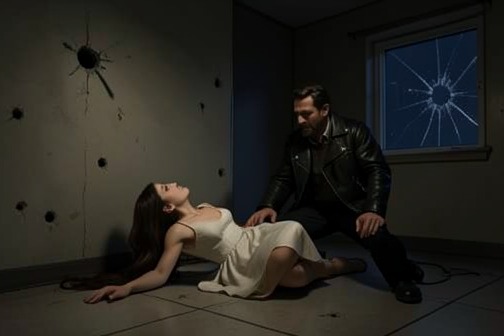
[The Motel Shooting Ambush](entity:event-recall-event-fa00a62e5e43) turns a sudden burst of gunfire into a flight for safety. Bullets tear through the room where [Ana](entity:character-recall-character-ana-c37b34a26ecf) and [Grizzly](entity:character-recall-character-grizzly-879f7ff26e99) are staying, and the attack revives Ana’s memory of a similar event five years earlier. Grizzly’s immediate priority is getting her away; the escape carries them to a farmhouse safehouse, where the first reports offer cautious relief but no complete accounting of the club’s people.
## Causes and Background
The episode begins without an identified attacker or an explanation for the shooting. Ana hears the first sharp pops before Grizzly does, followed by the sound of breaking glass. The violence escalates almost at once: the motel room’s glass gives way, and Grizzly pins her to the floor. When Ana looks up, she sees bullet holes scattered across the wall. The threat is made legible through damage to their immediate shelter, not through any account of who is firing or why.
The gunfire also strikes Ana through memory. As the room is hit, she recognizes the situation as resembling what happened five years earlier and feels the panic that had already begun that morning rising again. Her reaction establishes a personal history behind the fear, although this episode does not explain the earlier incident. Grizzly tries to reassure her while keeping her down; his repeated assurance that it will be okay sits against the visible evidence of bullets in the wall.
## The Attack and Escape
During a lull in the firing, Grizzly pulls Ana up and moves her toward the door. She tries to retrieve her bag, but he tells her to leave it. The choice is immediate and practical: possessions give way to escape while the gunfire has paused. Outside, other motel guests are also spilling out in panic, and the area has become chaotic. Grizzly’s attention narrows to Ana, whom he regards as the person he must get clear of the attack.
He takes her to his motorcycle and rides away before further harm can reach her. Grizzly believes her nightmare the previous night has left her particularly vulnerable to what is happening, though the passage does not disclose the nightmare’s contents. He expects the other men to follow and trusts them to handle themselves; Ana’s safety, rather than accounting for the group at the motel, determines his course. The episode’s movement from the room to the motorcycle makes the lull a brief opening, not a resolution of the attack.
## The [Farmhouse Safehouse](entity:location-recall-location-farmhouse-safehouse-7a570884cd0a)
Grizzly heads for the closest of several safehouses known to every member of [The Butchers MC](entity:organization-recall-organization-the-butchers-mc-9b3627c26852), so that the men can reach one when trouble breaks out. The farmhouse is normally about an hour away at a decent speed, but he gets there in roughly twenty minutes and arrives with barely a quarter tank of fuel. Those figures convey the urgency of the ride and its cost without suggesting that the danger has ended.
The farmhouse has a history tied to the club’s earlier identity as the Skinners. It belonged to the family of a Skinner boy who had been killed; as his family prepared to leave, they allowed the club to make use of the property. By the time Grizzly arrives, several of the men are already waiting outside, visibly on edge but appearing more at ease when he pulls up with Ana. The safehouse is thus both a practical refuge and a place made available in the aftermath of an earlier death.
## Casualties and Significance
Grizzly asks how many people have been hurt. Jet reports at least three injured among those already present, says more are still on their way, and relays that another rider has checked in to say additional members are coming. He does not think anyone has died, and Grizzly receives that as good news. The account is expressly provisional: the number covers those who have arrived, more reports may follow, and the apparent absence of deaths is an assessment rather than a confirmed final count.
The ambush changes the immediate measure of safety from whether the motel can be held to whether Ana and the others can reach a place of refuge. The broken glass and pitted wall establish how exposed the occupants were; the left-behind bag and hurried ride show the speed with which ordinary concerns fall away. At the farmhouse, the men’s partial arrival and uncertain casualty count keep the attack’s consequences open. Grizzly has removed Ana from the immediate gunfire, but the passage ends with the group still gathering and the full extent of the shooting not yet known.
Event 38
Road Rage’s Retaliatory Campaign Against the Butchers

Road Rage’s retaliatory campaign against [The Butchers MC](entity:organization-recall-organization-the-butchers-mc-9b3627c26852) turns a motel shooting into a widening conflict of ambushes, damaged clubhouses, and tampered-with motorcycles. The threat comes from an obscure motorcycle gang led by Road Rage, whose vendetta [Grizzly](entity:character-recall-character-grizzly-879f7ff26e99) sees as both dangerous and grounded in a false understanding of events. Grizzly’s response shifts from investigating the attackers to preparing his club to confront them, while the reason they chose The Butchers MC remains unanswered.
## Discovery of the Threat
After the motel shooting, Grizzly learned from [Mel](entity:character-recall-character-mel-c42cb76ff36c) that the attackers belonged to a motorcycle club formed under the radar. It had no clear public name, but it had a president: Road Rage, described as a junkie who had been gathering people around him for roughly four years. The limited information painted the group as violent drug users who caused trouble; it did not explain why they had targeted The Butchers MC. Grizzly therefore planned to ride out the next day and investigate for himself rather than assume he understood the conflict.
The uncertainty matters to the shape of the campaign. Grizzly had a lead about who was behind the shooting, but not a settled account of their motive. His first response was inquiry, and the information he received made the opposing group seem organized enough to be dangerous without making its purpose any clearer. The gang’s obscurity offered little reassurance: it operated with a president and a developing membership despite lacking a name by which Grizzly could readily identify it.
## Escalation and Personal Vendetta
From Road Rage’s perspective, Grizzly’s escape did not end the dispute. Road Rage had already spent time harassing Grizzly’s club and its clubhouses, but those actions did not satisfy him. His fixation centered on getting revenge against Grizzly, and his thoughts extended to [Ana](entity:character-recall-character-ana-c37b34a26ecf) as well. When using drugs, he became agitated rather than calm, a state associated in the account with violent impulses and an increasingly consuming vendetta.
The conflict also involves a profound difference in how the two men understand what has happened. Grizzly describes Road Rage as believing that certain events occurred when they did not, and as unwilling to discuss the truth with him or anyone else. To Grizzly, that combination makes the dispute exceptionally hard to settle through conversation: Road Rage is not merely hostile, but committed to a version of events that Grizzly considers false. Grizzly consequently warns his men that the whole group is dangerous and that Road Rage’s grievance is not likely to be resolved by an explanation.
## The Attacks on The Butchers MC
As the conflict worsens, The Butchers MC face repeated interference rather than a single isolated strike. Members are ambushed while riding; clubhouses are left badly damaged; and motorcycles are tampered with. Grizzly identifies this growing pattern as the reason that leaving the problem alone is no longer viable. The attacks put the club under continuing pressure and make it increasingly likely, in his judgment, that Ana could be drawn back into the turmoil if he waits.
Ana’s absence gives Grizzly room to concentrate more fully on the danger, but it does not make the campaign less personal. He hears that she seems sad and may miss him, yet believes she is missing someone else. That knowledge sits alongside his immediate responsibility for the club: he is glad she is away from the escalating violence, while fearing that delay could eventually pull her back into it. The campaign thus places his private concern for Ana beside the public pressure on The Butchers MC, without resolving the tension between keeping her apart and confronting the threat.
## Grizzly’s Preparation for a Counterattack
Grizzly decides the group must be dealt with before the conflict grows further. The night before the planned action, he gathers the men at the clubhouse and explains the situation and his decision. He emphasizes Road Rage’s volatility, his vendetta, his distorted beliefs, and his refusal to engage with the truth. Grizzly also invokes the danger of allowing a past disaster to happen again, making the coming operation a matter of preventing a recurrence as well as answering the present attacks.
He then lays out when and how the men should act, directing them to keep a low profile, rest, and be ready. The plan is aimed at bringing the conflict to a decisive end, but the account establishes the preparations, not the operation’s result. The campaign therefore closes this portion of its arc at a point of suspended action: Road Rage’s attacks have made inaction untenable, and Grizzly has mobilized The Butchers MC, but the outcome of their planned confrontation remains outside the episode’s immediate evidence. The unanswered question of why the gang first targeted the club persists even as both sides move toward a reckoning.
Event 39
Grizzly Escapes Road Rage’s Hideout
[Grizzly Escapes Road Rage’s Hideout](entity:event-recall-event-grizzly-road-rage-2bfb1e7b158b) is the failed reconnaissance that turns [Grizzly](entity:character-recall-character-grizzly-879f7ff26e99)’s suspicions into a direct confrontation with a presumed-dead enemy. What begins as a cautious attempt to assess Road Rage’s group ends with Grizzly discovering that [Rodent](entity:character-recall-character-rodent-741ce8e750d6) survived, has adopted the name Road Rage, and wants him captured for delivery to [The Butchers MC](entity:organization-recall-organization-the-butchers-mc-9b3627c26852). Grizzly’s escape preserves his freedom, but sends him back with new knowledge of the danger facing his club.
## Reconnaissance and Capture
Grizzly sets out early the next morning, reasoning that the group under Road Rage is most likely to be partying over the weekend. He hopes to find them in a state that makes them less threatening, but has also decided that if the circumstances demand it, he will deal with them directly. His plan includes the possibility of leaving before the situation gets out of hand; he is not setting out with certainty about what he will find.
After some investigation, he locates their hideout, a house reached by a long dirt road. He leaves his motorcycle off to the side of the road and approaches on foot, taking cover among trees near the house. With no curtains on the windows, he can see inside, though the people there soon disappear from view. Only three motorcycles are parked outside. Grizzly recognizes that this does not prove there are only three people in the house, but it shapes his assessment of the risk: he considers walking up to ask for Road Rage or waiting until nightfall to get closer.
The choice is taken from him when he hears a twig snap behind him, followed by the click of a gun. An armed man orders him not to move. The scene reverses Grizzly’s position from watcher to captive before he can put either of his plans into action. The captor makes a phone call and then pulls Grizzly to his feet, explaining that the boss wants to see him. Grizzly lets himself be led inside because the forced introduction may still get him the audience he came to seek, though he has no control over how that encounter will proceed.
## The Recognition of Rodent
Inside, Grizzly sees people using drugs and is struck by the disorder of the place. The setting challenges the appearance of an organized motorcycle club: what he finds is a group whose conduct and surroundings make its organization seem doubtful. He is pushed into a back room containing an old table and folding chairs, with drug-related items scattered across it. At the head of the table sits a man who seems vaguely familiar.
Grizzly recognizes him as Rodent, a man Grizzly believed he had seen die. Rodent is now visibly changed, and Grizzly’s recognition makes the meeting more than an encounter with a new adversary: it overturns his understanding of what happened to someone from his past. Rodent identifies Grizzly as the person he spotted spying outside and explains that he is now called Road Rage. The new name marks his position as leader, while his immediate hostility makes clear that the meeting will not become an exchange of information on equal terms.
Rodent’s reaction also reveals the personal stakes of the confrontation. He tells Grizzly that he does not like him, and Grizzly sees a level of hatred in him that he had not seen before. Grizzly’s disbelief that Rodent is alive competes with the immediate danger of being held at gunpoint. Recognition supplies an answer to one question, but opens another: why has the man Grizzly thought dead returned as the leader of this group?
## The Threat and the Escape
Road Rage leaves Grizzly alone in the room without locking the door. Grizzly searches for something he could use to defend himself, but finds no weapon. Listening at the door, he hears people discussing shooting him and delivering him to The Butchers MC. The overheard plan changes the stakes of his captivity: he is not simply being detained for questioning, but is at risk of being killed and handed over as a prize.
The unlocked door gives him no safe exit. Instead, Grizzly returns to the window, quietly turns its lock, raises it, and removes the screen. He waits when the voices outside pause, then climbs out and runs toward the woods. His motorcycle has not been brought closer to the house, an oversight that leaves him a route back to the road. The escape depends on the same cautious attention that shaped his approach: he watches, listens, and moves when he has an opening.
Shouting follows, and gunfire begins as Grizzly runs. Bullets strike a tree near him, but he keeps moving toward the motorcycle. He reaches it, gets on, and rides away without being pursued. From the house he hears angry cries, suggesting Road Rage is furious that Grizzly has escaped. Grizzly then rides hard back to the clubhouse and stops there, taking a moment to process what he has learned.
## Consequences and Significance
The encounter leaves Grizzly with three consequential discoveries: the group’s hideout is active, its leader is the surviving Rodent, and Road Rage intends to have him killed and delivered to The Butchers MC. These revelations recast the threat from an uncertain question of numbers and organization into a conflict involving a known enemy with a personal grievance. The failed reconnaissance therefore yields information at the cost of exposing Grizzly to capture and gunfire.
The event also hinges on small failures and openings. Grizzly is caught because another person approaches unseen, but he is able to escape because his captors leave the window available and do not move his motorcycle closer to the house. His return is not presented as a victory over Road Rage: the group remains in place, and Grizzly has not confronted its leader on his own terms. Instead, he carries the changed understanding back to the clubhouse, where he pauses to absorb the fact that the man he thought dead is alive, now leads the group, and has made him a target.
Event 40
Road Rage Kidnaps Ana
[Road Rage Kidnaps Ana](entity:event-recall-event-ana-road-rage-22e7d6c51edb) is the moment [Ana](entity:character-recall-character-ana-c37b34a26ecf)’s precarious attempt to build a life apart from [Grizzly](entity:character-recall-character-grizzly-879f7ff26e99) is interrupted by the return of [Rodent](entity:character-recall-character-rodent-741ce8e750d6), now calling himself Road Rage. The abduction begins during an ordinary shift at [Kevin's Bar](entity:location-recall-location-kevin-s-bar-be520e7d024a), but turns into a threat to Ana and her unborn child. Ana has little control over what happens to her; within that constraint, she makes a crucial choice to keep [Kid](entity:character-recall-character-kid-78506c588e26) from acting openly and to send him for Grizzly.
## Background and Setting
Before Road Rage appears, Ana is pregnant and still working at Kevin's Bar. She has begun looking for a more stable job that she considers more suitable for an expectant mother, but has not yet found one. The uncertainty is practical as well as personal: she worries that her pregnancy may affect whether her boss will want her behind the bar. For now, she remains in the job, trying to keep her attention on work rather than on her disappointment that Grizzly has not come for her.
The shift is unusually slow. Ana fills the quiet by running the bar and serving tables, and concentrates on keeping customers pleased and earning tips. Work gives her something to do while her thoughts threaten to return to Grizzly’s absence. The routine also establishes the public setting of the kidnapping: Road Rage does not lure Ana away in private. He approaches her inside the bar, in a place where other people are present, and takes advantage of the fact that no one steps in.
## Road Rage Returns
The encounter begins when someone Ana is not serving pulls her onto his lap. Her first response is hope that Grizzly has finally come for her, but she quickly recognizes that the man is neither as large nor as deep-voiced as Grizzly. When she turns, she identifies the stranger as Rodent, whom she had not expected to see again. His altered appearance makes the reunion more unsettling, but the decisive change is what he calls himself: Road Rage, or Rage for short, and he insists that Ana use that name rather than Rodent.
Road Rage says that he has been looking for Ana for a long time and waiting for her to reappear. He connects her return to Grizzly, whom he dismissively characterizes as her companion, making clear that he knows or suspects Ana is associated with him. The encounter therefore has a history beyond the immediate confrontation: Road Rage has not simply met Ana by chance, but has been anticipating the opportunity to find her. His use of the new name, coupled with his insistence that she acknowledge it, asserts control over how she may address him as the situation escalates.
## Threat to Ana and Her [Pregnancy](entity:state-recall-state-pregnancy-cdafbf158725)
Road Rage’s questions and actions make Ana’s pregnancy central to the danger. He asks whether she is pregnant again. Ana gives no confirmation, but her reaction conveys alarm; Road Rage then treats her silence as no protection against his suspicions. He threatens the unborn child if she says anything, placing Ana in a coerced choice between resisting him and protecting the pregnancy. The scene does not establish exactly how much he knows beforehand, but it shows that he has identified the possibility and is willing to use it to control her.
Ana responds by holding back her anger and complying verbally. Her restraint is not agreement: she is trying to avoid provoking an immediate threat to the baby. This changes the stakes from a confrontation over Ana’s freedom alone to a situation in which her decisions are constrained by the danger Road Rage poses to her pregnancy. Her earlier plans for work and greater stability are abruptly displaced by the need to get through the encounter alive and keep the child safe.
## Kid’s Intervention and the Abduction
As Road Rage leads Ana toward the exit, the other people in the bar do not intervene. Kid, seated near a corner, begins to stand and reaches inside his kutte. Ana sees him and sharply shakes her head. She does not want him to challenge Road Rage there, where an immediate confrontation could worsen the danger. Instead, she silently directs him to get Grizzly. Kid looks conflicted, then sits back down as Road Rage takes Ana out.
That exchange gives Ana a limited but important form of agency. She cannot prevent Road Rage from removing her, but she can signal Kid and shape his response. Her choice distinguishes the apparent passivity of her compliance from her actual purpose: she is trying to prevent an impulsive intervention while getting help to the person she hopes will come for her. Kid’s hesitation also makes the departure a moment of unresolved danger rather than a rescue; the text does not show whether he reaches Grizzly or how quickly help can follow.
Road Rage takes Ana out of the bar and onto the back of his motorcycle. He presents the ride as though it were a first date repeated, recasting the abduction in falsely familiar terms while Ana recognizes that cooperating may be her best chance of protecting herself and her baby. The event ends with her in Road Rage’s control and her destination unknown. The ordinary bar shift has become a forced departure, while the silent message to Kid leaves open the possibility of intervention beyond the scene.
Event 41
Death of Road Rage
Road Rage’s death marks the point at which [Grizzly](entity:character-recall-character-grizzly-879f7ff26e99)’s pursuit of [Ana](entity:character-recall-character-ana-c37b34a26ecf)’s abductor becomes a direct confrontation: after learning that Ana has been taken, Grizzly finds Road Rage at his hideout and kills him. The scene moves from an urgent report to a deliberate assault, then pivots immediately back to Ana, whose whereabouts remain the priority even after Road Rage is dead.
## Causes and Background
Grizzly and his men are preparing to ride out when [Kid](entity:character-recall-character-kid-78506c588e26) arrives at speed, skidding to a stop in the drive. Grizzly rebukes him for leaving Ana, whom Kid had been told to watch, but Kid explains that a man at the bar grabbed her, made her sit with him, behaved offensively, and dragged her away. The account gives Grizzly the immediate cause for abandoning whatever departure he had planned: Ana has been taken, and the report points to a specific threat.
Kid appears close to angry tears and blames himself for what happened. Grizzly recognizes his distress but insists on hearing the full account rather than letting the group’s panic take over. Once Kid has explained, Grizzly identifies the abductor as [Rodent](entity:character-recall-character-rodent-741ce8e750d6), also known as Road Rage, and knows where to find him. The revelation changes the purpose of the ride from a planned departure into a pursuit. Grizzly says he had already been ready to end matters with Road Rage; the kidnapping turns that existing hostility into a personal drive to reach him.
## The Ride to the Hideout
Grizzly orders the group to move and directs Kid to stay behind and hold down the fort. Kid wants to go with them, so Grizzly allows it only on the condition that he remain at the back and avoid taking risks. The instruction reflects the immediate stakes: Grizzly is mobilizing his men for a confrontation, but he is also trying to prevent Kid from becoming another person who needs rescuing.
They take the fastest route to Road Rage’s hideout. Grizzly remembers how to get there, but this time makes no effort to conceal the group’s arrival. He believes Road Rage already knows they are coming. A small group waits outside; to Grizzly, they look less like a disciplined force prepared for battle than people under the influence of drugs. That impression establishes the imbalance he sees on arrival: the men outside appear wary, while Road Rage is the one who steps forward as if willing to fight.
## Confrontation and Death
Grizzly and his men stop at the front of the hideout without lingering to dismount. Road Rage greets their return with a sneer, and Grizzly answers with a taunt of his own. The exchange is not an attempt to negotiate or gather information at a distance. Grizzly moves straight toward him, grabs the front of his shirt, and slams him against the house.
Road Rage’s men begin to move toward Grizzly, but Grizzly’s men step between them. Armed with knives and bats, they make the followers back off. With his own men holding the others away, Grizzly demands to know where Ana is and threatens Road Rage. Road Rage says Ana is inside and boasts that he has done something to her. The evidence establishes this as Road Rage’s claim; it does not establish precisely what happened to Ana before Grizzly arrived. The boast is enough to trigger Grizzly’s response.
Grizzly holds Road Rage against the house by the throat and does not let go until Road Rage is dead. The killing is presented as a sudden escalation within an already violent standoff: the immediate cause is Road Rage’s statement about Ana, while Grizzly’s anger has been building since Kid reported the abduction. His men keep the followers from intervening as the confrontation ends.
## Aftermath and Significance
When Grizzly releases Road Rage, the followers show little concern for their dead leader. They seem more afraid of what Grizzly might do to them than moved by the death, and none has tried to save Road Rage. Grizzly warns them not to stop him and tells them to leave if they want to avoid the same fate. They scatter. The group’s retreat ends Road Rage’s control of the scene, but it does not resolve Ana’s situation.
Grizzly storms into the house, calling Ana’s name. The people inside whom he encounters groan and tell him to be quiet; he continues searching and shouting. The scene therefore closes not on the killing as a victory in itself, but on Grizzly redirecting his attention to the person whose abduction caused it. The evidence ends with him inside the hideout and Ana’s condition and whereabouts still unconfirmed. Structurally, that unresolved search preserves the distinction between killing the abductor and finding the captive: Road Rage’s death removes the immediate opponent, but it does not yet answer the question that matters most to Grizzly.
Event 42
Ana’s Rescue and Hospitalization After Her Injury
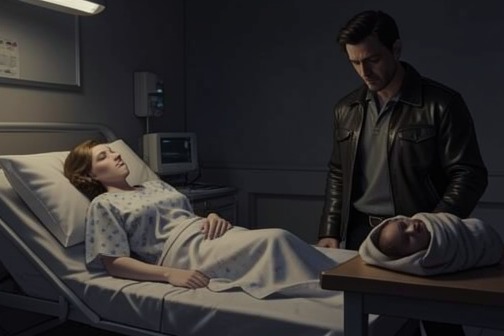
[Ana](entity:character-recall-character-ana-c37b34a26ecf)’s rescue and hospitalization turn a violent crisis into a moment of medical reassurance and a new beginning for her and [Grizzly](entity:character-recall-character-grizzly-879f7ff26e99). After Grizzly finds her injured in the house, he carries her out and takes her to the hospital. Doctors establish that she is pregnant, that the injury caused distress, and that the baby is safe. Her stay gives her time to recover and to accept the future she had feared might no longer be possible.
## Background and Stakes
Ana’s circumstances are shaped by two distinct experiences of pregnancy. Before the rescue, she had begun to suspect that she was pregnant again after missing a period that had always been regular. She had been having unprotected sex with Grizzly, but put off taking a test because she was not ready to face the result while other problems weighed on her. Once she bought tests, each one was positive, confirming that she was carrying Grizzly’s child. The prospect brought both the possibility of motherhood and the fear attached to her earlier loss into the present.
That earlier pregnancy had remained a private source of pain. Ana had never told anyone about it before disclosing to Grizzly that she had been pregnant before the raid and lost the baby after [Rodent](entity:character-recall-character-rodent-741ce8e750d6) died. She connected the loss to the stress of that night and explained that she had been unable to stay with Grizzly after what happened. The confession gives context to her hesitation: the new pregnancy did not arrive as uncomplicated good news, but alongside a loss she had kept to herself and the experience of having once nearly become a mother.
## Grizzly Finds Ana
The immediate emergency begins when Grizzly storms into the house with Ana as his first priority. He searches through the rooms until he finds her lying on the floor, injured and bleeding. His attention narrows to reaching her and getting help. Ana responds to him by name, and he lifts her carefully, telling her he will take care of her. He recognizes that the seriousness of her condition exceeds what he can manage himself and decides that she needs a hospital immediately.
Grizzly carries Ana out while other members of [The Butchers MC](entity:organization-recall-organization-the-butchers-mc-9b3627c26852) keep watch over the people inside. He does not let the surrounding disorder displace his central task: getting her medical care. At the hospital he rushes through the doors with Ana in his arms, while [Kid](entity:character-recall-character-kid-78506c588e26) stays beside him and the rest of the group hangs back rather than crowding the entrance. Grizzly calls for help when it does not arrive quickly enough. The scene shifts the focus from the violence at the house to the uncertainty of Ana’s condition and the need for urgent professional attention.
## Diagnosis and Reassurance
A doctor later asks Grizzly and Kid to speak privately, explaining that there has been a misunderstanding about the nature of Ana’s injuries. The doctor tells them that Ana has not been raped and has no signs of forced penetration. Grizzly’s immediate relief is followed by another question: what caused her to bleed so heavily? The doctor answers that Ana was injured, had mild abdominal bruising, and experienced pregnancy distress as a result.
After conducting multiple tests, the medical team determines that the baby is fine. The doctor says Ana needs to rest for the next few days and should then be able to return to her normal daily life without many further precautions. The diagnosis changes the meaning of the crisis for Grizzly. He learns not only that Ana is likely to recover, but that she is pregnant and that the child has survived the injury. The doctor recognizes that he is delivering the news to the father-to-be before Ana can tell him herself, but explains that Ana specifically wanted Grizzly informed so that he would not worry.
## Recovery and Consequences
Ana remains in the hospital for several days while the doctor checks that it is safe for her to be up and about. Though she dislikes staying there, she accepts the need to rest because the baby’s welfare comes first. Her recovery is supported by repeated visits from The Butchers MC. Members bring flowers, cards, and plush toys, and offer congratulations. Grizzly has shared his excitement about becoming a father, and Ana is able, with the pressure from other troubles lifted, to feel happy about the possibility of motherhood too.
On her third day in the hospital, Grizzly comes to take her home. Ana looks forward to a proper shower and a comfortable bed, and especially to being close to him again. The episode therefore ends not with the medical emergency alone, but with Ana returning to a relationship and a place of care after being injured. The danger has not erased her earlier grief; rather, the hospital’s findings distinguish this pregnancy from the one she lost and make room for hope without making the past disappear.
## Narrative Significance
The rescue links physical vulnerability with the long-delayed disclosure of Ana’s reproductive history. Her earlier loss had been kept secret, while the current pregnancy first became real to her through tests she bought without telling Kid why she needed to enter the store alone. In the hospital, information passes first from the doctor to Grizzly at Ana’s request, turning a medical update into a shared future. The visitors and gifts then make that future visible within the group, as private fear gives way to collective congratulations.
The event’s decisive reversal is precise: the injury prompts fear for Ana and the baby, but medical examination confirms both that the immediate harm is limited and that the pregnancy continues. Grizzly’s role moves from finding and carrying Ana to receiving the news that he will be a father; Ana’s role moves from withholding a test result and living with an undisclosed earlier loss to recovering with support and allowing herself happiness. The hospitalization thus provides more than treatment. It creates the conditions for the couple to understand the pregnancy as a real, shared prospect.
Event 43
Ana Leaves the Butchers Clubhouse
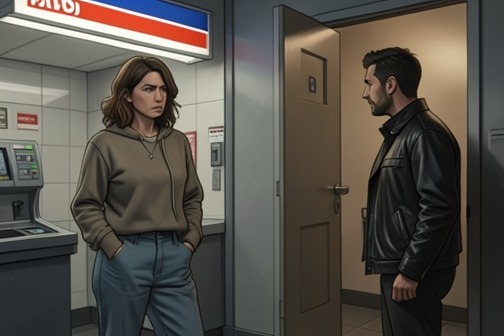
[Ana Leaves the Butchers Clubhouse](entity:event-recall-event-ana-butchers-34359669475e) is [Ana](entity:character-recall-character-ana-c37b34a26ecf)’s departure from the communal life of the Butchers in order to prepare for a child and build a home of her own. The move is practical as well as emotional: she has saved enough to rent a modest apartment near work, but [Grizzly](entity:character-recall-character-grizzly-879f7ff26e99)’s restrained response leaves her to interpret his silence as rejection. Her departure therefore brings a fragile new independence together with unresolved grief and a pregnancy whose full history has not yet been told.
## Circumstances and decision
Ana’s choice follows the discovery that she is pregnant. After her period is late, she delays taking a test because she fears making the possibility real while she is already struggling to keep other parts of her life in order. She eventually goes to a convenience store with [Kid](entity:character-recall-character-kid-78506c588e26), telling him she needs medicine for a stomach bug and asking him to wait outside. She buys every brand of pregnancy test the store carries; each one is positive. Alone in the bathroom, she recognizes that she is carrying Grizzly’s child and that she will become a mother.
The pregnancy intensifies the reasons Ana has for not staying at the clubhouse indefinitely. She and Grizzly have had unprotected sex, and the possibility of an unplanned pregnancy brings back the memory of an earlier pregnancy and loss. She had once imagined becoming a mother, but the events of five years earlier led her to give up that hope. The new pregnancy consequently carries both possibility and dread. Ana does not treat it as a simple resolution to her relationship with Grizzly: the uncertainty of their connection and her need to decide how to live remain pressing.
By the time she tells Grizzly she is leaving, Ana has worked at [Kevin](entity:character-recall-character-kevin-a4705189f694)’s Bar long enough to save a meaningful amount. Her regular income makes rent attainable without exhausting her savings, and the available apartments offer a relatively safe neighborhood, walking distance to work, and a small daycare on the premises. These practical details matter to her plans for the baby. The apartment is not ideal, but it offers a degree of security and a place from which she can support herself.
## Grizzly’s response and the move
When Ana tells Grizzly that she is going, he nods and says that he understands. She had privately hoped he would ask her to stay, explain his behavior from the previous night, or tell her that his distance came from shock rather than indifference. He does none of these things. Ana takes his acceptance as an answer about what he wants, even though the exchange does not establish what he actually feels. She concludes that he does not want her and is hurt by that conclusion, but resolves not to let his response determine how she carries herself.
The club marks Ana’s departure with a going-away party attended by the men and club girls. [Candy](entity:character-recall-character-candy-a4794126ff7b) joins in, despite Ana’s regret that work has left her little time to spend with her. Grizzly remains in the background, and Ana does not draw him into the celebrations. The party gives the departure a communal farewell, but it does not repair the silence between them. Its warmth stands beside the absence of the direct conversation Ana had wanted before she left.
Kid helps Ana move. He has been the Butcher who most often drives her to and from work, and there is little to transport: the apartment comes sparsely furnished, and Ana has lived in small spaces before. Her new home consists of one bedroom, one bathroom, a living room, and a kitchen, without a dining room. She accepts the limits of the place because its rent is affordable and because its furnishings mean fewer immediate expenses. The move is a calculated beginning, not a claim that she has found an easy or perfect refuge.
## A home apart from the clubhouse
Once Kid leaves, Ana finds the apartment quiet, almost stagnant. She has become accustomed to the clubhouse’s constant activity, so solitude feels unfamiliar even though she has chosen it. Kid has tried to soften Grizzly’s silence by suggesting that he may have had a reason for his behavior or may not have intended to hurt her. Ana does not continue the discussion. Left alone, she reminds herself that the move is for herself and her baby, touches her still-small abdomen, and resolves that she can manage what comes next.
The contrast between the clubhouse and the apartment makes the cost of her independence concrete. At the club, people and movement had surrounded her; in the new place, safety and affordability do not immediately supply companionship. Yet the apartment gives Ana control over her surroundings and puts her near both her job and childcare. Her decision is thus not simply to leave Grizzly. It is an effort to arrange the material conditions in which she might raise a child without depending on a relationship whose future is uncertain.
## Hidden history and later revelations
Ana’s departure is shaped by a history she has not yet disclosed to Grizzly. When she eventually tells him about her earlier pregnancy, she explains that she lost the baby after the stress of the night of the raid, following [Rodent](entity:character-recall-character-rodent-741ce8e750d6)’s death. She says that she could not remain at the clubhouse after everything that had happened. The loss had been a private source of pain for years, so the disclosure gives Grizzly a fuller account of why staying there had become so difficult.
The later revelations complicate that account. Grizzly misses Ana after she leaves, but believes that telling her Rodent is alive would add guilt to her grief: she might blame herself for having left and for losing the baby, while Rodent’s accusations about her feelings for Grizzly could compound the pain. In a later confrontation, Rodent reveals that he saw Ana’s pregnancy test and had waited for her to tell him. Ana confirms that the child she had been carrying was Rodent’s and says she kept the pregnancy secret because she was afraid. The disclosure links Ana’s decision to leave not only to her new pregnancy and strained relationship with Grizzly, but also to a past pregnancy and a concealed truth that Grizzly’s silence cannot protect her from indefinitely.
The episode’s central change is therefore a movement from crowded belonging to precarious self-reliance. Ana leaves with limited resources, a new pregnancy, and no reassurance from Grizzly, but she chooses a home organized around her own work and the child she expects to raise. The departure does not settle the relationships or secrets surrounding her; it gives those unresolved matters a new setting, and makes clear that her attempt to begin again must contend with the past as well as the future.
Event 44
Grizzly and Ana Officially Reconcile
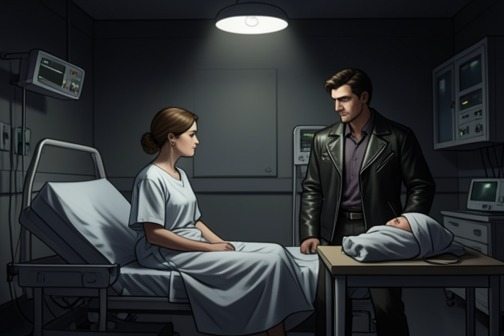
[Grizzly and Ana Officially Reconcile](entity:event-recall-event-grizzly-ana-fd596f1698e2) is the hospital-bedside turning point in which [Ana](entity:character-recall-character-ana-c37b34a26ecf) and [Grizzly](entity:character-recall-character-grizzly-879f7ff26e99) stop interpreting one another’s withdrawal as rejection and openly affirm that they want to be together. The news that Ana is pregnant brings their crossed assumptions into the open: Grizzly believes the baby is his without questioning her, while Ana learns that his earlier departure came from a mistaken attempt to let her go. Their reunion then takes practical form when she leaves the hospital and her old apartment for the clubhouse, a place she now associates with what she can gain rather than what she has lost.
## The [Pregnancy](entity:state-recall-state-pregnancy-cdafbf158725) and the Return to the Hospital
Ana is recovering in the hospital after being rescued from [Rodent](entity:character-recall-character-rodent-741ce8e750d6)’s den. The doctor has assured her that the baby is fine, though a little banged up, and has ordered several more days of bed rest before she can leave. Ana accepts the restriction because protecting her child matters more than getting out of the hospital quickly.
Grizzly enters looking exhausted and wearing the same clothes he had on when he took Ana from Rodent. His appearance comforts her: she wonders whether he has stayed at the hospital, and recognizes that he was there through the period when she needed treatment. The scene therefore begins with practical care already present, even before either of them explains what they want from their relationship.
When Grizzly asks whether the doctor’s news is true, Ana confirms that she is going to have a baby. He takes in the fact with visible disbelief and happiness, recognizing that he is going to be a father. More important to Ana than his surprise is what he does not ask: he does not doubt that the child is his. He reaches for her hand and places it on her belly, touching it gently before his fingers tighten in her hospital gown. That quiet gesture gives physical expression to a trust neither has yet managed to say aloud.
## The Misunderstanding Between Them
Grizzly apologizes and explains why he had withdrawn. After Ana told him about the baby she had with Rodent, he thought he understood her distance as evidence that she was still too hurt to be with him. He says that this belief was why he left and let her go; he thought it was what she wanted. His question about why she had let him go if she knew about the current pregnancy exposes how differently each had read the other’s silence.
Ana’s explanation reveals the other half of the misunderstanding. She believed Grizzly no longer wanted her because he had learned about her previous pregnancy, the baby she lost, and the way the experience had left her shaken. She had understood her past as making her damaged goods in his eyes. The two accounts are painful mirrors: each believed the other had reached a settled decision, when both were acting on fears about being unwanted.
Grizzly answers that he has always wanted her, while explaining that her relationship with Rodent, her departure, and the news of the earlier baby had led him to think there was no place for him in her life. Ana tells him there has always been a place for him with her. Saying it aloud matters: she acknowledges she had held the feeling back even from herself, and Grizzly’s response confirms that the affection is mutual. Their kiss follows that mutual recognition, no longer burdened by the same unspoken assumptions.
## Recovery and a Shared Home
The reconciliation continues during Ana’s remaining stay. She spends several more days in the hospital while the doctor checks that she is safe to be up and about. [The Butchers MC](entity:organization-recall-organization-the-butchers-mc-9b3627c26852) visit in a steady stream, bringing flowers, cards, and plush toys as well as congratulations. Grizzly has been unable to contain his excitement about becoming a father, and the support around Ana helps her feel able to welcome motherhood after the strain of the events that brought her there.
Grizzly picks Ana up on her third day in the hospital. During those three days, the members of The Butchers MC have moved her belongings from Ana’s Apartment to the clubhouse, with Ana’s permission. She is glad not to return to the apartment: it had become a reminder of what she was losing, whereas she now finds a sense of gaining something at the clubhouse. The move gives the reconciliation a concrete consequence, turning renewed affection into a shared living arrangement.
On the cab ride to the clubhouse, Ana leans against Grizzly and says she is glad the ordeal is over and that they can get back to normal. She responds warmly to his description of the clubhouse as home. Her wish for a shower, a proper bed, and the chance to be close to him makes the destination specific: returning is not simply leaving the hospital, but choosing a place and a relationship she now wants to inhabit. The event closes with their future still ahead of them, but with the central uncertainty resolved: both have said they want the other, and Ana is no longer planning her life around the assumption that she must leave.
Event 45
Aaron’s Birth
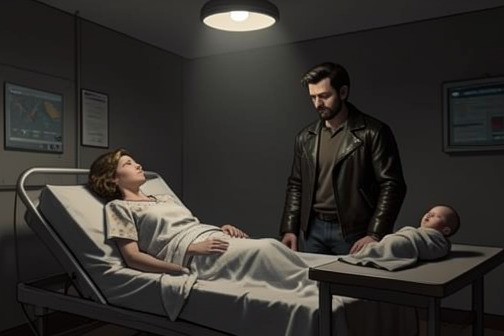
Aaron’s birth is the turning point from [Ana](entity:character-recall-character-ana-c37b34a26ecf) and [Grizzly](entity:character-recall-character-grizzly-879f7ff26e99)’s hard-won reunion to their life as parents. Grizzly recounts a pregnancy that had been easy, then a delivery lasting almost three days, during which he feared for Ana and their child. The birth brings that prolonged uncertainty to an end; in the epilogue, the family’s ordinary life with their son makes the significance of reaching that moment visible.
## Background and Course of the Birth
The birth takes place a few months after Grizzly gets Ana back. Her pregnancy had been easy, a result that shocked and pleased him. The delivery, by contrast, becomes a near-nightmare: their child stays in the womb longer, and labor takes almost three whole days. Grizzly remains at Ana’s side through the hours of pain and the uncertainty over whether she will need a cesarean.
His account keeps the danger in the form of fear rather than medical detail. Grizzly worries about Ana, the baby, and the possibility that one or both might not survive. The long duration matters: this is not presented as a brief passage between pregnancy and parenthood, but as an ordeal in which the family’s hoped-for future remains uncertain until the delivery is over.
## Ana and Grizzly at the Delivery
Grizzly stays beside Ana throughout the labor. His attention is fixed on both mother and child, and he describes the hours as a succession of pain and worry rather than as a medical chronology. His fear of a possible cesarean and of losing either of them gives the birth its emotional stakes; the text does not say that the operation takes place, only that he spends hours wondering whether it will be necessary.
The relief at the end is inseparable from Ana’s response. Grizzly says that holding his newborn son is surpassed only by seeing the joy on Ana’s face as she sees the two of them together. Her words identify them as her boys, making the new family bond explicit. The moment is described through their shared presence: after the prolonged uncertainty, mother, father, and child are together.
## Naming and Early Fatherhood
Grizzly holds his newborn son after the delivery and embraces the role of father. The baby is later named Aaron, after Grizzly’s real name, although Grizzly prefers calling him his little bear cub. The two names convey different aspects of the relationship: Aaron is the name given to him, while the affectionate nickname expresses Grizzly’s fondness for their child.
Grizzly describes the baby as good-natured, saying he barely cries or screams. He does not resent changing diapers; instead, he stresses how much he loves being a father. His account connects parenthood to the love he shares with Ana and to a commitment to raise and care for their son. The birth therefore changes more than their household: it gives Grizzly a future defined by sustained responsibility for the child he and Ana have made together.
## The First Month and the Epilogue’s Contrast
About a month after Aaron’s birth, Grizzly sits on the clubhouse porch and watches Ana push their son on a baby swing he has put up on a tree outside. [Kid](entity:character-recall-character-kid-78506c588e26) is trying to fix his bike nearby, while [Candy](entity:character-recall-character-candy-a4794126ff7b) talks with Ana. Ana laughs, then moves aside so Candy can take a turn gently pushing the baby. Aaron kicks his legs in the swing, and Grizzly watches from the porch.
The scene gives the birth a concrete aftermath. The near-three-day delivery and Grizzly’s fear of losing Ana or the baby stand in sharp contrast to this shared, everyday moment among family and friends. He reflects that many circumstances had to be overcome for him to reach this place. The narrative thus makes the birth both an ordeal survived and the beginning of a domestic life: its significance rests not only in Aaron’s arrival, but in the ordinary care and companionship that follow.
Event 46
Misha Is Shot and Returns Years Later
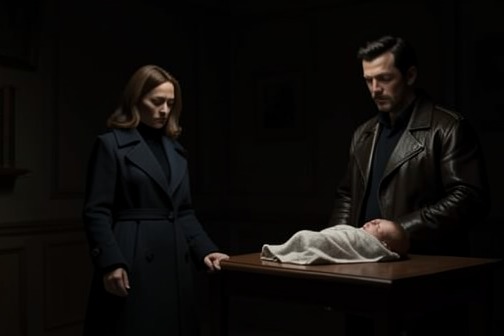
Misha’s shooting and return years later transform Trip’s promised revenge into a crisis of recognition: the woman he believed dead arrives alive, carrying their baby. The event links an earlier act of violence, years of deferred retaliation, and a sudden revelation that changes both what Trip knows about Misha and what he must now consider as a leader of the [Pride MC](entity:organization-recall-organization-pride-mc-e6ffdb469b3d).
## The Shooting and the Belief of Loss
Trip remembers hearing Misha scream as she was gunned down. The account establishes the shooting through what he heard and believed, rather than identifying the attackers or describing the circumstances of the attack in further detail. He understands the violence as the work of enemies who took his girlfriend from him and wanted to stop him. The text therefore places personal loss and a conflict directed at Trip side by side, while leaving the assailants’ identities and precise intentions beyond what is disclosed.
For Trip, the shooting becomes a death: he believes Misha is gone and promises to avenge her. That belief gives the event its force even though her later appearance reveals that his understanding was wrong. The distinction matters. The account does not present a confirmed death; it presents the wound of a presumed death, shaped by what Trip heard and by the years in which he lived as though Misha could not return.
## Revenge Deferred
Years pass before the next turn. As vice president of the Pride MC, Trip is expected to be ruthless, and he carries his anger as both a private grievance and a pressure bound up with his position among men who depend on him. His stated reason for fury remains the murder of his girlfriend. The personal and organizational stakes overlap, but the evidence does not specify what actions the club has taken or how its members have participated in the conflict.
Trip does not describe an immediate response to the shooting. Instead, he tells himself to wait for the right time to make things right, imagining revenge as an exchange of death for death and blood for blood. By the time Misha reappears, he is almost ready to strike. That timing creates the event’s central reversal: the long-awaited moment for retaliation coincides with the return of the person whose supposed death has sustained his resolve. The account does not say whom he planned to attack or whether he had begun carrying out that plan.
## Misha’s Return
Misha appears at Trip’s doorstep after years away, and she is not alone. She has his baby in her arms. The arrival supplies two revelations at once: Misha survived the shooting Trip thought had killed her, and Trip has a child whose existence he did not know about in this account. No explanation is given for how Misha survived, where she spent the intervening years, or why she returns at this moment. Her arrival is decisive without resolving those questions.
The doorstep makes the change immediate. Trip’s account moves from years of waiting and imagined retaliation to the sight of Misha and the child before him. His world is turned upside down; amid that shock, he recognizes only one certainty, but the available passage does not state what that certainty is. The ending thus registers a sharp change in his situation while withholding his response and the consequences of the reunion.
## Narrative Significance
The event is organized around the gap between an apparent ending and a belated return. The shooting seems to close Misha’s place in Trip’s life; his promise of revenge gives that absence a continuing purpose. Her reappearance does not erase what Trip believed he witnessed or the years shaped by that belief. Instead, it forces the past to become present again at the moment when he has nearly translated grief into violence.
The baby makes the reversal more than a question of whether Misha is alive. Trip’s intended retaliation now sits beside an unexpected parental connection, placing the language of blood-for-blood vengeance against the presence of a child. The account does not establish how Trip will reconcile those pressures. It ends at the threshold of that decision: the presumed dead has returned, the man ready to strike has been stopped short by new knowledge, and the next course of action remains unresolved.
Event 47
Tony Esposito’s Transgressive Affair with a Politician’s Daughter

Tony Esposito’s affair with a politician’s daughter is presented as a deliberate breach of the protected life she has been raised to inhabit, and its decisive consequence is an unexpected pregnancy. The encounter offers her a first experience of feeling fully alive, but it does not remain a self-contained transgression: Tony leaves her pregnant, and she believes he will come back to claim the child.
## Identity and Background
The woman is identified through her family and social position rather than by a personal name: she is a politician’s daughter, raised to appear prim and proper. She describes herself as having always been a good girl and says she had been kept far from the dangerous world Tony represents. That carefully maintained identity establishes the boundary her choice will cross; the affair is not framed as an ordinary continuation of her life, but as a step into a world she has been taught to avoid.
## The Crossing
She deliberately crosses the tracks and lets Tony Esposito claim her. The language of crossing makes the encounter a conscious departure from her accustomed sphere, while Tony’s description as dark, violent, and dangerous marks him as its most charged opposite. The account does not present her choice as accidental or imposed: she decides to enter the relationship, and the experience is described as extraordinary to her. For the first time, she feels alive, making the encounter a sudden release from the restrained identity she has inhabited.
## From Transgression to Consequence
The affair’s aftermath reverses the apparent closure of Tony dropping her off. She identifies the pregnancy as the one problem that keeps the encounter from ending there: the mobster has left her carrying his child. The narration thus turns a moment of chosen escape into a continuing circumstance, one with consequences beyond the immediate excitement of the affair. Her pregnancy changes the stakes without erasing her original agency in crossing the boundary.
## Return and Narrative Significance
The episode closes with the expectation that Tony is coming back to claim what is his. That prospect gives the pregnancy a forward pull: the encounter has created a lasting connection, and Tony’s anticipated return threatens to draw the politician’s daughter further into the dangerous world from which she had been sheltered. The contrast between her established respectability and her choice of Tony organizes the episode, while the pregnancy transforms that contrast into an unresolved conflict over what follows.
Event 48
Tanner Williams Is Kidnapped and Claimed as Griz’s Prize

[Tanner Williams Is Kidnapped and Claimed as Griz’s Prize](entity:event-recall-event-tanner-williams-griz-dadb5aea14a6) is presented as a collision between abduction and possessive desire. Griz describes Tanner as a liability he cannot afford and a temptation he cannot ignore, then treats her presence as something imposed on him and something he has the right to control. The event’s decisive turn is not only her removal but the language that follows: Tanner becomes “the spoils of war,” and Griz’s irritation at her challenge gives way to a threat to tighten her leash and determine where she belongs.
## Background and Stakes
The available account frames Tanner’s abduction against several pressures in Griz’s life. He has a daughter at home, a club to run, and a war looming on the horizon. These responsibilities make Tanner, in his own framing, a distraction he cannot afford. At the same time, he describes her as intensely attractive and acknowledges that her presence unsettles the order he wants to maintain. The event therefore arrives already charged with competing claims: the demands of fatherhood and leadership on one side, and his fixation on Tanner on the other.
Griz’s account also stresses that this is not how events should have unfolded. He objects to the image of throwing a kidnapped woman across his bed and to calling her a prize of war, presenting the situation as more than he had asked for. That reluctance does not undo the abduction or restore Tanner’s freedom. Instead, it establishes a tension between his stated lack of choice and the authority he proceeds to exercise over her. The blurb supplies no account of the circumstances that led to the kidnapping, so its emphasis falls on the contradiction Griz faces after Tanner is in his power.
## Abduction and Claim
The bed is the concrete focal point in the description of the event: Griz says Tanner has been thrown across it. The image places her physically within his private space, while the phrase “the spoils of war” casts her as a possession acquired through conflict. The account does not describe the mechanics of the kidnapping or Tanner’s condition beyond this portrayal, but its wording makes clear that the event is coercive rather than a freely chosen encounter. Griz’s attraction is part of his explanation of the tension, not evidence of Tanner’s consent.
That distinction sharpens as Griz moves from describing Tanner as an unwanted complication to asserting that she is his now, whether he likes it or not. His phrasing makes possession sound inevitable, even as the surrounding details show his active role in enforcing it. Tanner’s challenge to his authority is the immediate trigger for his loss of patience. In response, he announces that he will tighten her leash and show her who she belongs to. The language converts a conflict over authority into an explicit attempt to regulate Tanner’s freedom and identity.
## Control and Narrative Significance
The event’s central reversal is that Griz casts himself both as burdened by circumstances and as the person entitled to dictate what happens next. His daughter, his club, and the approaching war are invoked as pressures, yet his response to Tanner’s resistance is not withdrawal: it is a threat of tighter control. The distinction between what he claims he cannot avoid and what he chooses to do remains unresolved in the account. His sense of being saddled with a distraction coexists with his insistence that Tanner belongs to him.
The passage is framed through Griz’s first-person perspective, so the reader encounters the kidnapping through the language of the man exercising power, not through an account of Tanner’s thoughts or choices. That perspective makes the possessive metaphors especially revealing: the leash and the spoils of war reduce a person to something to be managed or claimed. At the same time, the description gives Tanner a point of resistance by noting that she challenges his authority and gives him lip. The available material ends with Griz’s intention to intensify his control; it does not establish what Tanner does afterward, whether she escapes, or how their relationship develops.
Event 49
Jess Breaks into the Sigma Saints Hideout and Is Imprisoned
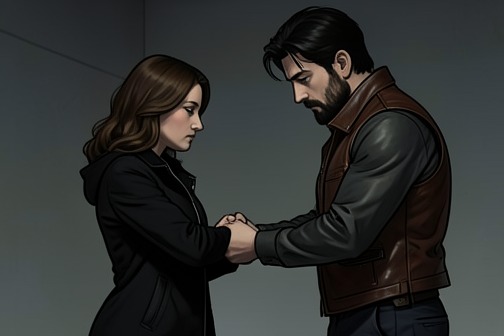
[Jess Breaks into the Sigma Saints Hideout and Is Imprisoned](entity:event-recall-event-jess-sigma-saints-98d26d904388) marks the point when an intrusion becomes a captivity: after Jess enters where she does not belong and overhears things she should not have heard, a member of the [Sigma Saints MC](entity:organization-recall-organization-sigma-saints-mc-c6423f4d145b) restrains her rather than letting her leave. The account centers on that captor’s changing assessment of her, while leaving the information she overheard and the eventual outcome of her imprisonment unstated.
## Intrusion and Exposure
Jess’s entry is presented as trespass, not as an invited visit or an accidental encounter. The captor regards her presence as a breach and stresses that she has heard information she was not meant to hear. The nature of that information is withheld, but the fact that Jess has encountered it makes her, in his view, a problem to contain.
## Restraint and Unresolved Intent
The captor describes Jess as a loose end and cuffs her while he decides what to do with her. His account makes the confinement a deliberate interim measure: he has not yet settled her fate, and regards her as someone whose presence requires a decision. The evidence establishes that she is restrained and held, but does not say how long the captivity lasts or what happens next.
## A Change in the Captor’s View
At first, the captor considers Jess unremarkable, though he recognizes her as attractive. As he watches her, his appraisal changes: he becomes increasingly unwilling to treat her as disposable and begins to regard her as a prize. He contrasts this response with his experience of having been with many women before, describing Jess as different and as drawing out unfamiliar sides of him. The reversal does not resolve the danger of her situation; it shows the captor’s attention shifting while she remains under his control.
Event 50
A Hitman Is Ordered to Kill a Client’s Ex-Wife
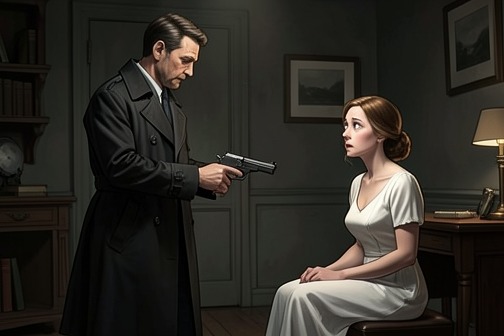
The assignment to kill a client’s ex-wife introduces a conflict between professional obedience and doubt. The hitman is accustomed to clients who want people dead and presents himself as someone who carries out their requests without investigating their claims. This case unsettles that routine before the intended victim has even had a chance to speak: her husband’s accusation supplies the reason for the assignment, but the assassin is no longer sure that it tells the whole story.
## The Assignment and Its Claim
The opening establishes a chain of accusation and intended violence. A man presents his former wife as someone who deserves her fate, and the hitman is the person expected to make that judgment consequential. The reader receives no independent account of what the woman has done, no explanation of the marriage’s history, and no evidence that verifies the husband’s allegation. Her supposed guilt therefore remains a claim made by an interested party, not a settled fact.
That gap is central to the event. The hitman describes his work as a service for clients who want people killed, not as an inquiry into whether their targets are guilty. His customary refusal to ask questions gives the assignment a familiar procedural shape: a client supplies a target, and the assassin acts. Yet the description of this particular woman interrupts that pattern. The event is not presented as a completed killing; it is the approach of a hired killer toward a target whose culpability has already become uncertain to him.
## The Hitman’s Professional Rule
The assassin’s self-description draws a boundary between violence and judgment. He does not regard himself as a judge or jury, and he says that he ordinarily avoids asking questions. In his account, that rule makes the work impersonal: clients decide whom they want dead, while he performs the task. The rule is also a way of declining responsibility for the truth of the stories that make his work possible.
The ex-wife’s assignment exposes the instability of that separation. If the hitman acts without examining the accusation, he can treat the client’s version as sufficient and preserve his routine. But he admits that something about this target feels different, describing her in terms that suggest innocence and purity. Those impressions do not prove that she is blameless; the evidence supplies no testimony from her and no resolution of the husband’s charge. Instead, they make the hitman’s usual indifference harder to maintain. His attention to her unsettles the professional rule even as he remains on course to carry out the job.
## An Accusation Under Question
The event’s central uncertainty turns on two competing descriptions of the same woman. In her husband’s version, she merits death; in the hitman’s emerging impression, she may be innocent. He explicitly wonders whether she is truly the monster her husband describes or whether another story lies behind the accusation. The question is left open rather than answered, making the assignment a test of the narrative the client has provided as well as a threat to the person named in it.
The imbalance between the accounts matters. The husband’s judgment reaches the assassin before the woman can offer her own, and the hitman’s questions arise from his impressions rather than from verified facts. The reader is thus asked to hold uncertainty on both sides: the ex-wife may not be as her husband portrays her, but the hitman’s sense of her innocence is not proof either. The event makes that unresolved distance between accusation and knowledge part of the danger. His work depends on treating a client’s account as actionable; his hesitation begins when he can no longer accept that account without question.
## Significance and Limits
The episode establishes the story’s initiating conflict without showing the assignment’s outcome. The woman believes she has finally reached safety, while the hitman says he is coming to kill her. That contrast places her expectation of security against the threat she does not yet know is approaching. It also gives the event a clear direction—an assassin is moving toward a target—while withholding the encounter itself and any confirmation of what he will ultimately do.
The opening’s tension rests on the distance between a job’s apparent simplicity and its uncertain moral basis. The client has supplied a verdict, the hitman has a habit of acting without inquiry, and the target has not been heard. Yet the assassin’s sense that this case is different prevents those elements from settling into a routine contract. The assignment therefore introduces both an immediate threat and a question of credibility: whether the husband’s account can be trusted, and whether the man hired to act on it will continue to treat ignorance as part of his profession.
Event 51
Dom Abducts Erica and Is Drawn into the Underworld

Dom’s abduction of Erica turns his supposed last job into a return to the criminal world he hoped to escape. The encounter begins with Dom’s plan to complete one more heist and leave that life behind, but Erica’s arrival redirects his attention from escape to possession. He takes her away on his motorcycle, making the apparent rescue inseparable from coercion.
## The Heist and Erica’s Arrival
Dom approaches the job as routine: he expects to get in and out as he has done many times before, and believes this final heist will be no different. Erica’s sudden appearance breaks that expectation. He describes her as a city woman far removed from his world and regards that distance not as a reason to protect her, but as evidence that she will be easy prey. When he sees that she is about to be stabbed, he chooses to intervene on his own terms: he scoops her up, throws her across his motorcycle, and takes her home. His stated sexual interest makes clear that removing Erica from immediate danger does not amount to a selfless rescue; Dom replaces one threat with his own control over her.
## From Rescue to Possession
At home, the abduction becomes sexual, and Dom frames what follows as an expression of appetite rather than a negotiation: he takes Erica, and the encounter leaves him wishing the episode had ended there. The contrast with the danger he interrupted is stark. He had carried her away from a stabbing, but his own account makes clear that he did so to claim her for himself, not to return her to safety or leave her free.
That choice overturns his plan to make the heist his final one. Dom had imagined a clean exit from criminal life; Erica instead becomes the person he believes is drawing him back into the underworld he is desperate to leave. His insistence that she does not give the orders establishes the imbalance at the heart of their encounter: he claims authority over her even as her presence disrupts the escape he had intended. The episode thus ends not with the completion of a last job, but with Dom caught between the life he wants to abandon and the coercive attachment he has created.
## Dom’s Framing of the Encounter
The episode is filtered through Dom’s first-person account, so Erica’s arrival and removal are presented through the vocabulary of his appetite and authority rather than through her perspective. His narration makes his assumptions visible: he treats her unfamiliarity with his world as vulnerability and her presence as something to claim, while casting himself as the person who decides what happens next. That framing does not make the encounter consensual; instead, the gap between his self-assured voice and his coercive actions exposes the power imbalance at its center. The closing insistence that he, not Erica, gives the orders leaves the scene’s immediate conflict unresolved and fixes control—not mutual understanding—as the terms on which their connection begins.
## The Story’s Possessive Frame
The heading, “DOM’S BABY: [Broken Spires MC](entity:organization-recall-organization-broken-spires-mc-c21fcd9bde73),” and the accompanying declaration, “I HAD A TASTE OF HER. NOW, I’M COMING FOR THE REST,” place possession at the threshold of the episode. The blunt promotional framing echoes Dom’s own language of taking and command, presenting Erica as the object of an appetite before the scene shows how he acts on it. That framing sharpens the episode’s central contradiction: Dom imagines himself leaving his old life, yet the story introduces his new entanglement through the same language of dominance that belongs to the underworld he wants to escape.
Event 52
Rip Trades Protection for Control and a Promise of Children
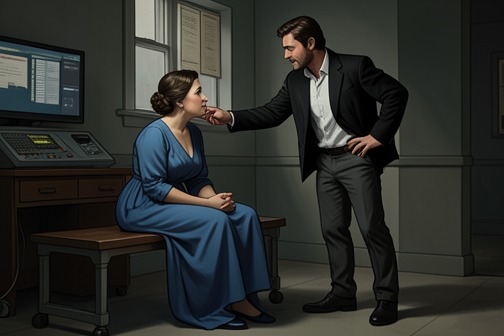
Rip’s offer of protection turns a young woman’s urgent need for help into a bargain over her autonomy. Professor Ellsmith threatens her developing career after targeting her for sexual reasons rather than her talent; Rip appears able to intervene, but makes his help conditional on control of her body and a child. The event’s decisive tension lies in that exchange: she needs an ally, yet the price Rip names makes protection another source of danger.
## The predicament that prompts the offer
The account begins with Professor Ellsmith’s abuse of professional power. He did not select the young woman because he recognized her ability; he wanted sexual access to her. When she refused, he threatened to derail her budding career. The threat makes the predicament more than an unwelcome advance: the professor can place the future she has been building at risk if she rejects him.
The synopsis frames her situation as a forced choice between allowing the professor to take advantage of her and giving up on her dreams. Neither option is presented as a free or satisfactory decision. Her request for help follows from that narrowed field of choices, rather than from evidence that she has already chosen to surrender her ambitions. The career threat is the immediate pressure behind the event, while the prospect of losing those ambitions explains why she seeks an intervention at all.
## Rip’s conditional protection
Rip is not described as her natural first choice. The account presents him as the last person she wants to owe a favor, but says she has few alternatives. That reluctance matters: his apparent usefulness does not make him a trusted or uncomplicated rescuer. She approaches him because the professor’s leverage has left her needing help, not because the synopsis establishes confidence or affection between them.
Rip’s services, in turn, are explicitly not free. His demands are described as steep, and the account specifies three linked forms of control: he wants her to strip, to be under his power through the night, and to carry his baby. These conditions transform assistance with the professor problem into an intimate and reproductive bargain. The young woman’s exposure to the professor’s threat creates the circumstances in which Rip can set the price; the offer therefore does not simply oppose one man’s abuse with uncomplicated protection from another.
## A bargain, not a confirmed resolution
The promotional account establishes Rip’s demands, but does not narrate a completed negotiation. It does not say that the young woman accepts, that Rip has already confronted Professor Ellsmith, or that the professor’s threat is removed. The event is consequently best understood as the presentation of a conditional offer at a point of acute pressure, not as proof that protection has been secured. Her need for help and Rip’s terms are clear; her response and the immediate outcome are left unstated in this evidence.
The framing keeps her ambitions and bodily autonomy in direct tension. She seeks a way to resist a professor who threatens her career, yet the alternative Rip proposes also asks her to accept control over her body and a pregnancy. The synopsis does not resolve that conflict by showing her decision. Instead, its sequence makes the proposed exchange itself the turning point: a request for help becomes an encounter with another demand, and the possibility of escape is inseparable from the cost Rip attaches to it.
## The pregnancy premise
The material following the promotion identifies the story as *Biker’s Baby: Devil’s Wings MC* and says that the narrator can feel a biker’s baby growing inside her. This establishes pregnancy as part of the story’s advertised premise, giving particular weight to Rip’s demand that she carry his child. It does not, by itself, specify when conception occurs, establish the terms under which it happens, or show that the pregnancy results from an accepted bargain. The distinction is important: the offer’s reproductive condition is explicit, and pregnancy is foreshadowed, but the intervening events are not supplied here.
As presented, Rip’s protection is neither a settled rescue nor a neutral service. It is an offer made in the shadow of a professor’s career-threatening coercion, and its price reaches beyond the immediate problem to the young woman’s control over intimacy and reproduction. The event’s significance rests on that unresolved exchange: the need for protection is real, but the evidence leaves open whether Rip’s terms become an agreement and what consequences follow.
Event 53
Micah Escapes Daddy Williams but Is Held by Ford
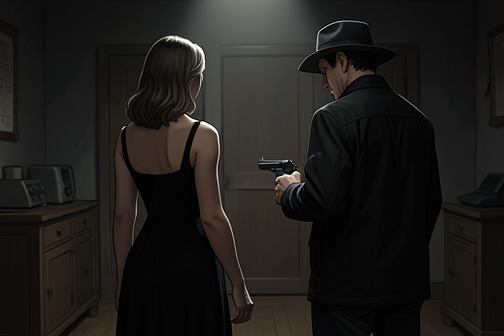
Micah’s escape from Don “Daddy” Williams does not lead directly to freedom. After she refuses to sleep with strangers for money, Don “Daddy” Williams abandons her at a rough roadhouse, where she is in danger and has no protection. Ford gets her out, but his intervention turns into another form of control: he expects something in return, later confines Micah after discovering she stole from him, and must choose what to do when Don “Daddy” Williams demands her return. The event’s central reversal is stark: rescue removes Micah from one immediate threat without giving her control over where she goes next.
## The Business Micah Tries to Leave
Micah is a woman on the run from Don “Daddy” Williams, who first presented his operation as a legitimate business when she arrived desperate for money. She soon recognizes that it is neither an ordinary business nor a safe place to work: he is a pimp and a flesh trader, and he does not accept her refusal. Her decision not to sleep with strangers for money is the immediate cause of her abandonment. Don “Daddy” Williams drops her at a rough roadhouse without protection, exposing her to the possibility of being manhandled or worse.
The circumstances make Micah’s escape precarious rather than planned. She wants to get to [Hollywood](entity:location-recall-location-hollywood-3ce8b1af5069) and believes she may be able to use Ford’s help to climb out of her circumstances. That hope takes shape at the roadhouse, where she is left without a dependable means of protection and faces danger before she can make her way out on her own.
## Ford’s Intervention and Its Terms
Ford appears as a hired thug and enforcer looking for a new job. He gets Micah out of the immediate danger, describing his action as a helping hand, but he does not present the assistance as disinterested. He believes Micah knows he wants something in return, and he regards her body as the payment he can claim. The difference between being rescued and being free is established at the point of intervention: Ford changes Micah’s immediate circumstances, but the arrangement gives him leverage over her.
Micah’s hope of using Ford to escape and Ford’s intention to gain from her are therefore in direct conflict. She is not described as naïve about his expectations; she understands that his help has a price. Yet her desire to reach Hollywood leaves her willing to accept a relationship in which Ford claims complete ownership. The account presents this as a constrained choice, made while she is trying to get away from Don “Daddy” Williams and lacks protection, rather than as an uncomplicated agreement between equals.
## Confinement and the Threat of Recapture
Ford’s control deepens after he discovers that Micah has stolen from him. He chains her in a dungeon and makes her beg for forgiveness. This punishment changes the rescue into confinement: Micah has escaped the place where Don “Daddy” Williams held power over her, only to find herself physically restrained by the man who took her away from the roadhouse. The discovery of the theft is the stated trigger for Ford’s response; the account does not describe Micah’s intended use for what she took.
The settings associated with Ford’s claim over her include the hood of his car, a diner, and a filthy motel. These details mark how his control follows Micah across different places rather than ending with the initial rescue. The available account does not resolve her escape to Hollywood or establish that she regains her freedom during this episode; instead, it emphasizes the unsettled conditions in which Ford’s protection and possession remain entangled.
## The Choice Don “Daddy” Williams Forces
The danger changes again when Ford learns that Don “Daddy” Williams desperately wants his best working girl back. The demand makes Micah’s status a decision point between two men: Ford can sell her back to the violent trafficker, or keep her for himself. The account presents these alternatives as Ford’s dilemma, not as a choice Micah is shown controlling. Her escape has brought her out of Don “Daddy” Williams’s immediate reach, but his interest in reclaiming her keeps the original threat active.
The event’s significance lies in that unresolved reversal. Ford is the person who prevents the danger at the roadhouse from immediately worsening, yet his own possessive claim makes him no simple route to safety. Don “Daddy” Williams’s demand exposes how little the initial rescue settles: Micah remains the object of a contest over control, while the outcome of Ford’s choice is left open.
Event 54
Kelsey Is Kidnapped and Chopper Discovers the Child Is His
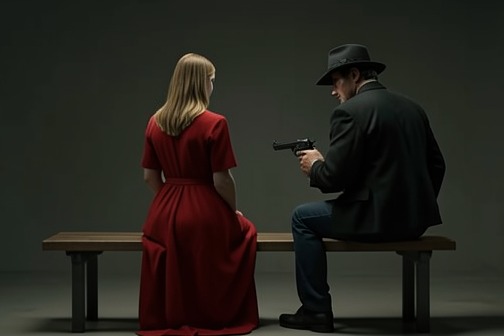
Kelsey’s kidnapping and Chopper’s discovery that he is the father of her child turn a power struggle into a personal crisis. Kelsey enters the conflict seeking the truth about her sister’s murder, but becomes entangled with Spike Lawler, who claims her as his old lady. When Chopper targets Spike, he takes Kelsey captive as a means of striking at his rival—only to realize that she is not merely a pawn in their dispute, but the mother of his baby.
## Kelsey’s Investigation and [Captivity](entity:state-recall-state-captivity-0bc31185b3d3)
Kelsey describes her involvement with the bikers as a dangerous choice made in pursuit of answers. She believes one of them must know who killed her sister and is willing to go to considerable lengths to find the murderer. The investigation places her inside a world where information and control are bound up with the club’s power struggles, leaving her exposed to the people she is trying to question.
Spike claims Kelsey as his old lady before she understands that she might resist that claim. She depicts herself as trapped and unable to escape his control. Her situation is therefore not simply a relationship complication: it is the immediate constraint shaping her efforts to investigate and her prospects of getting away. The account gives no resolution to her sister’s murder, only the reason Kelsey entered this dangerous circle and the cost of remaining within it.
Kelsey’s pregnancy raises the stakes of that captivity. She expects that when Spike learns she is pregnant, her remaining opportunities to escape will close. Yet she is keeping a crucial fact from him: the child is not his. She believes the child’s father is coming to claim it, a development that makes the pregnancy both a concealed truth and a possible turning point in her confinement.
## Chopper’s Plan Against Spike
Chopper’s account begins from the opposing side of the conflict. He judges Spike to be weak and arrogant, and resolves to attack him at the point he considers most painful. The secret Chopper has learned is that Spike’s old lady is pregnant. Rather than treating this knowledge as private information, he makes it the basis of a plan against Spike.
The plan succeeds in bringing Kelsey into Chopper’s custody. He has her tied up in his clubhouse basement, where she becomes the direct focus of his attempt to act against Spike. The setting and restraint establish the imbalance between captor and captive; the available account does not describe the abduction’s mechanics or any further physical details. What matters to the event is that Chopper has transformed his knowledge of the pregnancy into leverage, while Kelsey’s danger has shifted from Spike’s control to Chopper’s.
## The Interrogation and Recognition
Chopper goes to interrogate Kelsey expecting to confront someone caught in a struggle between men. Instead, the encounter brings a personal fact into view: Kelsey is the mother of his baby. His account marks this as a stunning realization, changing how he understands her place in the conflict. She is not merely a way to hurt Spike; she is connected to Chopper through the child she is carrying.
That recognition answers the pregnancy’s central concealed question for the reader. Kelsey has already established that Spike is not the father and that the child’s actual father intends to claim it; Chopper’s realization identifies him as that father. The reveal also sharply reverses the purpose of the kidnapping. Chopper has taken Kelsey to use her against Spike, but learns that the captive at the center of his plan is bound to him by a relationship he had not recognized.
## Consequences and Narrative Significance
The event leaves the immediate power imbalance unresolved. Kelsey is in Chopper’s clubhouse basement, and the account does not establish whether she is released, whether Chopper changes his treatment of her, or how Spike responds to the abduction. Nor does it show whether Chopper’s discovery leads to his claiming the child. The consequential change is instead the newly disclosed paternity: the pregnancy is no longer only a secret that could tighten Spike’s hold over Kelsey, but a link between Kelsey and the man who has abducted her.
The alternating first-person accounts give the reveal its force. Kelsey’s perspective presents the pregnancy as a secret she must protect while she remains trapped; Chopper’s presents the same fact as information he can weaponize against Spike, until the interrogation makes it personal. The event thus turns on a gap between what each character knows and what the other intends: Kelsey knows the child is not Spike’s, Chopper initially approaches her as a strategic target, and the recognition of his own paternity changes the meaning of the confrontation without yet resolving Kelsey’s captivity.
Event 55
Halley Returns to Her Former Lover with Their Secret Son
Halley Talin’s return reunites former lovers and reveals the child whose existence had been kept from the narrator. Eight years after their earlier encounter, she comes to his door with their son. The revelation changes the meaning of their shared past: what the narrator had regarded as something finished now carries a living consequence and a future he feels compelled to defend.
## Background and Return
The account presents Halley and the narrator as people with an intense past, followed by a separation. Its compressed description contrasts how she was when they met with the condition in which she left, while linking their brief time together to the secret child. The evidence does not elaborate on the circumstances of their separation or explain why Halley kept the pregnancy and child from him; the silence leaves those questions unresolved at the point of reunion.
Eight years later, Halley comes knocking at the narrator’s door. He has believed she belonged to his past, and her arrival disrupts that assumption before he knows what she has brought with her. When she steps aside, he sees a son he had never known existed. The sequence is spare but decisive: a familiar figure returns, then the relationship’s hidden consequence is made visible.
## The Revelation
The child’s existence is the event’s central disclosure. The narrator’s reaction is described as near speechlessness, marking the news as a shock rather than a fact he had already suspected. Halley’s return therefore does more than reopen contact between former lovers. It reveals a parent-child relationship that had existed beyond his knowledge and forces him to confront a role he has not prepared for.
The account identifies the boy as the narrator’s son but supplies no further details about his age, name, or life before this meeting. Nor does it show what Halley says about the years apart. The reunion is focused instead on the immediate reversal in the narrator’s understanding: he has not simply encountered Halley again; he has discovered that he is a father.
## Consequences and Stakes
The narrator openly acknowledges that he does not know the first thing about being a father. The admission establishes uncertainty, not a completed transformation: the revelation gives him a new responsibility, but the available account does not show how he will meet it. His lack of experience stands against the certainty of his response to the stakes. For the first time in his life, he believes he has something to lose, and he resolves that no one will take it from him.
That resolve makes the son both a newly recognized relationship and a source of vulnerability. Before Halley’s arrival, the narrator could treat their past as closed; afterward, his emotional and protective commitments extend beyond himself. The event’s force lies in this abrupt change of scale—from a former lover at the door to a child whose future now matters to him—while leaving the practical terms of fatherhood and the future of the family unsettled.
Event 56
The Fight for Joey Banks’s Smuggling Route and the Siege
[The Fight for Joey Banks’s Smuggling Route and the Siege](entity:event-recall-event-joey-banks-011bb3f7dc4c) is a contest over a smuggling route that escalates from a private plan against Joey Banks into a siege. Its defining reversal is the narrator’s encounter with Joey’s daughter: she is not merely caught up in the narrator’s scheme, but is pursuing revenge of her own. Their temporary alignment breaks, leaving the narrator to prepare an escape while insisting on taking her along.
## Causes and Competing Aims
The conflict begins with an order from an unnamed boss, who wants Joey Banks “straightened out.” The narrator rejects that limited assignment in favor of a more ambitious plan: kill Joey and take the smuggling route for personal use. The narrator presents this as a simple operation, claiming that no one else needs to get hurt. That assurance belongs to the narrator’s plan, not to an established outcome; the account does not say that Joey is killed or that the route is successfully seized.
The route is both the object of the narrator’s intended takeover and the source of the dispute with the boss’s instructions. The difference between carrying out an assignment and claiming the route for oneself gives the conflict an internal as well as an external stake: the narrator’s plan exceeds what the boss requested before Joey’s daughter enters the picture.
## Joey’s Daughter and the Reversal
The narrator’s encounter with Joey’s daughter changes the direction of the plan. The narrator first describes being drawn to her, then discovers that she is allowing the narrator to draw her back in so she can pursue her own revenge against her father. Her apparent participation therefore conceals a separate objective. The two are not simply aligned against Joey: each has a personal purpose, and the narrator recognizes her deception as a tactic resembling the narrator’s own.
For a time, the narrator imagines that the pair might have made an effective team. That possibility depends on their aims temporarily coinciding, not on trust. The decisive break comes when she turns on the narrator. The account does not specify what she does, why she changes course at that moment, or how the betrayal unfolds; it establishes the reversal and its consequence without resolving those details.
## The Siege and Attempted Escape
After the betrayal, the narrator calls in a siege. The operation shifts from an intended maneuver against Joey and his route to a fight to get out. The narrator expects to have to fight through the situation, but still refuses to leave empty-handed: taking Joey’s daughter becomes an explicit part of the escape plan. The account does not identify who participates in the siege, where it occurs, or whether the narrator succeeds in escaping with her.
This ending leaves the struggle unresolved. The narrator’s original goal of taking the route gives way, at least in the immediate crisis, to the determination to leave with Joey’s daughter. Her own revenge remains a separate motive, so the narrator’s insistence on taking her does not establish that she consents or that their interests have realigned.
## Significance
The event is structured around successive changes in allegiance: the narrator departs from the boss’s assignment, discovers that Joey’s daughter has been using the narrator to further her own revenge, and responds to her betrayal by escalating to a siege. Each shift narrows the narrator’s stated priorities, from taking a smuggling route to escaping with her. The promised simplicity of the original plan stands in contrast to the compromised alliance and armed confrontation it becomes.
The account closes on intention rather than resolution. It establishes the narrator’s plan to fight out and take Joey’s daughter, but supplies no outcome for the siege, the route, Joey, or her revenge. That uncertainty keeps the contest open: the narrator’s possessive determination is clear, while the daughter’s next move and the fate of the competing plans remain unsettled.
Event 57
Carter Becomes Angela’s Close Protector After a Threat

A threat delivered by mail turns Angela McCarron’s already rule-bound life into a security problem and brings Carter Prince into it as her bodyguard. The assignment is more than a protective arrangement: it places a wary, unwilling protector beside a young woman who longs to make her own choices, while attraction complicates the boundaries both are expected to keep.
## The Threat and Angela’s Confinement
Angela is the daughter of a city councilman, and the constraints surrounding that position have shaped her daily life. For eighteen years, she has been told where to go and what to do. Her desire is not simply to evade one particular instruction; she wants a taste of the carefree childhood she feels she missed. The threat in the mail therefore arrives in a life where freedom is already scarce, adding a new reason for other people to decide what is safe for her.
The threat is described as mysterious, with no sender or motive identified in the account of the event. Its immediate consequence is concrete: Angela’s father hires a bodyguard for her. Protection answers the danger, but it also places another person between Angela and the independence she wants. The arrangement begins as a response to a risk she has not chosen and becomes the setting for her resistance to rules.
## Carter’s Assignment
Carter does not welcome the job. His club president hires him out to guard the politician’s daughter, a duty he accepts without enthusiasm. He is not looking for a romantic partner, and at first the assignment appears to be work he would rather not have. That expectation shifts when he finds Angela strikingly attractive. He tells himself to concentrate on the job, setting up a conflict between professional responsibility and personal interest before the danger has fully closed in.
Angela’s first impression is similarly divided. Carter is the most attractive man she has seen, but she also regards him as cold and difficult. His role gives him a reason to set limits; her established impatience with limits gives her reason to test them. Neither is presented as meeting the other without resistance. Their mutual attraction is present from the outset, but it does not dissolve the friction created by his duty and her desire for freedom.
## A Guarding Arrangement Under Pressure
The relationship develops through repeated movement between collision and connection. Carter tries to keep his attention on protecting Angela, while Angela continues to push against the restrictions surrounding her. The synopsis presents their clashes and moments of closeness as part of the same developing bond, rather than as separate phases in which either person simply yields. The assignment keeps them together; their opposing responses to it make that proximity volatile.
Meanwhile, the danger around them draws closer. The account identifies a mistake as the point at which both recognize how far they have gone into the situation, but does not specify what the mistake is. It frames the consequences as a danger to both of them, with their ability to save themselves—and each other—uncertain. The protective arrangement thus expands beyond a straightforward guard-and-client relationship: Carter’s duty and Angela’s safety become entangled with the choices and attachment each is trying to manage.
## Stakes and Narrative Role
The event establishes a central tension between safety and autonomy. Carter is assigned to protect Angela, yet protection takes the form of another rule imposed on someone who has spent eighteen years living under them. Angela’s resistance is not incidental to the danger; it shapes how the arrangement works, while Carter’s attraction makes the professional boundary harder for him to maintain. The threat gives their conflict an external pressure, and their growing closeness makes the consequences personal.
The setup leaves the source of the mailed threat unexplained and emphasizes that the danger is still approaching. Its decisive turn is not a resolved rescue or a disclosed conspiracy, but the transformation of an unwanted security assignment into a relationship carrying risk for both Carter and Angela. Their opposing impulses—to guard and to break away—become inseparable as the danger closes in.